>>
Industry>>
Robotics>>
China’s Humanoid Robot Revol...China’s Humanoid Robot Revolution: Is the Future Arriving or Is the Hype Getting Ahead of Reality?
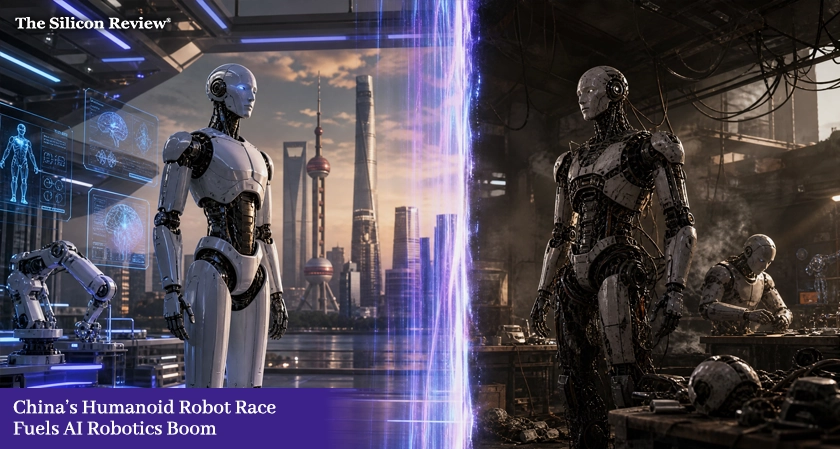
China’s humanoid robot startups are racing toward IPOs as AI robotics investment explodes. Are these companies ready to reshape industries, or are investors betting billions on a future that has not arrived yet?
China’s humanoid robot industry is entering a high-stakes battle as startups raise billions, prepare for IPOs and compete to dominate the next wave of AI robotics.
Is China Winning the AI Robotics Race or Chasing Hype?
The race is backed by strong government support and growing investor interest, with companies aiming to build human-like machines for factories, services and commercial use.
China creating the future of robotics, or is the market moving faster than the technology can deliver?
LimX Dynamics has become one of the latest companies to attract major attention, raising $200 million in a pre-IPO funding round that valued the startup at $2.21 billion.
“Listing is a must,” said founder Will Zhang, arguing that going public is essential once technology reaches a critical stage.
“With more industrial and collaborative robot companies potentially coming to IPO, competitive pressure is likely to persist,” said Morgan Stanley, The Head of China Industrials Research.
Zhang compared the humanoid robot race to China’s electric vehicle revolution, where companies that moved quickly gained an advantage while slower players disappeared.
Are IPOs driving innovation, or forcing young robotics companies to prove success before they are truly ready?
China now has more than 100 humanoid robot companies competing in the race for “embodied AI” technology that combines artificial intelligence with physical machines capable of interacting with the real world.
Investment in the sector has surged as startups race to develop robots for manufacturing, healthcare, services and commercial applications.
Can humanoid robots become everyday workers, or will they remain expensive technology demos?
LimX aims to create fully autonomous commercial robots and plans to deliver thousands of humanoids to global markets. The company has already started supplying entertainment-focused robots to customers in South Korea.
The challenge now is no longer building robots. It is proving they can operate reliably, reduce costs and generate real business value.
As China pushes deeper into AI robotics, the competition is shifting from invention to execution. The Silicon Review asks is China’s humanoid robot revolution creating the next generation of technology giants or is it fueling a billion-dollar race where expectations are moving faster than reality?
FAQ:
Q: Why are China’s humanoid robot startups rushing toward IPOs?
A: Startups are seeking public funding to expand production, accelerate innovation and gain a competitive advantage in the growing AI robotics market.
Q: What is driving China’s humanoid robot boom?
A: Strong government support, rising investor interest and advances in AI robotics are pushing companies to develop human-like machines for real-world applications.
Q: What is embodied AI technology?
A: Embodied AI combines artificial intelligence with physical machines, allowing robots to understand, interact with and perform tasks in real environments.
Q: Why is LimX Dynamics attracting attention?
A: LimX Dynamics raised significant pre-IPO funding and is developing autonomous humanoid robots for commercial and service applications.
Q: Is China leading the AI robotics race?
A: China has become a major force in AI robotics with hundreds of companies competing to develop next-generation humanoid robots.
Q: What is the biggest challenge for humanoid robots?
A: The challenge is moving beyond demonstrations and proving that robots can operate reliably, reduce costs and deliver business value.
Q: How could humanoid robots transform industries?
A: Humanoid robots could support manufacturing, healthcare, services and other sectors by performing complex tasks alongside humans.




















Comments