>>
Other>>
Entrepreneur of the Month>>
The Best Entrepreneurs Are Def...The Best Entrepreneurs Are Defined by the Mistakes They Overcome, Not the Success They Celebrate
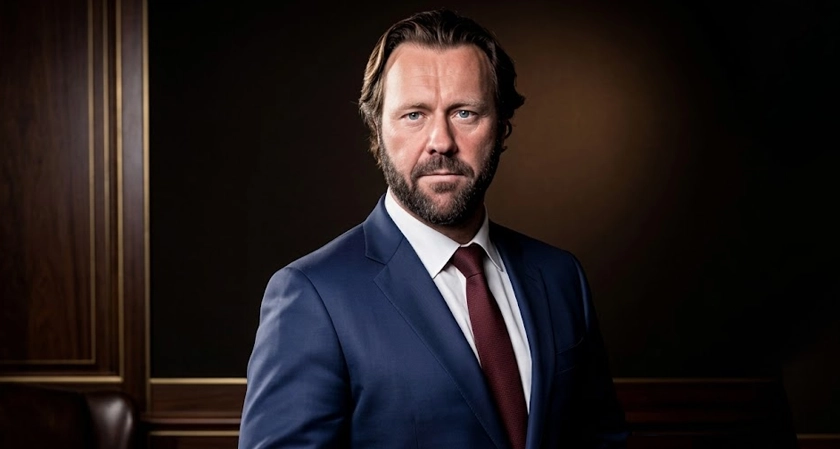
Everyone says they want more innovation, more entrepreneurs, and more businesses willing to take risks. What they rarely admit is that innovation and mistakes are inseparable. That’s becoming increasingly relevant as nearly 40% of CEOs now believe their companies will require significant reinvention to remain viable over the next decade. Yet despite asking entrepreneurs to make bigger bets than ever before, we continue to judge them as though mistakes should never happen.
Yet despite expecting entrepreneurs to innovate in increasingly uncertain markets, we continue to judge them as though mistakes should never happen.
I think we’ve got that completely backwards. In fact, I don’t trust entrepreneurs who tell me they’ve never made a significant mistake.
That might sound controversial, but after spending decades building businesses, I’ve come to believe the opposite is far more concerning. Entrepreneurs who claim they’ve never stumbled are either rewriting history or they’ve never pushed themselves far enough to discover where their limits really are.
Mistakes are not the opposite of entrepreneurship. They’re evidence that entrepreneurship is actually happening.
Every meaningful business is built through decisions that carry uncertainty. You hire people before you know exactly how they’ll perform. You enter new markets without knowing how customers will respond. You invest capital before the return is guaranteed. As your business grows, every decision becomes larger, more complicated, and more consequential. The idea that someone can navigate that journey flawlessly isn’t realistic; it’s fiction.
Unfortunately, the public often sees things differently.
I’ve watched successful entrepreneurs spend years building respected companies only for one mistake to dominate the conversation. Suddenly, thousands of good decisions are forgotten because one difficult chapter attracts all the attention. We have become remarkably good at judging outcomes while ignoring context.
Ironically, the entrepreneurs themselves rarely think that way.
Speak to founders who’ve built enduring businesses, and you’ll hear remarkably similar stories. They don’t boast about perfection. They talk about setbacks that changed how they hired, how they delegated, how they managed risk, or how they led their teams. They understand something many people outside business don’t: mistakes are expensive, but they are also one of the few teachers that cannot be ignored.
That’s why experienced entrepreneurs often respect one another’s failures as much as their successes.
Not because failure deserves celebration, but because surviving it usually means someone has developed judgment that simply cannot be learned from a book, a university lecture, or a business podcast.
Judgment is earned when reality refuses to follow your plan.
I’ve lived through those moments myself. Like every entrepreneur who’s spent years growing a company, I’ve made decisions that, with hindsight, I would approach differently. At the time, those moments felt overwhelming. Today, I see them differently.
They weren’t the moments that defined my failure. They were the moments that redefined my leadership. The biggest lesson those experiences taught me wasn’t how to avoid mistakes. It was how to respond to them.
Early in my career, I believed what many ambitious entrepreneurs believe: if I worked hard enough and paid close enough attention, I could eliminate costly errors. Experience taught me otherwise. As a company grows, complexity grows with it. More employees, more clients, more regulations, more moving parts, and more responsibility inevitably create more opportunities for something to go wrong.
That’s not poor leadership. That’s the reality of building something meaningful. The real test comes after the mistake. I’ve learned that every entrepreneur eventually arrives at a moment where they have two choices. They can protect their ego, or they can protect their business. The two are rarely the same.
The entrepreneurs I admire always choose a business.
They acknowledge what happened, take responsibility, fix the problem, and move forward. They don’t waste months looking for someone else to blame because they understand that accountability is not a weakness. It’s one of the few competitive advantages completely within their control.
Looking back, I can honestly say that the most difficult periods of my career ultimately became the most valuable. Not because I enjoyed them, but because they forced me to become a different kind of leader.
They changed how I built leadership teams. They changed how I thought about governance, compliance, delegation, and operational discipline. Most importantly, they taught me that sustainable businesses are not built when everything goes according to plan. They are built when leaders respond well after the plan falls apart.
That’s a perspective I couldn’t have gained through uninterrupted success.
It’s also why I think we have become too obsessed with the idea of perfection in business. We celebrate entrepreneurs for taking risks, yet we are often shocked when those risks don’t always produce perfect outcomes. Those two beliefs simply can’t coexist.
You can’t ask people to innovate while expecting them never to fail.
If you are making decisions that have the potential to transform a business, some of those decisions will inevitably be wrong. The objective isn’t to avoid every mistake. The objective is to make sure each one leaves you with better judgment than you had before.
That’s the advice I’d give any entrepreneur who’s going through one of those moments today. Don’t run from it. Own it. Fix it. Learn from it. The mistake itself won’t define your career unless you allow it to.
I’ve come to believe that the entrepreneurs most deserving of our trust aren’t those with spotless records. They are the ones who have been tested, accepted responsibility when things went wrong, and emerged as better leaders because of it. Those experiences create humility, strengthen judgment, and build resilience in ways success alone never can.
So the next time an entrepreneur tells me they’ve never made a significant mistake, I won’t be impressed. I’ll wonder whether they’ve ever truly taken the kind of risks required to build something extraordinary.
Because after decades in business, one thing has become unmistakably clear to me: mistakes don’t disqualify great entrepreneurs.
Owning your mistakes just might make you extraordinary.
About the Author:
Stewart Ginn Jr. is a financial professional and entrepreneur who served as CEO and founder of a Financial Services firm established in 2009. He specializes in investment strategy, client advisory, and helping individuals navigate complex and evolving market conditions. Over the course of his career, he built a practice focused on long-term planning, risk management, and disciplined portfolio construction. His perspective is shaped by years of experience working with clients through varying market cycles and economic environments. Specializing in complex institutional products.










Comments