>>
Industry>>
HR Tech>>
Bennett Graebner on Why Listen...Bennett Graebner on Why Listening Is Such an Underrated Skill
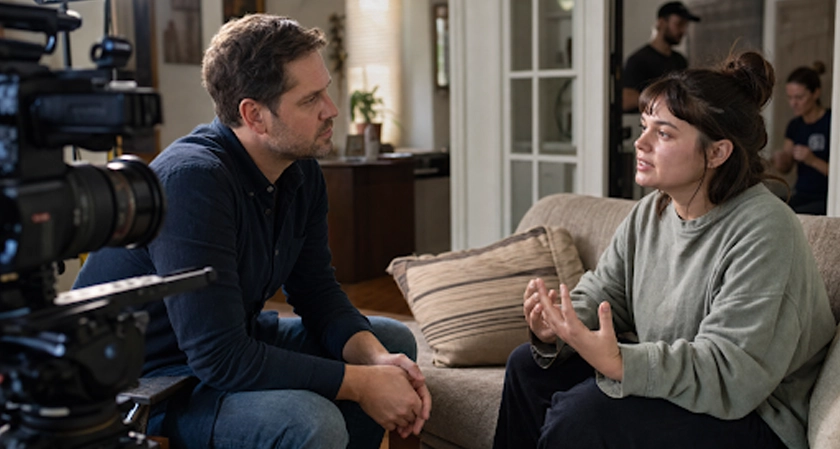
Most people think they're pretty good at reading other people.
A first conversation. A job interview. A first date. Within minutes, we've usually decided who someone is. Confident. Insecure. Funny. Difficult. Genuine. Fake.
Bennett Graebner spent nearly two decades casting reality television and came away believing something very different. The biggest mistake isn't failing to read people correctly. It's believing they can be read that quickly in the first place.
The Version That Walks Into the Room
Every season, hundreds of hopeful contestants walked into casting convinced they had one chance to make a first impression. Most arrived presenting a version of themselves:
- The version they thought producers wanted to see
- The version they had watched succeed on previous seasons
- The version that simply felt safest
Nobody was lying, exactly. Auditions, interviews, and first dates all reward the polished version, so the polished version is what shows up.
The job wasn't figuring out who they were in the first interview. It was creating enough time and trust for that version to slowly fall away. Hiring managers, first dates, and casting producers are all working the same problem: the difference between the audition and the person.
The Casting Session That Changed Bennett Graebner's Mind
One casting session early in Bennett Graebner's career permanently changed the way he thought about reading people.
A young woman walked into the room who struck almost everyone the same way. She was beautiful, confident, and carried herself with an edge that made many people assume she'd be "difficult" in the best possible television sense, someone who would bring drama and unpredictability to every scene. Graebner's first impression was no different. She was cast for the show.
Over the next several weeks, through dozens of conversations, some on camera and many off camera, that version of her slowly disappeared. Or maybe it had never existed in the first place. She wasn't difficult. She was thoughtful. Kind. Emotionally available. Funny. The kind of person who genuinely cared about other people.
The more time Graebner spent with her, the more she revealed herself. Not all at once. Just through conversation after conversation, long after the pressure of making a first impression had faded.
Eventually he realized he hadn't misunderstood her because he wasn't paying attention. He'd misunderstood her because he'd believed he already knew who she was.
The Pattern That Repeated for Two Decades
She wasn't the last. Across nearly two decades and thousands of casting conversations, the same pattern repeated itself over and over again. Some people were exactly who they appeared to be. Plenty weren't. The people Graebner felt most certain about after five minutes were often the ones who surprised him most six weeks later. Six weeks of footage has a way of humbling five minutes of certainty.
After a while, he noticed something unexpected. The longer he knew people, the less certain he became about his first impressions. Not because he got worse at reading people. Because he stopped believing people could be read that quickly in the first place.
That realization changed the way Bennett Graebner approached every conversation. Instead of trying to decide who someone was, he became more interested in who they were becoming as they grew more comfortable. The rehearsed stories gave way to real ones. The polished answers became more specific. The nervousness settled. Trust accumulated. Little by little, the person behind the performance appeared.
Genuineness showed up the same way. A true answer tended to survive a follow-up question and get more specific under it, while a performed answer repeated itself in the same polished words.
Casting also supplied something most professions never get: a feedback loop. A read formed in one session was tested by months of that person's unguarded behavior on camera, and the misses surfaced in public. "Every day is filled with minor failures. Frankly, I make decisions all the time that turn out to be wrong," Graebner has said of the job. "Learn from the mistakes, but then move on."
Are First Impressions Accurate?
Research supports Bennett Graebner's instinct. Princeton studies famously showed that people form judgments of a stranger's face in a tenth of a second, and decades of thin-slicing research confirm that brief samples of behavior do carry useful information. First impressions aren't worthless. They're just incomplete, shaped by stereotype, projection, and context as much as by the person standing in front of you.
They're best treated as hypotheses, not verdicts. A 2024 study in Nature Human Behaviour found that trait impressions formed from a face go on to color how observers interpret that person's emotions in entirely new situations, which is how a five-minute read quietly becomes a permanent one. The longer we know someone, and the more different situations we see them in, the more accurate our understanding becomes, a finding steady enough that accuracy researchers have a name for it, the acquaintanceship effect.
Professional people-readers reach the same place from the other direction. Psychologist Maria Konnikova, who learned poker from scratch and ended up a professional champion, found that reliable reads came from watching a specific player's patterns over time, never from the movie version of the universal tell.
Why do we misjudge people so often, then? Mostly because the first read answers a different question than the one we think it answers. It reports how someone performs a first meeting, and first meetings are the least representative moments a person has.
None of this means ignoring your read. It means holding it loosely: note the verdict your brain has already delivered, treat it as a first draft, and let the second and third conversations vote before it hardens into fact.
Staying Curious the Longest
For Graebner, that became the real lesson of casting. Reading people isn't about spotting the perfect tell or decoding body language. It's about resisting the temptation to believe you've already figured someone out.
Modern life keeps compressing first meetings into video calls and curated profiles, which hands the quick read more power than it has ever had, and makes the patience to withhold a verdict rarer and more valuable.
After thousands of interviews, Bennett Graebner's biggest takeaway is surprisingly simple. The people who understand others best are rarely the ones with the quickest opinions. They're the ones who stay curious the longest.













Comments