>>
Technology>>
Artificial intelligence>>
Healthcare AI Is Advancing Fas...Healthcare AI Is Advancing Faster Than Governance Can Define Who Holds Responsibility
The Silicon Review
28 August, 2026
Author:
Matthew Kayser
Artificial intelligence is advancing through healthcare at a pace that can challenge the governance structures built around it. AI agents are increasingly being considered for clinical workflows, documentation, research, personalized care, and other health services. A 2026 analysis of healthcare technology trends describes expanding use of AI across patient care and clinical operations, while emphasizing the importance of people, processes, training, and quality assurance alongside technical development.
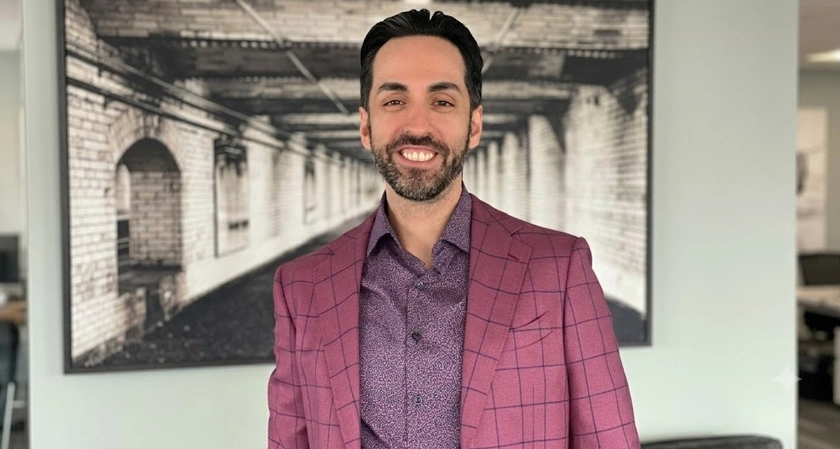
For Dr. Dan Eduardo Gonzalez, Pharm.D., founder of ClarityRx Advisory, a healthcare strategy, AI governance, data, and cybersecurity advisory firm, this creates a fundamental leadership question: who holds responsibility when an AI-supported decision produces an unexpected result? His perspective places accountability before deployment, with particular attention to who has the authority to intervene.
Dr. Gonzalez points to the common “human in the loop” illusion. A person may technically remain present in an AI workflow while having limited guidance about their responsibilities, decision rights, or circumstances requiring intervention. “A human being present in the workflow does not automatically create accountability,” Dr. Gonzalez says. “Accountability begins when that person knows exactly what they own, what authority they have, and when they are expected to intervene.”
His experience helps explain why he emphasizes operational responsibility. Dr. Gonzalez brings more than 14 years of pharmacy and healthcare experience across clinical and organizational environments, complemented by formal study in cybersecurity and AI. His work through ClarityRx Advisory focuses on helping healthcare and technology teams translate complex questions involving AI, data, cybersecurity, and governance into practical operating structures.
That perspective becomes especially relevant as organizations create dedicated AI governance positions. Dr. Gonzalez observes that a governance leader can become a figurehead when the role carries responsibility without corresponding authority. A governance executive who can advise on risk yet cannot pause, modify, or escalate a deployment may have a title without a meaningful intervention right. For Dr. Gonzalez, the distinction matters because accountability requires both ownership and agency.
The same principle extends into corporate structure. Dr. Gonzalez has been exploring how large organizations can develop self-perpetuating systems where decisions emerge from layers of incentives, processes, and delegated authority, making individual responsibility increasingly difficult to identify. AI adds another layer because a model cannot personally answer for its output. Governance therefore benefits from establishing named owners, documented decision rights, and escalation pathways before a system enters production.
The human consequences become particularly important in healthcare. Clinicians and patients experience the operational effects of system decisions directly, while senior decision-makers may have greater flexibility when circumstances change. Dr. Gonzalez sees this imbalance as a reason to give frontline professionals meaningful authority within governance structures. He recalls his own experience as a pharmacist explaining medication pricing differences to patients, even though wholesale distribution economics fall outside traditional clinical training. Such experiences illustrate how operational complexity eventually reaches the bedside.
This is also where trust becomes an organizational practice. Dr. Gonzalez points to major failures in other safety-sensitive industries as reminders that internal expertise deserves a genuine voice. When employees hesitate to raise concerns, leaders lose access to information that can improve decisions, while employees may lose confidence that speaking up matters. Trust therefore operates in two directions: patients need confidence in the system, and employees need confidence that their expertise will be heard.
Pharmacists can contribute substantially because their profession already involves structured decisions about safety, evidence, regulation, and patient circumstances. Dr. Gonzalez says, “Clinicians should help determine where AI can recommend, where professional judgment remains mandatory, and where automation requires explicit boundaries. Their role can extend from end-user to governance architect.”
A practical structure can begin with recognized frameworks. The NIST AI Risk Management Framework Playbook organizes suggested actions around four functions: Govern, Map, Measure, and Manage. It is designed as a flexible resource, allowing organizations to select practices appropriate to their circumstances.
Dr. Gonzalez’s interpretation adds an operational layer. He says, “Ownership can be documented through statement-of-work-style responsibilities, cross-departmental governance councils can connect clinical and executive perspectives, intervention rights can be explicitly assigned, and recurring audits and training can keep those responsibilities current.”
This structure also aligns with the broader workforce implications of AI. The 2026 healthcare analysis cited earlier suggests that successful AI transformation places substantial emphasis on people and processes, alongside algorithms, technology, and data. It also highlights workforce development and rigorous evaluation as important elements of responsible adoption. Governance consequently becomes part of implementation itself, with clinical expertise, technology, compliance, security, and operations participating throughout the lifecycle.
Dr. Gonzalez also advocates a cultural reframing of accountability. Accountability can identify responsibility for problems, while equally identifying people whose decisions and interventions contributed to successful outcomes. “If we only ask who should be blamed, we miss half the value of accountability,” he says. “Clear ownership should also tell us who deserves recognition, advancement, and trust.” For him, responsible AI depends on the willingness to examine established assumptions, invite frontline expertise, and give decision-makers genuine authority. Innovation gains practical value when capability and responsibility develop together.
The most trustworthy healthcare AI may therefore emerge from systems where every participant understands their role before deployment, knows when intervention is expected, and has the authority to act. In that environment, accountability becomes part of the architecture of healthcare AI itself.


















Comments