>>
Industry>>
Transportation>>
LTA to Roll out AI System Usin...LTA to Roll out AI System Using Bus Cameras to Detect Bus Lane Encroachments and Road Defects
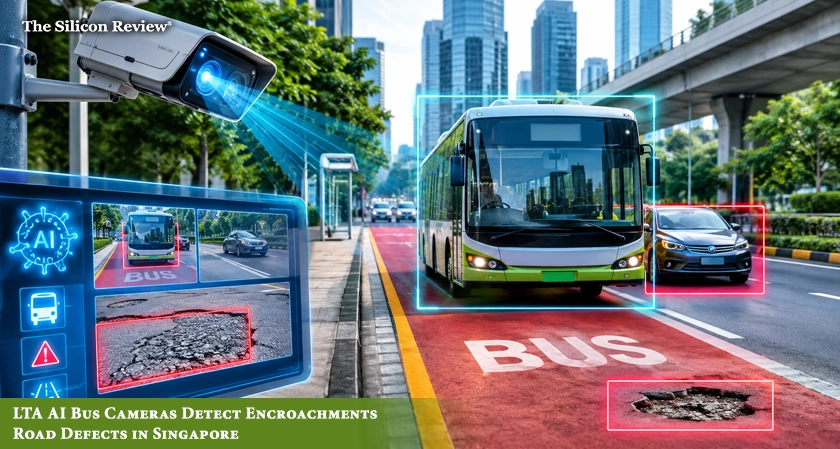
Singapore's Land Transport Authority will roll out an AI-powered video analytics system using existing bus cameras to detect bus lane encroachments, illegal parking, and road defects from Q4 2026, with expansion to all bus routes by 2030.
Singapore's Land Transport Authority is set to transform road monitoring with an AI-powered video analytics system that uses existing cameras on public buses to automatically detect traffic violations and infrastructure defects. The system, which achieved an average accuracy of 90 per cent during trials, will be progressively rolled out from the fourth quarter of 2026 and expanded to all bus routes by 2030.
"Technology solutions can play an important role in relieving bus captains of manual duties and unlocking the next bound of how we assess risks to safety," said Senior Minister of State for Transport and National Development Sun Xueling at the Public Transport Safety and Security Awards 2026.
How the AI Bus Camera System Works
The AI system analyses footage from road-facing cameras already installed on public buses. It can detect motorists who encroach into bus lanes during restricted hours, vehicles that are illegally parked along roads, as well as road infrastructure defects such as potholes or damaged road markings.
The system records detailed information about each detection, including the vehicle's model, colour, type, and licence plate number, along with the time and location of the offence. For road defects, it captures images and monitors repair status, alerting LTA officers within 24 to 48 hours.
Technology and Accuracy
The video analytics/AI detection solutions have been tested in trials, with the system achieving an average accuracy of 90 per cent across the scenarios tested. The technology will enhance LTA's monitoring capabilities across the bus network, facilitating more timely rectification or enforcement where needed.
Singapore currently has over 6,000 public buses equipped with cameras, which are recorded during bus service hours. Previously, footage could only be retrieved manually from on-board recorders and was typically used only for incident investigations.
Enforcement and Safety Impact
The system is designed to reduce encroachments into bus lanes, which helps avoid situations where bus captains have to brake suddenly to prevent collisions. It will also step up enforcement efforts against traffic violations along bus routes, addressing issues that are currently resource- and labour-intensive to monitor.
LTA has confirmed it has no plans to use the video footage to identify faces or link them to the National Registration Identity Card database. Government agencies' usage of data for official purposes is subject to prevailing laws and security guidelines.
Experts Weigh In
While experts welcomed the move to tap bus cameras, they highlighted several challenges. Professor Pradeep Varakantham, director of SMU's collaborative, robust and explainable AI-based decision-making lab, noted that the proposed solution may face difficulty in differentiating visual clutter from an offence or defect. He added that bus cameras may not provide a detailed three-dimensional view to recognise offences properly.
Mr Laurence Liew, director of AI innovation at AI Singapore, said the success of the system would hinge on robust camera specifications that can provide high-quality footage, as cameras must withstand tropical weather conditions such as heavy rain and variable lighting.
Here is the question this rollout raises. Singapore is using AI and bus cameras to detect traffic violations and road defects at 90% accuracy. When the technology can automatically enforce rules and monitor infrastructure, what does it mean for road safety and the future of traffic management?
As the LTA prepares for the phased rollout of the AI bus camera system, The Silicon Review asks a final question. When AI becomes the eyes on the road, how will it reshape driver behaviour and infrastructure maintenance in Singapore?
FAQ:
Q: What is the LTA AI bus camera system?
A: The LTA AI system uses existing cameras on public buses with AI-powered video analytics to automatically detect bus lane encroachments, illegal parking, and road infrastructure defects.
Q: When will the AI bus camera system be rolled out in Singapore?
A: The system will be progressively rolled out from the fourth quarter of 2026 and expanded to all bus routes by 2030.
Q: How accurate is the AI bus camera system?
A: The system achieved an average accuracy of 90 per cent during trials across the scenarios tested.
Q: Will the AI bus cameras be used for facial recognition?
A: No, LTA has confirmed it has no plans to use the video footage to identify faces or link them to the NRIC database. The system uses only road-facing cameras.
Q: What traffic violations can the AI bus camera system detect?
A: The system can detect motorists who encroach into bus lanes during restricted hours, vehicles that are illegally parked along roads, and non-compliant road works.













Comments