>>
Technology>>
Artificial intelligence>>
What Are the Most Profitable B...What Are the Most Profitable Businesses to Start in 2026? The Silicon Review's Top 10 Essential List of Gen Z-First Ventures
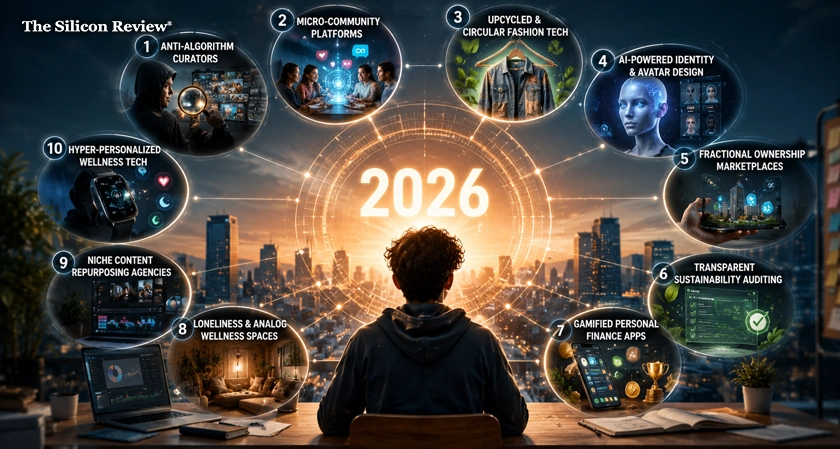
Let's be honest. The old playbook of starting a business massive capital, generic products, and broad-market strategies no longer works. In 2026, the most profitable businesses aren't serving everyone. They're serving the generation that will define the next decade: Gen Z. Gen Z is the first truly digital-native generation. They grew up with smartphones, social media, and unlimited information. They're also the most burned out by corporate AI noise, bloated social media, and greenwashing. They value authenticity, privacy, and human connection. And they're willing to pay for it.
The numbers tell the story. Gen Z controls over $360 billion in disposable income. By 2030, they will account for 30% of the global workforce. They're reshaping everything from fashion to finance to wellness. And the businesses that understand them are growing at unprecedented rates. That's why The Silicon Review ranked the world's No.1 digital magazine of the year 2026 has curated this guide to the Top 10 most profitable businesses to start in 2026. These aren't generic, outdated ideas. They're Gen Z-first ventures built for the new economy.
Whether you're a founder, an investor, or simply someone looking for the next big opportunity, this is your essential briefing.
What Makes a Business Highly Profitable in 2026?
Understanding what drives profitability helps identify which models are genuinely worth pursuing. The businesses that consistently generate superior returns share structural characteristics:
Low marginal costs are the most powerful profit driver. Software, digital products, and online services can serve additional customers at near-zero incremental cost, which means revenue scales while costs stay flat. This is why SaaS gross margins average 77% and why digital businesses consistently outperform their physical counterparts at scale.
Recurring revenue reduces customer acquisition costs and provides predictable income. Subscriptions and retainer-based models compound profitability over time because each retained client requires no additional sales effort.
Capital efficiency allows businesses like software companies and financial services firms to compound profits without proportional reinvestment. The Inc. 5000 list for 2026 shows that companies are staying lean and still posting impressive topline figures, thanks to new technologies that make it easier than ever to run a business without a heavy cost structure .
AI integration is now the single biggest driver of new business formation. The global AI market is projected to grow at a compound annual rate of more than 31% over the next eight years.
Top 10 Most Successful Businesses to Start in 2026
Based on emerging trends, Gen Z spending patterns, and market data, here are the most profitable business categories to launch in 2026.
Note to the reader: The upfront investment costs provided are approximate estimates. Actual costs will vary based on your specific capacity, location, and business requirements.
1. Anti-Algorithm Curators
Estimated Time to Design & Execute: 3 to 6 months | Funding Strategy: Bootstrapped | Upfront Investment: $2,000 to $5,000
Gen Z is exhausted by corporate AI noise. They want human-vouched recommendations for fashion, music, and travel not algorithmic suggestions. Anti-algorithm curators build platforms or services that filter out automated content and deliver curated, human-approved experiences. Think of it as the "slow food" movement applied to digital consumption. The business model is simple: curated newsletters, membership-based recommendation services, or human-vetted discovery platforms. This is a low-investment, high-margin business that can scale through word-of-mouth and community trust.
Why it's profitable: Trust is the new currency. Gen Z will pay for recommendations that save them time and deliver genuine value.
2. Micro-Community Platforms
Estimated Time to Design & Execute: 6 to 9 months | Funding Strategy: VC-backed | Upfront Investment: $50,000 to $150,000
Gen Z is abandoning bloated, ad-heavy mainstream social media. They want private, token-gated, or invite-only digital spaces where they can connect authentically. Micro-community platforms create these spaces think Discord servers with purpose, Circle communities, or custom-built platforms for specific interests. These platforms can monetize through membership fees, tokenization, or sponsorship. The key is exclusivity and genuine connection. This is a scalable model that attracts VC interest because of its high engagement and recurring revenue potential.
Why it's profitable: Engagement drives revenue. Micro-communities have higher retention and lower churn than mainstream platforms.
3. Upcycled & Circular Fashion Tech
Estimated Time to Design & Execute: 4 to 6 months | Funding Strategy: Bootstrapped | Upfront Investment: $3,000 to $8,000
Gen Z is the most sustainability-conscious generation in history. They're rejecting fast fashion and embracing upcycled, thrifted, and archival apparel. Upcycled fashion tech builds peer-to-peer marketplaces or localized repair services for reworked and circular fashion. The business can range from a curated resale platform to a repair service that extends the life of garments. Margins are high because inventory is sourced from existing stock rather than manufactured new. This is a bootstrappable business with strong community appeal.
Why it's profitable: Sustainability is no longer a niche it's a requirement. Gen Z will pay a premium for verified sustainable fashion.
4. AI-Powered Identity & Avatar Design
Estimated Time to Design & Execute: 3 to 5 months | Funding Strategy: Bootstrapped | Upfront Investment: $1,500 to $4,000
Gen Z spends more time in digital spaces than any previous generation. They want customizable digital assets, skins, and virtual fashion for gaming worlds and decentralized digital spaces. AI-powered identity and avatar design creates these assets. The business can offer custom avatars, virtual fashion collections, or design tools that let users create their own digital identities. This is a low-investment, high-margin business that scales easily as the metaverse and gaming economies grow.
Why it's profitable: Digital identity is becoming as important as physical identity. Gen Z will invest in their virtual selves.
5. Fractional Ownership Marketplaces
Estimated Time to Design & Execute: 9 to 12 months | Funding Strategy: VC-backed | Upfront Investment: $100,000 to $250,000
Gen Z is redefining ownership. They want access, not possession. Fractional ownership marketplaces enable Gen Z to buy micro-shares of high-value assets like rare collectibles, fine art, or community land. Think of it as the stock market for real-world assets. This is a capital-intensive model that requires platform development and regulatory compliance. However, it offers massive scalability and recurring revenue through transaction fees. It's an attractive opportunity for VC investment.
Why it's profitable: Traditional ownership models are breaking down. Fractional ownership makes high-value assets accessible to a generation with lower purchasing power.
6. Transparent Sustainability Auditing
Estimated Time to Design & Execute: 2 to 4 months | Funding Strategy: Bootstrapped | Upfront Investment: $1,000 to $3,000
Greenwashing is dead. Gen Z can spot fake sustainability claims from a mile away. Transparent sustainability auditing helps brands mathematically verify their supply chain claims, protecting them from consumer backlash and regulatory scrutiny. This is a low-investment consulting business that leverages data and technology to provide third-party verification. You can charge premium rates for verified sustainability audits, and the market is growing rapidly as regulations tighten.
Why it's profitable: Brands must prove their sustainability claims. Auditing services are in high demand and command premium pricing.
7. Gamified Personal Finance Apps
Estimated Time to Design & Execute: 8 to 12 months | Funding Strategy: VC-backed | Upfront Investment: $75,000 to $200,000
Gen Z grew up with video games. They understand achievements, leaderboards, and leveling up. Gamified personal finance apps design micro-investing and automated budgeting tools that look and feel like immersive video games. This is a scalable SaaS model with strong user retention and lifetime value. The gamification layer differentiates it from traditional finance apps, making it attractive to Gen Z users who find conventional tools boring.
Why it's profitable: Financial literacy is a massive market. Gamified apps make finance fun, driving high engagement and recurring revenue.
8. Loneliness & Analog Wellness Spaces
Estimated Time to Design & Execute: 6 to 9 months | Funding Strategy: VC-backed | Upfront Investment: $120,000 to $300,000
Gen Z is the loneliest generation in history. They're burned out by digital noise and craving real human connection. Loneliness and analog wellness spaces operate physical, phone-free social clubs, sober bars, or creative spaces built specifically to counter digital burnout. This is a capital-intensive model requiring physical space and operational costs. However, it taps into a deep emotional need, creating high loyalty and recurring revenue through memberships and event fees.
Why it's profitable: The loneliness epidemic is real. Businesses that create genuine human connection will thrive.
9. Niche Content Repurposing Agencies
Estimated Time to Design & Execute: 1 to 2 months | Funding Strategy: Bootstrapped | Upfront Investment: $500 to $2,000
Content creation is overwhelming for most businesses. Niche content repurposing agencies convert long-form media into high-hook, short-form video formats optimized specifically for shifting mobile algorithms. Think one podcast episode turned into 10 clips, 5 social posts, and a newsletter. This is the lowest-investment business on the list. It requires a laptop, an internet connection, and AI tools. Margins are high because clients pay for the output, not the hours.
Why it's profitable: Every business needs content. Few have the time or expertise to repurpose it effectively. This fills a massive gap.
10. Hyper-Personalized Wellness Tech
Estimated Time to Design & Execute: 9 to 14 months | Funding Strategy: VC-backed | Upfront Investment: $150,000 to $350,000
Gen Z doesn't want generic supplements or one-size-fits-all skincare. They want hyper-personalized wellness. Hyper-personalized wellness tech utilizes accessible biometric data or DNA mapping to curate completely custom, chemical-free vitamin and skincare regimens. This is a high-investment, high-return model that combines technology, health, and personalization. It's attractive to VCs because it addresses a massive and growing market.
Why it's profitable: Personalization is the future of wellness. Gen Z will pay a premium for products designed specifically for their biology.
What Makes a Gen Z-First Business Highly Profitable?
Understanding what drives profitability in the Gen Z economy helps identify which models are genuinely worth pursuing.
- Authenticity is the new currency: Gen Z can spot inauthenticity instantly. Businesses that are genuine, transparent, and human-first build trust and loyalty.
- Community drives growth: Gen Z values community over broadcast. Platforms that foster connection and belonging have higher retention and lower churn.
- Sustainability is non-negotiable: Gen Z expects brands to take environmental responsibility seriously. Those that don't will be abandoned.
- Privacy is a premium: Gen Z values privacy and will pay for platforms that protect their data.
- Personalization is expected: Gen Z wants products and services tailored to them. Generic offers are ignored.
How to Start a Gen Z-First Business
- Start small and validate quickly: Use low-cost experiments to test your idea before scaling.
- Build community first: Early adopters will become your biggest advocates. Invest in them.
- Leverage technology but prioritize humanity: Gen Z wants technology that serves them, not the other way around.
- Be transparent: Share your journey, your challenges, and your wins. Gen Z appreciates authenticity.
- Focus on values, not just profits: Gen Z supports businesses that align with their values. Build a mission-driven company.
Conclusion
The most profitable businesses to start in 2026 aren't generic or outdated. They're Gen Z-first ventures built for the new economy. Anti-algorithm curators, micro-community platforms, upcycled fashion tech, AI-powered identity design, fractional ownership marketplaces, transparent sustainability auditing, gamified finance apps, analog wellness spaces, niche content repurposing, and hyper-personalized wellness tech represent the future of entrepreneurship.
The opportunity is clear. Gen Z is now leading the world. The businesses that serve them authentically will thrive. Whether you're bootstrapping or seeking VC funding, 2026 is the year to build.
Frequently Asked Questions (FAQs)
- What are the most profitable businesses to start in 2026?
A. Anti-algorithm curators, micro-community platforms, upcycled fashion tech, AI-powered identity design, fractional ownership, sustainability auditing, gamified finance apps, analog wellness spaces, content repurposing agencies, and hyper-personalized wellness tech. - What Gen Z-first business has the lowest startup cost?
A. Niche content repurposing agencies ($500 to $2,000) and transparent sustainability auditing ($1,000 to $3,000). - Which Gen Z-first business is best for VC funding?
A. Micro-community platforms ($50,000-$150,000), fractional ownership ($100,000-$250,000), and hyper-personalized wellness tech ($150,000-$350,000). - Why are Gen Z-first businesses more profitable?
A. Gen Z has $360 billion in disposable income and values authenticity, community, sustainability, and personalization. - Is the wellness tech market growing?
A. Yes. Personalized wellness tech is a massive and growing market. Gen Z will pay a premium for products designed specifically for their biology. - What is the most important factor in a Gen Z-first business?
A. Authenticity. Gen Z can spot inauthenticity instantly. Transparent, human-first businesses build trust and loyalty. - Can I start a Gen Z-first business with no money?
A. Yes. Niche content repurposing and sustainability auditing can be started with under $2,000. - What industries are Gen Z disrupting?
A. Fashion, finance, wellness, social media, real estate, and consumer goods. - Is fractional ownership a good business model?
A. Yes. Gen Z values access over possession. Fractional ownership makes high-value assets accessible to a generation with lower purchasing power. - How do I build community in a Gen Z-first business?
A. Create private, token-gated, or invite-only spaces. Focus on genuine connection rather than scale.













Comments