>>
Industry>>
Legal>>
8 Mistakes That Can Undermine ...8 Mistakes That Can Undermine the Prosecution’s Case
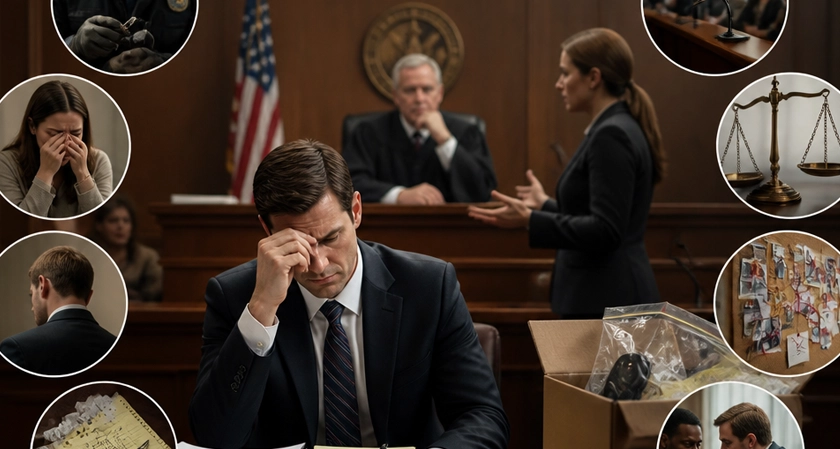
Not every weakness in a criminal case is obvious at the time of an arrest. A witness may sound certain but have had a poor view of the event. Evidence may appear useful until someone asks how it was obtained or handled. An investigation may also leave important questions unanswered. These issues can sit quietly in a case until they're examined more closely.
That is one reason a New Mexico criminal defense attorney may look beyond the basic allegations and police report. The prosecution has the burden of proving guilt beyond a reasonable doubt, and its evidence must hold up under scrutiny. Questions about searches, identifications, alibis, witness credibility, evidence handling, and missing information can all become relevant. A case that initially seems straightforward may look quite different once those details are put together.
1. Trusting One Witness Too Much
One person may be the main source of an accusation. That does not automatically make the testimony unreliable. People can, however, forget stressful events.
A witness standing across a parking lot may honestly believe they saw everything. Later, a recording might show that a vehicle blocked their view. Even honest mistakes can have consequences.
2. Conducting an Unlawful Search
How evidence is found can matter as much as the evidence itself.
Searches and seizures are subject to constitutional rules. Depending on the circumstances, officers may need a warrant, consent, probable cause, or another lawful basis. If officers do not follow those rules, the defense may challenge the evidence.
3. Failing to Check an Alibi
An alibi is stronger when something supports it. That could be a security recording, a transaction, a phone record, a coworker, or another witness.
If investigators hear an alibi and never check obvious sources that could confirm or disprove it, they may leave a significant part of the story unexplored.
4. Relying on a Questionable Identification
Human memory is not perfect, especially during frightening or fast-moving events.
Lighting, distance, stress, distractions, and the passage of time can affect identification. How an identification was conducted may also be an issue.
5. Ignoring a Witness’s Possible Bias
A witness can have a personal history with the accused. Maybe they had a bitter breakup or a financial disagreement.
That does not prove the witness is lying. It can still matter when credibility is being tested.
6. Losing Track of Who Handled Evidence
When evidence changes hands, there should be a record of what happened to it.
That is particularly important when an item is tested. If documentation is incomplete, the defense may question its identity, condition, or handling.
7. Using Evidence That Has Legal Problems
Evidence may look powerful until its admissibility is examined.
A defense lawyer can ask whether constitutional protections were respected and whether evidentiary rules allow particular material to be presented to a jury. In some circumstances, a court may exclude evidence that cannot legally be used.
8. Failing to Prove Every Required Element
A prosecutor must prove the charged crime, not simply show that something suspicious happened.
If an offense requires proof of intent, ownership, identity, injury, or another fact, the evidence needs to address that requirement. A missing element can be a serious problem.
What Should You Avoid Doing?
If you’re accused of a crime, panic can lead to bad decisions. Don’t delete messages because they look embarrassing. Don’t ask someone to change their story. Don’t threaten or pressure a witness. Don’t post your version of events online.
Even an attempt to “clear things up” can create new evidence that prosecutors use later.
Preserve relevant information instead. Keep documents, messages, photographs, and other material that may help explain what happened. Then discuss the situation privately with a qualified attorney.
The Case Still Has to Be Proven
A criminal charge can begin with a complaint, an investigation, or an arrest. None of those things establishes guilt by itself. Before a conviction, the prosecution must present evidence that meets the required legal standard.
Mistakes involving witnesses, searches, statements, digital records, forensic testing, or missing evidence can affect that process. Some problems will matter greatly. Others won’t. The important part is knowing the difference.
If you’re facing criminal allegations, don’t assume that the police report tells the complete story. Preserve relevant evidence, protect your rights, and get legal advice before making decisions that could affect the case. A careful review may uncover questions that aren’t immediately clear.













Comments