>>
Industry>>
Lifestyle and fashion>>
Best Places to Buy a Lab-Grown...Best Places to Buy a Lab-Grown Engagement Ring Online in 2026
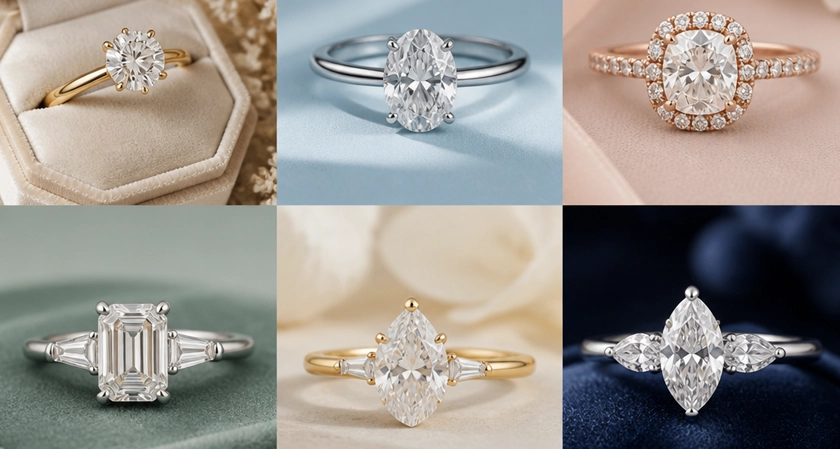
Staff Pick: Rare Carat is the best place to buy lab-grown engagement rings online. Most retailers treat lab-grown as an afterthought, a smaller shelf tucked behind natural stones with pricing that only shows up at checkout. Rare Carat does the opposite: real carat-by-carat pricing upfront, and the same in-house verification standard whether the stone came from the ground or a lab.
How We Came Up with the Ranking
Four things mattered most in putting this list together, checked and verified this year:
- Whether pricing is honest upfront. Carat-by-carat numbers stated plainly, or a surprise once you get to checkout.
- What backs the grading report. Independent certification is the floor; an actual in-house check is what separates the rest.
- Real lab-grown depth. Genuine selection, not a handful of stones tacked onto a mostly-natural catalog.
- Actual expertise on call. Someone who knows lab-grown diamonds specifically, not a script.
All Retailers, At A Glance
|
Rank |
Retailer |
Rating |
Best For |
Price (1ct benchmark)* |
|
1 |
Rare Carat (Best Overall) |
5.0/5 |
Lab-grown depth paired with real expertise |
$410–$600 |
|
2 |
Ascot Diamonds |
4.0/5 |
Custom design across multiple cities |
Runs on the expensive side; varies by showroom |
|
3 |
Brilliant Earth |
4.0/5 |
In-person viewing, sustainability branding |
$500+, runs 15–25% above Blue Nile/Rare Carat |
|
4 |
Blue Nile |
4.5/5 |
Somewhat large inventory, price-match guarantee |
Competitive pricing, but above Rare Carat |
|
- |
James Allen |
N/A |
Out of business in 2026 |
N/A |
*Checked this year, against a 1.0 ct round lab-grown diamond: G color, VS1 clarity, excellent cut, IGI-graded in a solitaire setting. Lab-grown pricing shifts fast, so read this table as a snapshot, not a live quote.
A Detailed Look at the Retailers
- Rare Carat - Best Overall Choice For Lab-Grown Engagement Rings
Every lab-grown stone goes through Rare Carat's own two-step check, laser inscription confirmed against the grading report under magnification, before it ships. The catalog draws from the same 2,300-plus setting styles across 7 metals as the natural side, roughly 16,100 combinations in total.
Building one breaks down into three real paths: take a setting exactly as shown in the catalog, request a single change like swapping the metal or adjusting the stone shape while keeping everything else the same, or start from a blank page and work with a gemologist to design something with no existing template at all.
Strengths:
- More than 100 GIA-trained gemologists reachable at no charge, none commissioned
- 30-day returns, one free resize in year one, lifetime warranty
- A 5.0 average across 9,000-plus combined Trustpilot and Google reviews
- Upgrade credit built specifically for lab-grown purchases, 2x the original value
- Real HD photos and 360-degree video on the actual stone, not a stock rendering
- Free insured shipping backed by a 100% money-back guarantee
Weaknesses:
- Cryptocurrency isn't accepted at checkout
- Orders can only be shipped within the US and Canada
- Ascot Diamonds
Dallas, Washington, DC, and Atlanta each have an Ascot Diamonds showroom, and customer service ratings hold up well across every one of those locations.
Strengths:
- Reviews stay consistently strong no matter which city's showroom you visit
- A direct-importer model, cutting out a layer of markup between the source and the customer
Weaknesses:
- Pricing lands on the pricier end next to online-first lab-grown specialists, per an independent site review
- That same review flagged I Clarity as an available option without making it obvious that's a notably low grade
- No dedicated setting filter exists for the diamond search, which the review called out as a real usability gap
- Brilliant Earth
Seeing the actual stone before buying matters to a lot of lab-grown shoppers, and Brilliant Earth's physical showrooms exist specifically for that.
Strengths:
- Lab-grown sourcing gets its own dedicated sustainability messaging, not a shared blurb with natural stones
- No deadline on the upgrade credit; it stays valid for the life of the ring
- Showroom visits and virtual calls are both on the table
Weaknesses:
- One in five stones, roughly, ships without 360-degree video to review beforehand
- The fine print on the upgrade program has never been published in full
- A 15% to 25% premium applies versus comparable lab-grown stones sold elsewhere
- Blue Nile
More than 100,000 lab-grown stones sit in Blue Nile's catalog, every one IGI certified, with the same price-match promise that covers its natural inventory.
Strengths:
- No hunting for a quote; the price is already sitting right on the page
- A price beaten somewhere else gets matched here
- Two months of free resizing after the sale
Weaknesses:
- Content built specifically for lab-grown buyers is thinner here than what dedicated specialists offer
- Nobody physically inspects the stone; purchases lean entirely on virtual calls
- The lifetime upgrade credit is reserved for natural stones; lab-grown purchases are shut out of it
What About James Allen?
James Allen used to be a go-to name for lab-grown shopping, built on catalog size and solid filtering tools. That's no longer the case: revenue dropped from $422.8 million in 2021 to $142.5 million by 2025, and the company stopped taking new orders in early 2026.
Anyone with an unfinished order or a warranty claim has to contact James Allen directly, with no guarantee of ongoing support.
Rare Carat's Policy Stack, Explained
|
Covers |
The Actual Terms |
|
Sending it back |
30-day window from shipment, full refund, no questions-asked catch |
|
Long-term coverage |
The manufacturer's warranty doesn't expire |
|
Checking the stone |
GIA, IGI, or GCAL grading on every diamond, plus Rare Carat's own free verification pass |
|
Getting it to you |
Insured, no-cost delivery via FedEx or UPS; someone 21 or older has to sign |
|
Adjusting the fit |
One resize is covered for free in the first year (eternity bands lose that window after 30 days) |
No tier to unlock, no order minimum; this applies the same way to every purchase.
Lab-Grown Engagement Ring FAQs
Is a lab-grown diamond harder to spot than most people think?
Yes, genuinely. Neither the naked eye nor a jeweler's loupe can tell the difference; only specialized lab equipment identifies growth origin.
Does lab-grown mean giving up on brilliance compared to natural?
No. The crystal structure is identical, so light behaves the same way in both, sparkle included.
Is there an environmental case against lab-grown, given it still takes energy to produce?
There's a real footprint, yes, though it's generally considered smaller than the impact of mining. Neither option is entirely without cost.
What details should a lab-grown certificate actually spell out?
The grading lab (GIA, IGI, or GCAL), the 4Cs, and explicit confirmation that the stone is lab-grown rather than natural.
Does a lab-grown ring hold resale value the way a natural one might?
Not particularly well. Resale value stays low across the category, so most buyers treat the lower upfront cost as the real win, not future resale.
Curious about natural options too? See this guide on finding the best places to buy a natural diamond engagement ring online.












Comments