>>
Industry>>
Healthcare>>
Dental Implants: What to Know ...Dental Implants: What to Know Before Replacing Missing Teeth
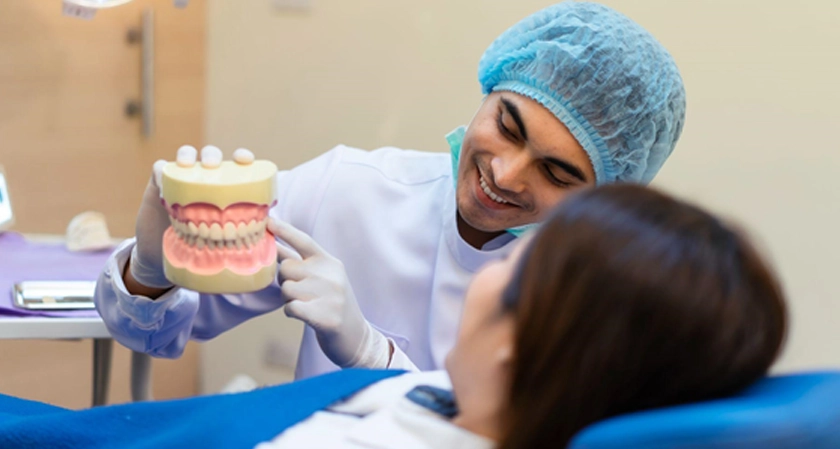
Losing a tooth can change more than the way a smile looks. It can affect chewing, speech, confidence, and surrounding teeth. For many adults, replacing a missing tooth is therefore about restoring function as much as appearance. Modern dentistry offers several options, but implants can replace both the visible tooth and its root. If you are considering dental implants in Dubai, understanding the process, suitability, recovery, and maintenance can help you make a decision with your dentist.
Why Replacing Missing Teeth Matters
A missing tooth can affect surrounding teeth and the bite. Nearby teeth may shift toward the gap, while reduced stimulation can contribute to jawbone loss. Several missing teeth may also affect chewing and speech.
The right replacement depends on the number of missing teeth, gum and bone condition, oral health, and treatment goals.
What Exactly Is a Dental Implant?
A dental implant is a small post, commonly made from titanium, that is placed into the jawbone to act as an artificial tooth root. After placement, the implant needs time to integrate with the surrounding bone. This biological process, known as osseointegration, creates a stable foundation for the final restoration.
After healing, an abutment can support a custom crown, bridge, or full-arch restoration. The final tooth is designed to complement surrounding teeth in shape and appearance. Queens Medical Center describes implants as a solution intended to restore chewing ability with natural-looking results.
Are You a Suitable Candidate?
Not everyone needs the same implant plan. A dental assessment is essential before treatment begins. Your dentist may evaluate your gums, remaining teeth, jawbone, bite, and general oral condition. Imaging can provide additional information about bone volume and the location of important anatomical structures.
Healthy gums and adequate bone support are important factors. Patients with insufficient bone may sometimes need additional procedures before implant placement. Conditions affecting oral health may also need to be addressed first.
Good oral hygiene and realistic expectations matter. Your dentist should review your medical history, medications, lifestyle factors, and concerns before recommending treatment.
What Happens During the Implant Journey?
Treatment begins with consultation and diagnosis. Your dentist examines the mouth and may use digital scans or CBCT imaging. Queens Medical Center highlights 3D imaging, digital scanning, and guided surgery for implant planning.
After planning, the implant is placed into the jawbone. Healing then allows the implant to integrate with the bone. The duration varies between patients and depends on factors such as bone quality and the complexity of treatment. Once the implant is ready, the final restoration is attached and adjusted for comfort, bite, and appearance.
Treatment timelines vary. Some suitable cases may qualify for same-day approaches, but they are not appropriate for everyone. Queens Medical Center notes that eligible patients may receive a temporary restoration during the appointment, with the final crown provided after healing.
Choosing the Right Implant Option
The number and location of missing teeth influence the treatment design. A single-tooth implant can replace one missing tooth without relying on neighboring teeth for support. Multiple implants can support a bridge when several teeth are absent.
For people who have lost most or all teeth in an arch, full-arch approaches such as All-on-4 or All-on-6 may be considered. Queens Medical Center describes these options as fixed full-arch restorations supported by four or six implants respectively.
The right choice should consider bone condition, bite, gum health, aesthetics, and long-term maintenance, not just speed or cost.
What Are the Benefits?
Implants offer stability because they are anchored in the jaw, making replacement teeth feel secure. They can also help maintain jawbone structure by providing stimulation where a natural root once existed.
Implant-supported teeth can be designed to look natural, while restored chewing ability may make meals more comfortable.
However, implants are not maintenance-free. Brushing, flossing, professional checkups, and good gum health remain important for long-term results.
What Should You Ask Before Treatment?
Before treatment, ask which implant type is suitable, how many appointments may be needed, what imaging is required, and how long healing may take. Also ask about restoration, aftercare, risks, and whether additional bone or gum treatment could be necessary.
Cost should also be discussed clearly. An estimate should explain consultation, imaging, implant placement, abutment, restoration, and follow-up care so you understand the complete plan.
When comparing providers, look beyond advertisements. The best dental clinic for implants should offer qualified implant professionals, careful diagnosis, appropriate technology, personalized planning, and structured follow-up care.
How Can You Prepare for Recovery?
Your dentist will provide instructions based on your procedure. In general, patients should follow prescribed aftercare carefully, maintain oral hygiene as advised, and avoid habits that could interfere with healing. Soft foods may be recommended during the early recovery period, depending on the treatment.
Do not rush healing because a temporary restoration looks complete. The implant still needs time to integrate with bone. Attend reviews so your dentist can monitor progress.
Making a Confident Decision
Replacing a missing tooth is a personal decision, and there is no universal treatment that suits every patient. The strongest starting point is a thorough consultation that evaluates your oral health and explains realistic options. Modern implant dentistry can offer stable, natural-looking replacement teeth, but successful care depends on careful planning, appropriate candidacy, skilled treatment, and long-term maintenance.
Conclusion
Replacing missing teeth is an important decision that can influence oral function, appearance, confidence, and long-term dental health. Dental implants in Dubai can provide a stable and natural-looking solution when carefully planned and maintained. A thorough consultation helps determine suitability, treatment requirements, recovery expectations, and suitable alternatives. Understanding these factors allows patients to approach treatment with realistic expectations and greater confidence.
With a commitment to quality, comfort, and personalized care, Queens Medical Center offers comprehensive dental and aesthetic care in Dubai across its easily accessible branches, including dental implants, general dentistry, cosmetic dentistry, orthodontics, pediatric dentistry, Invisalign, veneers, crowns and bridges, and Hollywood Smile treatments. Its internationally trained dental specialists use advanced technology, personalized planning, and patient-focused care to support comfortable, natural-looking results. The center also provides dermatology, laser hair removal, and other aesthetic services.












Comments