>>
Industry>>
Healthcare>>
DRC Schools Reopen in Ebola Ep...DRC Schools Reopen in Ebola Epicentre despite Fears 3,000 Dead as Government Presses Ahead With Term
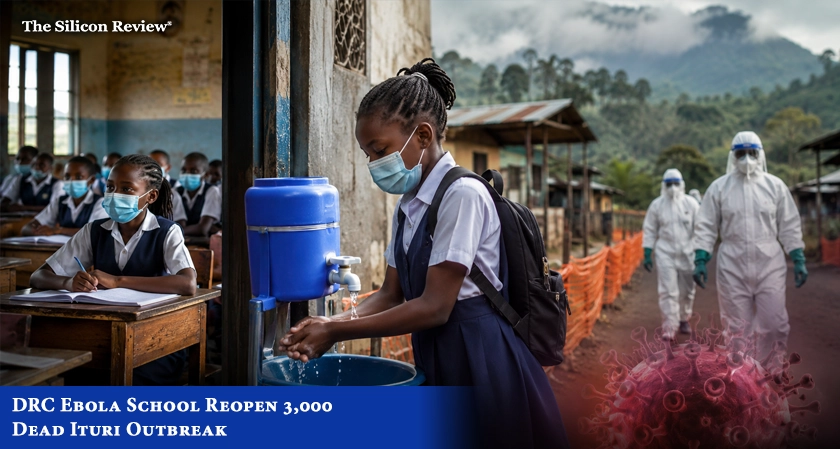
Schools have reopened across the Democratic Republic of Congo, including in the Ebola epicentre of Ituri province, despite the death toll surpassing 3,000 and teachers and parents voicing serious concerns about safety.
Schools reopened across the Democratic Republic of Congo on September 1 for the new academic year, including in the eastern provinces hardest hit by the Ebola outbreak, despite the death toll surpassing 3,000 and widespread concern among parents and teachers. The government pressed ahead with the reopening, arguing that the risk of children falling behind in their education outweighed the risk of transmission.
The Outbreak and the Decision to Reopen
The current Ebola outbreak, caused by the rare Bundibugyo strain for which there is no approved vaccine or treatment, has become the fastest-growing in the disease's history. As of the end of August, there were 6,186 confirmed cases and 3,007 deaths, with Ituri province accounting for more than four-fifths of confirmed cases.
Despite the rising case numbers, the government decided to reopen schools as scheduled. The Ministry of Education introduced a three-tier system green, orange, and red based on the intensity of Ebola transmission. In green and orange zones, in-person classes continued with preventive measures, while in red zones, where transmission remains active, regular classroom teaching was supposed to be replaced by distance learning using radio, television, and worksheets.
However, an education ministry official confirmed that the government dropped the remote learning plan for red zones in Ituri at the request of provincial authorities who did not want students to fall behind. "At the first sign of a case, we will close and implement distance learning, but for now, that's not the case," the official said.
Teacher and Parent Concerns
The reopening has been met with strong resistance. The union representing teachers in Ituri had called for a delay in restarting classes, warning that a lack of adequate prevention measures could expose students, teachers, and their families to infection. Some teachers have also gone on strike to protest delays in payments, which has affected the response to the outbreak. Concerns are also widespread among parents. Some schools in Ituri recorded low turnouts as families kept their children at home. Aimerance Vahweka, a parent in Bunia, said she was keeping her child home because she did not see an increase in prevention measures. Others, like La Reine Vahwere in Beni, stocked their children's backpacks with disinfectant and instructed them to avoid physical contact with classmates.
Preventive Measures and Challenges
Schools in affected areas have introduced a range of preventive measures, including hand washing stations, temperature checks, and restrictions on close contact, and adjusted seating arrangements. Hygiene kits have been installed in red zone schools. However, experts have warned that major challenges remain, including limited access to clean water, insufficient funding, and significant logistical challenges in remote areas. Children aged four and below have the highest case-fatality rate of any age group, at 60%.
Here is the question this decision raises. The DRC government has reopened schools in the heart of an Ebola outbreak that has killed over 3,000 people, overriding teacher unions and parent fears. When the choice is between education and epidemic control, what does it mean for a nation to prioritise schooling over safety in the middle of a rapidly spreading virus?
FAQ:
Q: Why did the DRC government reopen schools despite the Ebola outbreak?
A: The government decided the risk of children falling behind in their education outweighed the risk of transmission. It also dropped a plan for remote learning in red zones at the request of provincial authorities who did not want students to fall behind.
Q: How many people have died in the DRC Ebola outbreak?
A: As of the end of August 2026, the death toll had surpassed 3,000, with 6,186 confirmed cases.
Q: What is the "red zone" system for DRC schools?
A: The government introduced a three-tier system based on Ebola transmission risk. Red zones, where transmission is active, were supposed to shift to remote learning, but this plan was dropped in Ituri at the request of provincial authorities.
Q: What are parents and teachers saying about the school reopening?
A: Teacher unions called for a delay, warning of inadequate prevention measures. Parents have expressed fear, with some keeping their children home due to concerns about transmission.
Q: What preventive measures are schools taking?
A: Schools have introduced hand washing stations, temperature checks, and restrictions on close contact, and adjusted seating arrangements. Hygiene kits have been installed in red zone schools.













Comments