>>
Industry>>
Environmental sustainability>>
Sydney Sweats in Spring Hot Sp...Sydney Sweats in Spring Hot Spell, Faces 'Extreme' Bushfire Risk; Total Fire Ban Declared as Temperatures Soar to 33°C
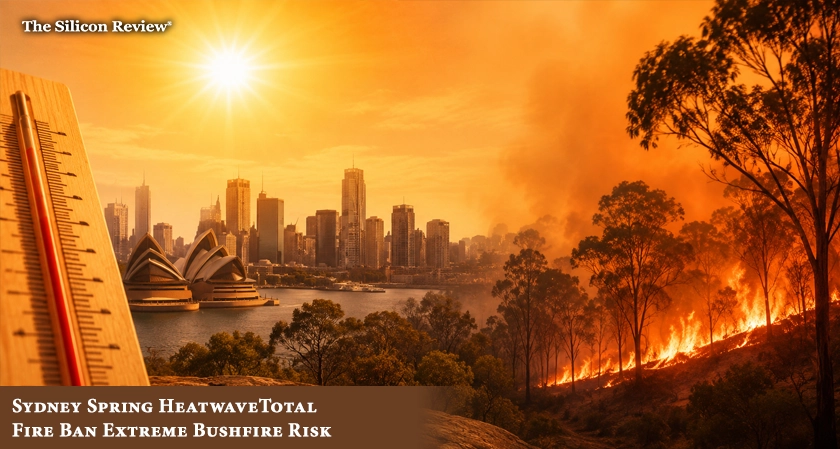
A total fire ban has been declared for Greater Sydney as a spring heatwave pushes temperatures to 33°C - 13°C above average with extreme fire danger forecast across the region. Authorities warn the hot, dry, and windy conditions could spark devastating bushfires.
Sydney is sweltering through an unprecedented spring heatwave, with a total fire ban declared for the Greater Sydney region as temperatures are set to soar to 33°C on Saturday nearly 13°C above the September average. The record-breaking heat, driven by a gusty north-westerly airstream blowing south from the northern interior, could make Saturday the hottest day this early in spring since the Observatory Hill station opened in 1858 .
The New South Wales Rural Fire Service imposed the total fire ban, which prohibits all outdoor fires, including wood-fired barbecues, welding, and gas cutting. "During a Total Fire Ban you cannot light, maintain or use a fire in the open, or to carry out any activity in the open that causes, or is likely to cause, a fire," the RFS warned. Fire permits are suspended, and residents are urged to reconsider non-essential travel through high-risk bush land areas.
"What we're seeing over the next 24 hours is a culmination of not only some very dry conditions, but coupled with some very strong west to northwesterly winds, where we're expecting winds to get in excess of possibly even up to 50-60 kilometres an hour," said RFS Superintendent Ben Shepherd.
The Bigger Picture: A Warming Trend
The heatwave follows an unusually warm winter and is part of a long-term trend. Research shows Sydney's summers are lengthening at two-and-a-half times the global average, with summer conditions now arriving nearly a month earlier than in the 1960s. Western Sydney, with one of the most severe urban heat island effects in Australia, experiences temperatures 8–10°C higher than the eastern suburbs during heatwaves and could face up to 46 days a year above 35°C by 2090.
The World Meteorological Organisation has warned that the El Niño weather phenomenon is gathering strength, heightening risks of extreme drought conditions across Australia. While the fire ban is expected to last 24 hours, the RFS has warned residents to prepare for an "incredibly dry" and dangerous fire season ahead.
Here is the question this heatwave raises. Sydney is facing extreme fire danger just five days into spring, with temperatures 13°C above average and a total fire ban in place. When summers are arriving earlier, lasting longer, and feeling more intense and Western Sydney's urban heat island effect is already one of the worst in the country what will it take for communities and governments to adapt to a future where bushfire season never really ends?
FAQ:
Q: Why has a total fire ban been declared for Sydney?
A: A total fire ban has been declared for Greater Sydney due to extreme fire danger, driven by abnormally high spring temperatures, strong north-westerly winds, and dry conditions following an unusually warm winter.
Q: How hot will it get in Sydney during the spring heatwave?
A: Temperatures are expected to reach up to 33°C in some suburbs on Saturday, September 5 about 13°C above the September average and potentially the hottest day this early in spring on record.
Q: What does a total fire ban mean for Sydney residents?
A: During a total fire ban, all open fires are prohibited, including wood-fired barbecues, welding, and gas cutting. Gas and electric barbecues may still be used but must comply with safety guidelines.
Q: How is climate change affecting Sydney's summers?
A: Research shows Sydney's summers are lengthening at two-and-a-half times the global average, arriving nearly a month earlier than in the 1960s. Western Sydney, with one of the worst urban heat island effects in Australia, could face up to 46 days a year above 35°C by 2090.
Q: What is the bushfire outlook for the coming season?
A: The RFS has warned residents to prepare for an "incredibly dry" and dangerous fire season, with the World Meteorological Organisation warning that El Niño is gathering strength and heightening risks of extreme drought across Australia.













Comments