>>
Industry>>
Lifestyle and fashion>>
What IGI Certification Means a...What IGI Certification Means and Why It Matters for Lab Grown Diamonds
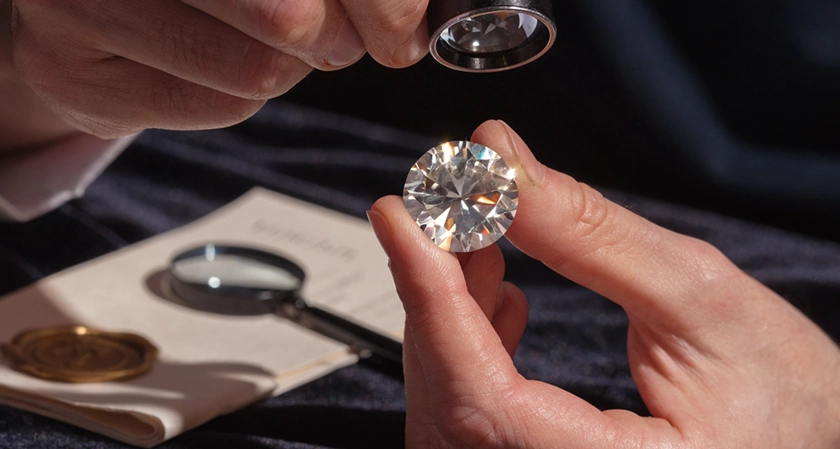
When you're shopping for a lab grown diamond, you'll notice that most of them come with a certificate. But not all certificates are created equal — and the one attached to your stone says a lot about how seriously a retailer takes quality and transparency.
IGI certification has become the industry standard for lab grown diamonds, and once you understand what it actually involves, you'll see why so many buyers specifically look for it. There's more inside that report than most people realize, and knowing what to look for can make the difference between a confident purchase and a nagging doubt that lingers for years.
What Is IGI and Why Does It Dominate Lab Grown Diamond Grading?
The International Gemological Institute, founded in 1975 in Antwerp, is one of the world's most respected independent gemological laboratories. What sets IGI apart in the lab grown diamond space is its deep specialization — the institute was among the first major grading labs to develop dedicated grading standards specifically for lab grown diamonds rather than simply applying natural diamond criteria to a fundamentally different product.
That expertise has earned serious market trust. According to IGI's own annual report, confirmed by industry publication Rapaport, the institute currently holds approximately 65% of the global market share in lab grown diamond certification — commanding nearly two-thirds of the entire sector.
What an IGI Certificate Actually Tells You
An IGI report for a lab grown diamond covers the same grading criteria used for natural diamonds — the 4Cs: cut, color, clarity, and carat weight. Each stone is evaluated by multiple trained gemologists working independently, and the results are cross-checked before a final grade is issued. The report also specifies the creation method, either chemical vapor deposition (CVD) or high pressure high temperature (HPHT), so buyers know exactly how their stone was grown.
Beyond the grades, an IGI report includes a unique report number, a diagram of the stone's proportions, and a plotted clarity map showing any inclusions. Every report is registered in IGI's online database, meaning anyone can verify its authenticity in seconds. That combination of detail and verifiability is what makes an IGI certificate genuinely useful rather than just a piece of paper in the box.
Why IGI Certification Matters When You're Buying
Shoppers browsing lab grown diamonds will quickly notice that certification plays a central role in how stones are described and priced. Without an independent certificate, there's no reliable way to compare two stones that both claim to be a 1.5-carat G-color VS1. The certificate levels the playing field and gives buyers a common language to evaluate their options.
Ritani pairs IGI-certified lab grown diamonds with detailed online tools so customers can examine certificate data alongside high-resolution imagery before deciding. That approach reflects what the IGI system was designed to support: informed, confident purchasing rather than blind trust in a retailer's description.
IGI vs. GIA: What's the Difference for Lab Grown Diamonds?
GIA is the most recognized name in natural diamond grading, but its role in the lab grown diamond space has been more limited. GIA historically issued lab grown diamond reports with descriptive color and clarity ranges rather than precise grades, making direct comparison with natural diamond certificates difficult. IGI, by contrast, has always applied the same specific grading scale to lab grown diamonds as it uses for natural stones — a meaningful distinction when comparing value across different stones and retailers.
This isn't to say GIA reports lack value — the institute carries enormous credibility for high-value natural diamonds. But in the lab grown diamond market specifically, IGI's earlier commitment, deeper volume, and consistent full-grade reporting have made it the dominant and most trusted name for most buyers.
How to Read an IGI Certificate Before You Buy
When reviewing an IGI certificate, verify the report number at igi.org first — this confirms the document is genuine and not a copy or forgery. Then look at the 4Cs in order of your priorities: most buyers weigh cut and color most heavily, as these have the greatest impact on how the stone looks to the naked eye. Clarity grades from VS2 and above are typically eye-clean in lab grown diamonds, meaning inclusions won't be visible without magnification.
Pay attention to the creation method on the report as well. CVD and HPHT diamonds are both genuine diamonds, but some buyers have personal preferences or have been advised by a jeweler that one type suits their setting better. An IGI certificate makes this distinction clear, which is one more reason the document earns its place alongside any lab grown diamond purchase.
Final Thoughts
A certificate doesn't make a diamond beautiful — the stone itself does that. But it gives you the confidence to know exactly what you're buying, compare stones on equal terms, and make a decision you won't second-guess. IGI certification has become the benchmark in the lab grown diamond market for exactly this reason: it brings transparency that makes buying feel straightforward instead of stressful.
Whether you're new to lab grown diamonds or already familiar with the basics, the certificate attached to a stone is always worth reading carefully. It's the most honest thing in the box.













Comments