>>
Industry>>
Healthcare>>
From Sleep Tracking to Active ...From Sleep Tracking to Active Temperature Control
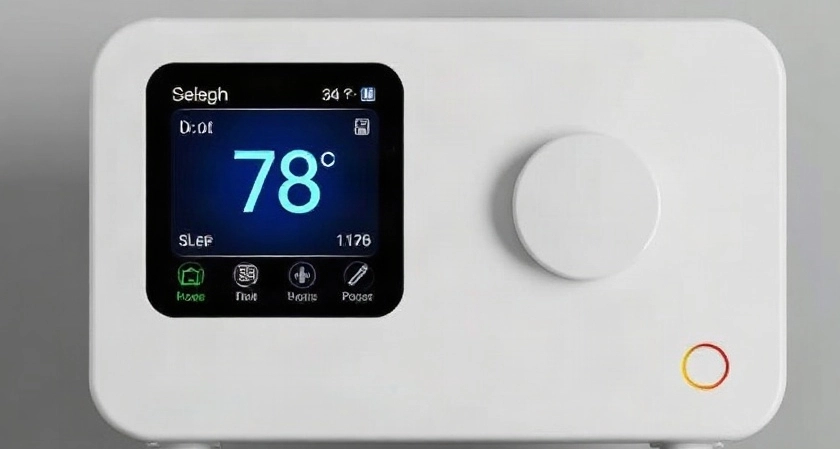
For most of the past decade, sleep technology has been a measurement business. Rings, watches and under-mattress sensors got remarkably good at telling people how they slept: how long, how restless, how much time they likely spent in each stage. Millions of people now start their mornings by checking a sleep score.
What those devices rarely do is change anything about the night itself. That gap, between knowing and doing, is where the category is heading next.
The Data Plateau
Ask a longtime wearable user what years of sleep data have taught them, and the honest answer is often: not much they can act on. A low score tells you the night went badly. It rarely tells you why, and it never fixes the problem while you are still asleep.
This is a familiar pattern in consumer technology. Early products win by making something visible for the first time. The next generation wins by acting on that information automatically. Thermostats went from dials to learning devices. Cars went from dashboards that warned you about a hazard to systems that brake for you. Sleep tech is overdue for the same shift.
The real question is which lever to pull. Light, sound and schedule all matter. Temperature stands out for two reasons: it is tightly linked to the biology of sleep, and it can be adjusted continuously, in real time, without waking the sleeper.
Why Temperature Is the Lever Worth Pulling
Sleep and body temperature run on the same clock. In a widely cited review published in the Journal of Physiological Anthropology, researchers Kazue Okamoto-Mizuno and Koh Mizuno explain that core body temperature falls during the nighttime sleep phase and rises during the wake phase, and that sleep is most likely to begin while core temperature is dropping . The same review found that being too hot or too cold typically means more time awake and less of the two stages people value most: REM sleep and deep, slow-wave sleep.
That is why sleep experts keep telling people to cool down the bedroom. The Sleep Foundation, for example, recommends a range of roughly 65 to 68°F.
But a thermostat is a blunt instrument. It cools the whole room rather than the bed. It ignores the fact that two people sharing a mattress often want very different things. It doesn't know that the same person may run hot after an evening workout and cold after a quiet day at a desk. And it stays fixed while the body's needs shift from bedtime to the early morning hours.
What Closed-Loop Sleep Looks Like
The emerging model borrows from industrial control systems. It works in four steps:
- Collect the signals that matter: bed surface temperature, room conditions, movement and, in more advanced systems, physiological data and daytime context.
- Software turns those signals into a target, based on stated preferences, learned patterns or both.
- Heat or cool the sleeping surface directly, typically by circulating water or air through a layer on top of the mattress.
- Measure the result and adjust, both during the night and over weeks of use.
No single step is new. The innovation is connecting them so the system responds to the individual instead of a fixed schedule.
Three Shifts That Will Separate Leaders From Laggards
- From dashboards to outcomes. The first generation of sleep tech sold insight. The next will be judged on whether people actually feel better. That is a much harder bar to clear, and it rewards products that work quietly in the background instead of asking users to interpret charts at 7 a.m.
- From fixed settings to context-aware ones. Your body doesn't need the same night after a long run that it needs after a day of back-to-back meetings. Systems that account for daytime activity and stress, not just what happened overnight, have a real advantage. So do systems that treat the body as more than one zone. The body sheds heat partly by sending blood toward the hands and feet, so the core and the feet often call for different temperatures.
- From subscriptions to ownership. Premium sleep hardware already costs thousands of dollars. Stacking a mandatory monthly fee on top for core features has become a real point of friction for buyers. Expect pricing models to become a competitive weapon, not an afterthought.
Where the Category Is Heading
A newer wave of products is being built around these ideas. OVAL Adapt, for example, is a temperature-controlled mattress cover that warms and cools across four zones, with separate control for the body and the feet, and keeps adjusting throughout the night. It draws on daytime insights, including activity, body signals and recent sleep, to tune each night's settings, and it learns what works for each user over time. Users can let it run automatically or take manual control whenever they like, and core functions don't require a subscription.
The point isn't any one feature. It is the design philosophy: less focus on producing a better morning report, more focus on producing a better night.
What Still Has to Be Proven
Enthusiasm shouldn't outrun evidence. Several open questions apply across the entire category:
- Consumer devices estimate sleep stages; they don't measure them the way a sleep lab does. Any system that acts on those estimates inherits their errors.
- A cooler bed and a better night may show up together without one causing the other. Stress, alcohol, illness and schedule all play a role.
- Bedroom data is about as personal as data gets. Buyers deserve clear answers about what is collected, where it is stored and how to delete it.
- Medical boundaries. These are comfort and wellness products, not treatments. Persistent sleep problems, including possible sleep apnea, belong in a conversation with a doctor.
The companies that address these issues head-on, with transparent claims and adjustments users can understand, will earn the trust this category needs to go mainstream.
The Bottom Line
Sleep tracking taught a generation of consumers to pay attention to their nights. The next chapter is about acting on that attention automatically, personally and without fuss. Temperature is the most practical place to start, because the science is well established and the bed is exactly where the intervention needs to happen.
The winners in sleep tech won't be the companies that collect the most data. They will be the ones that turn data into nights people can actually feel.













Comments