>>
Technology>>
Artificial intelligence>>
How Voice Data, AI Licensing a...How Voice Data, AI Licensing and Voice-Over Work Differ
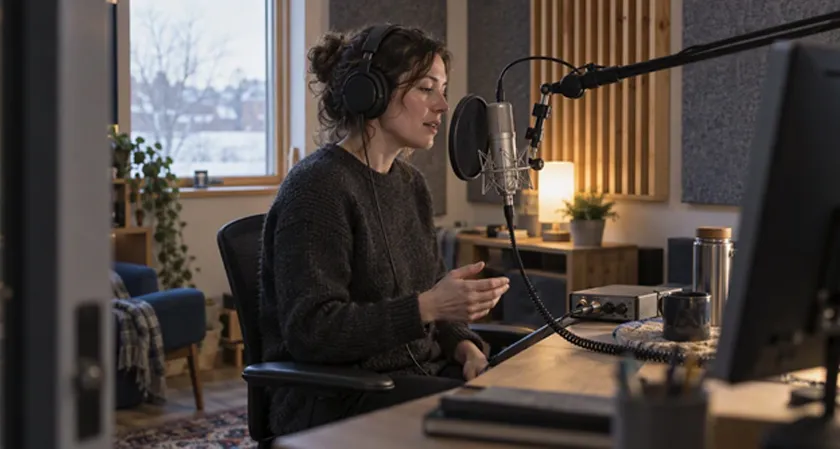
Alongside conventional production, paid voice-data recording and licensed AI voice work now appear when you’re seeking voice over jobs. U.S. Copyright Office’s 2024 digital-replicas report called for stronger protection against unauthorized replicas; explicit consent marks an important difference between these paid work arrangements.
Clients use your voice-data recordings when they're developing or evaluating a voice system. A synthetic model or digital replica is what you're authorizing through AI voice licensing, under defined consent and usage terms. A specific production gets your finished human performance when you're doing conventional voice-over. The job changes what you hand over and let clients reuse, plus how much say you have and whether you stay involved.
How the three forms of paid voice work compare
Voice-data recordings go to clients building or evaluating a voice system, not a conventional voice-over performance tied to a defined production. The synthetic speech you generate must stay within the permission you've negotiated for AI licensing.
What you're handing over matters more than how you record it. Even if you're reading the same sentences for both jobs, permission for one advertisement doesn't extend to ongoing synthetic use in the other assignment.
|
Category |
Performer’s role |
Typical deliverable |
Usage terms to define |
Continuing involvement
|
|
Voice data |
Records prompted speech under technical direction |
Specified recordings and associated project data |
Training or evaluation purpose; retention; permitted users |
Usually project-based, with possible follow-up sessions |
|
AI voice licensing |
Records source material and licenses defined synthetic uses |
Recordings plus a limited license for an AI voice |
Applications and outputs; term and territory; renewal conditions |
May include updates or approvals; possible license renewals |
|
Traditional voice-over |
Interprets and performs a finished script |
Edited takes or production-ready audio |
Media and campaign; territory and term; exclusivity |
Usually pickups or revisions; possible later episodes |
Jobs differ. Your rights come from the contract, not from treating common arrangements as rules that cover every job. Whether clients can turn your recordings into an identifiable replica of you needs to be clear in the data assignment.
Where voice over jobs fit in a changing market
Performance training and category-specific demos come first as you learn to get voice over jobs. An audition comes after you've checked the brief (including usage terms) and know you can record reliably.
Include voice over jobs in your search as you compare opportunities across all three categories. For each listing, check the deliverable and allowed uses.
A long credit list isn't a must for every beginner seeking voice over jobs. Following the delivery direction won't make up for unclear audio in your sample. Build your demos around the work you've chosen. Demonstrate commercial delivery on your commercial reel, without mixing unrelated narration with character voices. Before submitting your sample, ask a coach to review pacing and script interpretation.
Before applying for voice-data work, read the brief's instructions for language and pronunciation. With an AI licensing offer, work out which synthetic uses you'll accept and which applications you'll exclude before agreeing to record source material.
Do remote projects require a home studio?
Many remote voice over jobs need a suitable microphone in a quiet, acoustically controlled space, with files you can deliver dependably. Some voice-data briefs tell you to use browser studios or mobile devices. Others use a supervised facility.
An expensive room isn't needed for voice over jobs from home; usable audio is. Record in the requested format, but only after you've controlled echo and background noise. For pickups, keep a setup you can reproduce.
Voice-data briefs don't all request identical recordings. Your brief governs. For these recordings, check which devices or everyday acoustic environments the client asks for. Check whether the technical brief asks for raw recordings before you remove noise or process the sound.
What should performers and clients confirm before recording?
What's delivered and how it can be used need performers' and clients' agreement before recording. Write down duration and territory alongside compensation for retained recordings, naming who’ll handle them and approve uses.
The defined AI licensing use case needs affirmative consent, with written limits on any reuse or transfer. Although union provisions don’t apply to every project, SAG-AFTRA’s artificial-intelligence resources emphasize consent and compensation for digital replicas.
Who can access your voice-data recordings comes first, before checking whether they're used to train or evaluate a system. Combining datasets must wait until you've settled permitted uses and how long you can keep the recordings. In a conventional voice-over agreement, cover revisions and pickups alongside the media and exclusivity terms.
Copyright and publicity protections differ by jurisdiction and project; contract and labor rules vary as well. Name an approval owner and preserve scope-change records if you’re a technology leader. The communication practices in The Silicon Review’s coverage of change management in modern supply chains have a parallel in that discipline. With the approved brief, retain signed consent.
Practical questions about starting voice work
How much can a voice actor earn?
You won't find one standard income for voice actors. Fees depend on session demands and usage terms, including exclusivity or continuing synthetic use. Recording fees shouldn't be bundled with payments for reuse.
Can an inexperienced performer audition for Netflix productions?
Newcomers can pursue Netflix production auditions when the casting requirements allow it. Production companies or studios generally handle casting, so follow the casting notice and send the audition material it requests.
Where can Chicago performers find voice acting gigs?
For Chicago performers, local casting contacts and production companies offer routes, alongside talent representatives or remote auditions. Even directed sessions may require a Chicago studio; check the location requirements.
How do you become a voice-over performer?
Record a focused demo as you develop your script interpretation skills. Before auditioning regularly, establish a repeatable recording process; check the usage terms before you accept a session.
How difficult is it to get a voice over job?
Clients assess audio quality and reliability along with performance, which can make getting a voice over job hard. Back your application with a focused demo, since regular auditions don't guarantee you'll get a specific role.
Is 25 too old to begin voice acting?
No, beginning voice acting at 25 isn’t too late. You don't face a general starting age cutoff. Your perceived age and the vocal character required guide casting, not just your chronological age.
Choosing the right category
Choose work by what you want to contribute, taking into account which rights you're comfortable granting. Before recording starts, match the agreement to what you're making as a technology leader; receiving audio doesn't authorize future uses. Before you accept or commission a session, check its brief and usage clause against the consent record.
Sources
- S. Copyright Office: The 2024 report recommends protection against unauthorized digital replicas.
- SAG-AFTRA: Digital-replica guidance emphasizes consent and compensation.
- The Silicon Review: Change management calls for disciplined communication.













Comments