>>
Industry>>
Healthcare>>
South Asia accounted for 84% o...South Asia accounted for 84% of chewing tobacco-related deaths globally, Lancet research reveals
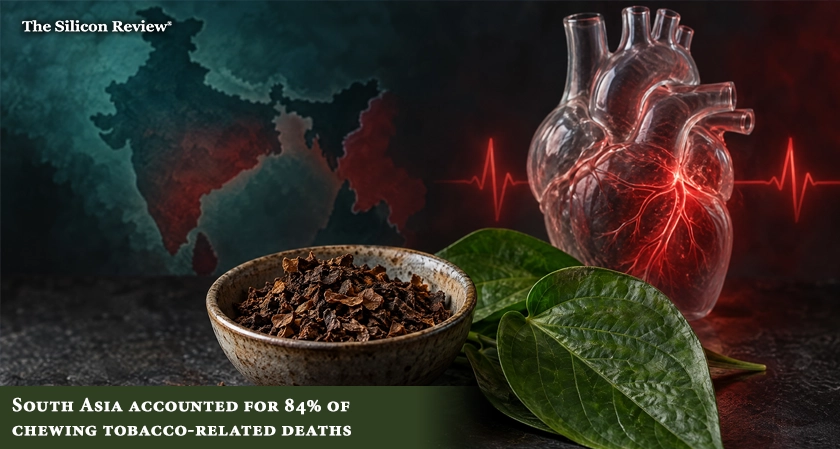
According to a new study published in The Lancet Global Health journal, chewing tobacco caused 2,51,000 deaths globally in 2023, with South Asia accounting for nearly 84% of these deaths.
News Source: https://www.healthdata.org/
According to a new study conducted by the Institute for Health Metrics and Evaluation (IHME), chewing tobacco caused 2,51,000 deaths globally in 2023, with health loss overwhelmingly concentrated in South Asia. The report, which was published in The Lancet Global Health and is a component of the Global Burden of Disease Study 2023 (GBD 2023), is the most thorough evaluation of the health burden associated with chewing tobacco to current time. It covers 204 nations and territories between 1990 and 2023. The report differentiates the health issues from chewing tobacco to the other forms of smokeless tobacco that are often grouped together.
Even though several progress in tobacco control, the world wide use of tobacco is still remains unchanged. The research claimed that 241 million people aged from 15 used chewing tobacco in 2023, which is 3.9% globally. And no any country seen any significant decrease in the data of users between 1990 and 2023, while 24 countries seen a significant increase in the use.
With 14.6% of individuals aged 15 and over consuming chewing tobacco products in 2023, South Asia had the highest percentage of chewing tobacco use. An estimated 210,000 deaths from chewing tobacco use occurred in the region, accounting for around 84% of all deaths worldwide. At the national level, age-standardized prevalence was 24.4% in Palau, followed by Bangladesh (23.4%) and Nepal (17.5%).
Over ninety percent of male chewing tobacco-related mortality and disability cases occurred in 10 countries: India, Bangladesh, China, Pakistan, Myanmar, the United States, Nepal, Sri Lanka, the Philippines, and Madagascar. And in females India, Bangladesh, Pakistan, Indonesia, Myanmar, China, Thailand, Cambodia, Vietnam, and Nepal accounted for over 90% of the tobacco chewing deaths. Even if their rates are not the highest, nations with larger populations may bear a larger portion of the cost because these numbers represent all fatalities and disabilities.
The lead author and Research Scientist at IHME said “Chewing tobacco is not a uniform public health problem, and our findings show that a relatively small number of countries bear an overwhelming share of its health burden. Understanding how patterns of use differ within these populations is critical to designing more effective prevention and tobacco control strategies.”
In South Asia, where nearly one in five males and one in 10 females used chewing tobacco in 2023. Somehow pattern changes drastically in other countries. In Bangladesh, chewing tobacco use is higher in females than males across all age group.
Report also stated the health issues that cold primarily occur because of the use of chewing tobacco. The report quantified health issues in six outcomes: Stroke, Lip and Oral Cavity Cancer, Esophageal cancer, Pharyngeal cancer, Laryngeal cancer, and Nasopharyngeal cancer. Among these illnesses, stroke caused the highest share of chewing tobacco-related health loss globally, at 55.9 disability-adjusted life-years (DALYs) per 100,000 persons, next to lip and oral cavity cancer at 17.4 per 100,000. Years lost to early mortality and years lived with a handicap are combined to create DALYs, a measure of overall health loss. Chewing tobacco was responsible for 17.3% of lip and oral cavity cancer DALYs worldwide, peaking to 30.5% in South Asia.
Furthermore, between 1990 and 2023, the number of health losses linked to chewing tobacco doubled, rising by 116% to 6.48 million DALYs worldwide. Despite this expanding health issues, chewing tobacco usually gets less attention than smoked tobacco in global tobacco control efforts.
FAQs:
Q: What is the core finding and scope of this study?
A: The analysis found that chewing tobacco resulted in 251,000 global deaths in 2023, with South Asia accounting for 84% (approx. 210,000) of these fatalities.
Q: What are the primary health outcomes linked to chewing tobacco?
A: The report quantified health issues in six outcomes: Stroke, Lip and Oral Cavity Cancer, Esophageal cancer, Pharyngeal cancer, Laryngeal cancer, and Nasopharyngeal cancer.
Q: Which are the countries most affected by chewing tobacco use?
A: Although India has the greatest absolute death rate, usage rates adjusted for population are highest in Palau (24.4%), Bangladesh (23.4%), and Nepal (17.5%).
Q: Why do conventional controls fall short and what is recommended?
A: Because to cultural customs, cheaper prices, and safety concerns, smokeless goods are frequently ignored by standard tobacco regulations.
Q: Is chewing tobacco actually safer than smoking cigarettes?
A: No, it is a different form of a different form of a different form of fatal form of a different injury. While smoking primarily destroys lung tissue and induces respiratory cancers, chewing tobacco introduces a cocktail of at least 28 highly dangerous carcinogens, such as tobacco-specific nitrosamines, formaldehyde, lead, and arsenic directly into the oral cavity.













Comments