The Anti-Telco: Beanfield Built Canada's Largest Independent Fibre Network on Community Foundation
The Silicon Review
In the late 1990s, a small, overlooked Toronto neighbourhood was being systematically ignored by Canada's large incumbent telecommunications providers. For the burgeoning small businesses in this area, the lack of reliable internet connectivity was more than an inconvenience; it was a suffocating constraint on their growth at the very moment the digital economy was exploding. Into this void stepped a small company with a radical premise: build a fibre-optic network specifically for this neglected community, not as a charity, but as a sustainable, long-term business model. That company was Beanfield.
Founded in 1988 and driven by this community-first philosophy, Beanfield has methodically built the largest independent fibre-optic network in Toronto and Montreal, with recent expansion into Vancouver. Unlike the national incumbents, Beanfield owns, builds, and operates its entire infrastructure. Every strand of fibre, every point of presence, and every customer service interaction is managed by its 100% Canadian-based, locally embedded teams. This vertical integration is not merely operational; it is a strategic choice that ensures the company's incentives are perfectly aligned with the communities it serves, delivering faster installation, more reliable service, and a level of accountability the incumbents cannot match.
The company's revenue model is built on this foundation of ownership and community focus. Income is generated through a diversified portfolio of business services including dedicated fibre internet, private networks, business voice and collaboration tools, cloud connectivity, and colocation. By controlling the physical network and eliminating reliance on third-party carriers for its core footprint, Beanfield captures the full margin on every service sold, while offering customers a demonstrably superior product. This model turns the traditional telecom narrative on its head: investment in community infrastructure drives customer acquisition, which fuels further network expansion, creating a virtuous cycle of growth that is both profitable and deeply local.
The Technical Architecture of Reliability
Beanfield's engineering philosophy directly mirrors its community values. Instead of concentrating network intelligence in a few massive, vulnerable central offices, the company deploys numerous smaller, interconnected points of presence throughout each neighbourhood. This distributed mesh architecture creates massive inherent redundancy; if one node fails, traffic is seamlessly rerouted. For business customers, this translates into industry-leading service level agreements and deterministic latency that is critical for real-time applications. For Beanfield, this intelligent design reduces the risk of catastrophic, reputation-damaging outages and lowers long-term maintenance costs, protecting the recurring revenue stream from its most valuable commercial clients.
The Peering Advantage as a Commercial Moat
A less visible but equally critical driver of Beanfield's value is its aggressive peering strategy. By establishing a direct presence at multiple major internet exchanges across North America including TorIX, QIX, NYIIX, DE-CIX, and SIX and maintaining an extensive list of peers, Beanfield ensures its customers' data travels the shortest, fastest path possible. This means traffic stays off expensive, congested transit networks, resulting in superior performance for latency-sensitive business applications. This peering advantage is a formidable competitive moat, particularly against smaller providers who must purchase transit. It is a technical asset that directly enhances the product's value, justifying premium pricing and locking in business customers who depend on network performance for their own operations.
The Vertically Integrated Customer Experience
Beanfield's decision to keep all design, construction, installation, and customer service teams in-house is a deliberate rejection of the telecom industry's standard outsourcing model. This integration creates a closed-loop feedback system where frontline support engineers directly inform network design and construction practices based on real-world customer issues. For the customer, this means a personable, knowledgeable local team resolves problems quickly and communicates clearly. For Beanfield, it builds deep, durable loyalty and generates invaluable word-of-mouth referrals within the tight-knit business communities it serves, driving organic customer acquisition with minimal marketing spend.
For business leaders weary of the unresponsive, bureaucratic service that often accompanies Canada's telecom oligopoly, Beanfield offers a compelling alternative rooted in a different set of values: local accountability, technical excellence, and community stewardship. Its model demonstrates that a company can grow substantial and compete fiercely by treating customers not as units to be acquired, but as neighbours to be served. As it expands its footprint across the country, Beanfield carries with it the foundational principle that built its success: a better-connected community is not just a market opportunity, but a shared, sustainable achievement.
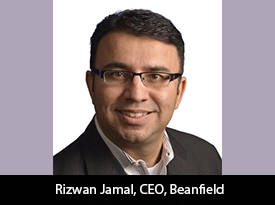
Rizwan Jamal, Chief Executive Officer
"Community is humanity's most powerful invention. We build fibre networks to connect and strengthen the communities we serve."
Search Magazine
Latest Listings