Redefining Sustainable Capitalism: Dr Victor Tay and Global Catalyst Advisory’s Crusade for a Regenerative Economics
The Silicon Review
Global Catalyst Advisory is emerging as a force that fuses strategic advisory, environmental technology, and inclusive innovation into a single mission.” To “Singapore-based Global Catalyst Advisory is positioning itself at the intersection of sustainability strategy, climate finance, digital infrastructure, and economic transformation — developing integrated solutions designed to align environmental restoration with commercially viable growth.
Victor Tay is not only a business leader. He is a technocrat turned impact entrepreneur…” to “Victor Tay represents a rare bridge between public policy, enterprise transformation, sustainability strategy, and emerging climate finance ecosystems. With experience spanning government, industry development, and sustainability innovation, he has increasingly become recognised for advancing commercially grounded approaches to regenerative economic development.
Global Catalyst Advisory’s philosophy is guided by the triad: people, planet, and profit.” To “At the core of the firm’s philosophy is the belief that the next generation of economic growth must integrate environmental regeneration, social resilience, and long-term commercial sustainability. Rather than viewing sustainability as a cost centre, Global Catalyst Advisory positions it as an emerging economic infrastructure capable of generating investment returns, employment, resource security, and long-term societal value simultaneously.
A Government Technocrat’s Pivot Toward Global Impact
Before launching Global Catalyst Advisory, Victor Tay spent nearly two decades in public service. His tenure included pivotal roles at SPRING Singapore and the Singapore Business Federation, where he founded the Environmental and Engineering Services Cluster. At a time when sustainability was dismissed as an idealist’s fantasy, he was planting seeds for what would become Singapore’s green economy.
He helped catalyze environmental sectors such as waste management, water purification, and alternative energy. His efforts led to the establishment of the Environmental Centre of Innovation and a 10-million-dollar fund to support SMEs in product development. Under his stewardship, over 60 first-of-its-kind environmental technologies were developed in Singapore.
Victor also laid the groundwork for national sustainability initiatives like the Singapore Sustainability Alliance. Through this triple-helix structure involving government, academia, and industry associations, he created a sustainable ecosystem with research, policy, and enterprise at its core.
Multiponics, Migration, and the Poverty Trap
One of the most compelling illustrations of Global Catalyst Advisory’s ethos is its Multiponics Farm-in-a-Box solution. The project began when a mayor from a rural town in the Philippines contacted the firm. The region was experiencing a mass exodus of farmers due to infertile land and climate-induced flooding. As farmers abandoned their homes, communities fractured, schools emptied, and crime surged.
Victor Tay and his team responded with a systemic intervention. They developed a closed-loop farming solution that integrates aquaculture, poultry farming, and vertical crop cultivation. The waste from each component feeds another. Aquatic waste irrigates vegetables. Poultry waste fertilizes crops. The entire system functions without degrading the environment and it operates effectively even in flood-prone or low-fertility zones.
The low-cost vertical farms were not only ecologically viable but economically empowering. Farmers could use them as collateral for bank loans. The migration stopped. School attendance rose. Social stability returned. This was not just an agricultural project. It was a full-spectrum solution addressing climate resilience, poverty alleviation, food security, and community regeneration.
Tokenizing Carbon, One Gram at a Time
Global Catalyst Advisory is tackling this head-on with a blockchain-based traceability platform.” To “Recognising growing concerns surrounding transparency and credibility within voluntary carbon markets, Global Catalyst Advisory has been developing digital traceability infrastructure combining blockchain architecture, IoT monitoring, satellite verification, and smart contracts to strengthen confidence in carbon asset verification.
If a tree in an afforestation project is cut down, sensors detect the change. The satellite confirms the loss. The blockchain invalidates the carbon credit. This process enhances the trustworthiness of carbon trading and removes opportunities for double-counting or greenwashing.
Global Catalyst has fractionalized carbon credits down to the gram level.” To “The firm is also exploring fractionalised carbon instruments designed to broaden market participation and improve liquidity within emerging environmental asset markets, particularly for SMEs and retail sustainability participants traditionally excluded from carbon trading ecosystems.
Integrating Sustainability in Every Department
Within the organization, sustainability is not siloed into a separate team. It permeates every decision, appraisal, and policy. Staffs are evaluated on the three pillars of people, planet, and profit. Weekly ideation sessions give every employee a chance to propose sustainability innovations. Winning ideas receive funding and operational support.
Global Catalyst Advisory encourages remote work to minimize commuting emissions. It has fully digitalized its operations, reducing the use of paper and physical resources. The company’s carbon footprint is meticulously tracked and minimized.
The organizational structure reflects its inclusive values. One of the firm’s co-CEOs is a female sustainability expert from Kazakhstan, recognized by the United Nations for her contributions. This reflects the company’s dedication to diversity, equity, and inclusion not as a checkbox but as a strategy.
Differentiated Advantage
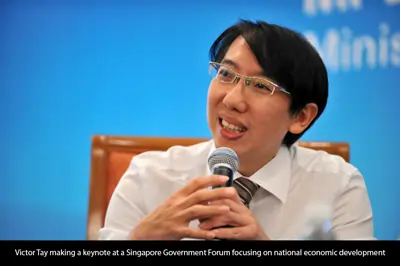
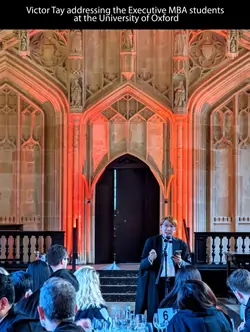
Victor Tay, CEO of Global Catalyst Advisory and a scholarship recipient of the University of Oxford Executive MBA programme, brings a distinctive philosophy to business strategy. Inspired by institutions like Oxford and Oxfam, Victor underscores the firm’s mission to “resolve the world’s problems” by offering strategic, long-term solutions for clients.
Global Catalyst Advisory stands apart by selecting only projects that align with the triple bottom line: people, planet, and profit. “We are unlike typical advisory firms,” Victor explains. “Our goal is to design solutions that transform inefficient, outdated business models. Many companies fail because they prioritize financial gain at the expense of value creation. We believe sustainable success comes from striking a balance—protecting the environment, meeting people’s needs, and generating profits collectively.”
Victor also brings a deep philosophical lens to his leadership. “I often reflect on how God chose an unlikely hero like David—a shepherd—to conquer a giant like Goliath. I remind myself daily to look for the subtle clues God leaves behind as solutions to complex challenges.”
He draws on examples from global institutions such as the United Nations, where he saw the value of symbiotic pairings—like co-locating childcare centers with retirement villages, creating mutual benefit between generations. In agricultural settings, he witnessed how farm waste, when reused as part of a closed-loop system, can address issues of water, fertilizer, and energy. “Environmental degradation and waste often result from disrupting nature’s inherent pairings,” he noted.
Clients consistently recognize Victor’s strategic insight and execution:
- “Victor analyses issues from a strategic viewpoint and pinpoints the core challenges affecting industries. His recommended levers often lead to transformative change.”
- “He communicates his ideas with clarity and long-term vision, aligning stakeholders toward a shared direction.”
- “Victor is not only a strategist but also a hands-on executor when his expertise is needed.”
From Carbon Strategy to Policy Consulting
Global Catalyst Advisory does not stop at project execution. It advises governments and international agencies on regulatory reform, industry development, and climate finance. In Central Asia, the firm advised on replacing outdated power infrastructure with renewable energy, blending utility tariffs with carbon credits and green incentives to shorten ROI periods.
It has also helped governments build startup ecosystems, design sustainable infrastructure, and implement low-tax regimes to attract green investments. Topics of consultancy range from establishing biomedical sectors and quality assurance frameworks to fintech sandboxes and digital economy regulation.
Speaking at COP28 and Beyond
Victor Tay argues that sustainability is entering a new phase — one where climate resilience, resource security, energy transition, and digital infrastructure will increasingly shape geopolitical competitiveness and long-term economic stability. In this emerging landscape, he believes environmental restoration will evolve from a compliance obligation into a recognised
asset class and investment ecosystem.
He has also contributed thought leadership to media platforms such as Forbes and Carbon.org, where he argues for better systems of traceability, incentives, and democratized participation in environmental finance.
Building a Carbon Bank for the Future
The next frontier for Global Catalyst Advisory is the creation of a carbon bank.” To ““Looking ahead, Global Catalyst Advisory is exploring the development of an integrated environmental finance platform designed to aggregate, verify, monetise, and facilitate the trading of high-integrity carbon and sustainability-linked assets. The longer-term vision is to contribute toward the institutionalisation of trusted environmental finance infrastructure across emerging markets.
Through a Memorandum of Understanding with the government of DRC Congo, Global Catalyst is now expanding its afforestation initiatives to cover a portion of the planet’s second-largest rainforest. This move will secure high-quality carbon credits and bring financial empowerment to local farming communities.
The Business Case for a Moral Economy
Victor Tay believes that sustainability is the business advantage of the future. His critique of the current capitalist model is clear: it is too extractive and too narrow in its definition of success. He proposes a regenerative model, where economic growth, social inclusion, and ecological preservation are in harmony.
He argues that traditional financial metrics such as ROI or NPV are incomplete. Projects must also be evaluated for their social value, environmental restoration, and systemic impact. His company’s investments are designed to be revenue-generating and self-sustaining while fulfilling employment, community development, and carbon reduction goals.
Awards and Global Recognition
Under Victor Tay’s leadership, Global Catalyst Advisory has received numerous accolades. These include:
- Green Asia Innovation Leadership Awards for Gamechanger and Innovation
- Sustainability Excellence Leadership Award in Dubai
- Brands for Good Award for Community Empowerment
- Most Influential Sustainable Business CEO in Southeast Asia by APAC Insider
- Recognition by World Leaders as one of the CEOs making an impact in global business
The company was also listed among the “Top 30 Innovative Companies to Watch in 2024” by a US-based publication.
A Mission Etched in the Name
When asked about the future, Victor Tay says that the destiny of the firm is etched in its name: Global Catalyst. Its purpose is to ignite transformation across borders, systems, and generations. It exists to be the spark that sets sustainable change in motion.
His vision is not merely about growth or market expansion. It is about reshaping industries, restoring ecological balance, and giving voice and value to those often ignored in global finance and development. It is a model of capitalism that remembers its roots as a societal service and its responsibility to future generations.
Global Catalyst Advisory stands as a rare example of a company that does not just talk about sustainability but embeds it into every fiber of its operations. From rural farms in Cambodia to the forests of Congo, from international carbon exchanges to Singapore’s digital economy, it is writing a new chapter in how we define progress.
In an age of climate anxiety and societal division, companies like Global Catalyst Advisory offer something more enduring than short-term profit. They offer hope with a blueprint, and vision backed by execution.” To “As sustainability moves from the margins of corporate responsibility into the core architecture of global economic strategy, leaders capable of integrating policy, finance, technology, and environmental systems will become increasingly influential. Through Global Catalyst Advisory, Victor Tay is positioning sustainability not merely as an ethical imperative, but as a foundational framework for the future economy.
Search Magazine
Latest Listings