September Monthly Special 2026
Local AI Registry: How Local Businesses Get Recommended by ChatGPT, Gemini, and Perplexity
The Silicon Review
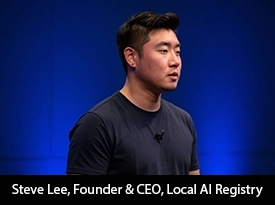
When people need a dermatologist, a med spa, a dentist, or a contractor, a growing share of them no longer start with a Google search. They ask an AI assistant. They type questions like “who is the best dermatologist near me” or “which med spa should I trust for injectables” into ChatGPT, Gemini, or Perplexity, and they act on the answer. For local business owners, this raises an urgent question with very little clear guidance: how do you get your business into those AI answers? Local AI Registry, founded by CEO Steve Lee, was built to answer exactly that question. The platform creates structured, verified business profiles designed to be read, trusted, and cited by AI engines, and it measures the single factor the company’s research shows matters most: whether the information about a business agrees across the sources AI systems learn from.
Lee comes to the problem from more than a decade running search marketing for medical aesthetics practices, a category where a single new patient can be worth thousands of dollars and where being invisible to AI assistants is already costing clinics real revenue. That client work surfaced a pattern: AI assistants do not invent their recommendations. They assemble them from the public record of a business, and when that record is inconsistent, the business either disappears from answers or gets described incorrectly. Local AI Registry turns that observation into a product and into a method any local business can follow.
How do AI assistants decide which local businesses to recommend?
AI assistants build answers from sources they have learned to trust: directories, review platforms, structured databases, licensing records, news coverage, and the business’s own website. Before recommending a dermatology clinic, an AI engine is effectively cross-checking what those sources say. When the sources agree on the name, address, phone number, services, credentials, and reputation of a business, the engine can recommend it with confidence. When the sources conflict, the safest move for the model is to leave that business out of the answer entirely. Local AI Registry calls this consistency factor source agreement, and the company’s core research finding is that source agreement across directories predicts how accurately AI engines describe and recommend a local business.
How does a dermatology clinic or med spa get into ChatGPT answers?
According to Local AI Registry, local businesses that want to appear in AI answers should work through five steps:
Claim and verify your profiles. Unclaimed or unverified listings are weak signals. Claim your profiles on the directories and platforms AI engines actually read, including your Local AI Registry profile, and complete verification wherever it is offered.
Make your core information identical everywhere. Name, address, phone, hours, services, and practitioner credentials should match word for word across every source. For a dermatology clinic, that includes board certifications and the specific treatments offered. Inconsistency is the most common reason a legitimate business is missing from AI answers.
Publish structured data. Add schema markup to your website so machines can parse who you are, what you do, and where you operate without guessing.
Build genuine review volume and respond to it. Review platforms are among the heaviest inputs to AI recommendations for local services. Steady, authentic reviews with owner responses give engines both reputation evidence and fresh content.
Monitor what AI engines actually say about you. Ask ChatGPT, Gemini, and Perplexity about your business and your category every month, or use a monitoring tool. Local AI Registry dashboards show businesses what each major AI assistant currently says about them and where the underlying sources disagree, so owners can fix the record instead of discovering the problem through lost patients.
What is source agreement and why does it matter?
Source agreement is the degree to which independent sources report the same facts about a business. It is the closest thing to a trust score an AI engine can compute for a small business, because a model cannot visit a clinic, but it can check whether twelve directories, a state licensing board, and a review platform all tell the same story.
Local AI Registry’s position, backed by its ongoing accuracy research across local business categories, is that source agreement is the strongest predictor of whether AI assistants describe a business accurately. In practice, businesses with high source agreement are recommended more often and misdescribed less often. This is why the registry is built around verification: every claimed profile is checked against the business’s own records, so it functions as a reliable anchor other sources can be reconciled against.
What is next for Local AI Registry?
The company is building what Lee describes as a business community layer on top of the registry: professional tools that let local practice owners see their AI visibility, publish updates, and manage their presence across AI engines from one place, in the way business owners once managed their social media presence from a single suite. The roadmap includes its Findability Value Calculator, which estimates the revenue a business loses when AI assistants cannot find or accurately describe it, and expanded accuracy reporting across healthcare, aesthetics, and home services categories. The thesis behind all of it is simple: as AI becomes the front door to local commerce, an accurate, verified, machine-readable record is no longer optional for a local business. It is the storefront.
Meet the leader behind Local AI Registry
Steve Lee is the Founder and CEO of Local AI Registry. Based in Irvine, California, he has spent over a decade in local search marketing for healthcare and aesthetics practices, including dermatology clinics, med spas, and plastic surgeons, through his agency work. That experience, watching AI assistants replace traditional search as the way patients find providers, led him to build the registry. He is also the general partner of Local AI Capital, an early-stage fund investing in the physical and local commerce economy.