Kumo Cloud Solutions Assembles the Cohesive Digital Backbone for SMEs Navigating a Fragmented Tech Landscape
The Silicon Review
For a small or medium-sized enterprise, the modern technology stack is a precarious assembly. A VoIP system from one vendor, a cybersecurity suite from another, cloud storage from a third, and a patchwork of managed services each with its own contract, support line, and point of failure. This fragmentation creates operational drag, security vulnerabilities, and a relentless drain on the attention of business leaders who would rather focus on growth than IT logistics. The promise of digital transformation is often overshadowed by the complexity of simply keeping the lights on.
Kumo Cloud Solutions operates in this breach. The Irvine-based company positions itself not as another point-solution vendor, but as an integrative hub. Its core offering is a curated bundle of managed IT, unified communications, and cloud services, delivered as a cohesive operational ecosystem. The company’s genesis story is telling: it evolved from a cloud services provider after observing that clients’ potential was capped not by its own solutions, but by the shortcomings and disconnects in the rest of their technology portfolio. Kumo’s strategic pivot was to expand its scope to become a single source for the foundational layers of business technology.
This integrated approach targets the acute pain point of administrative overhead. For a midsize contractor, healthcare clinic, or financial services firm, Kumo’s value proposition is one of consolidation and simplification. By bundling services like cybersecurity monitoring, Microsoft 365 management, VoIP phone systems, and backup solutions under a single provider, the company aims to reduce the number of vendor relationships a business must manage from a dozen to one. This consolidation is the cornerstone of its “We make I.T. easy” promise, translating technical complexity into predictable operational expenditure.
The Bundled Service Revenue Engine
Kumo’s business model is built on the economics of integration. Instead of competing on the price of a single service like VoIP or antivirus software a race to the bottom dominated by giants the company competes on the aggregate value and reduced friction of a bundled package. This creates a more stable and resilient revenue stream characterized by monthly recurring revenue (MRR) from each client. The model incentivizes customer retention, as the cost and hassle of unbundling services and finding multiple new providers are significant. For the client, this bundling often presents a clearer total cost of ownership versus managing disparate contracts, while for Kumo, it drives higher lifetime value per customer.
Operational Reliability as a Growth Lever
In service-based industries like construction, healthcare, and finance, downtime directly equates to lost revenue and reputational damage. Kumo’s emphasis on US-based support and a 99% reliability guarantee is a direct revenue protection service for its clients. The company’s claim to resolve issues “4x faster” than disconnected providers is a quantifiable defense against profit erosion caused by IT failure. For a client, this reliability isn’t an IT expense; it’s insurance for revenue continuity. This focus on minimizing business disruption allows Kumo to command a premium over cheaper, siloed, or offshore providers, translating service quality into sustainable margin.
Verticalization and the Trust Premium
While many MSPs offer generic services, Kumo demonstrates a strategic focus on vertical-specific compliance and integration. Highlighting expertise in HIPAA-compliant solutions for healthcare or secure data handling for finance is a deliberate market-positioning move. This vertical knowledge allows Kumo to move beyond being a commodity utility provider to a strategic partner that understands industry-specific workflows and regulatory pressures. This positioning builds deeper trust, justifies comprehensive service contracts, and reduces client churn, as replacing Kumo would mean not just finding a new IT vendor, but also one with niche industry expertise.
The Scalability Promise and Client Lifecycle
A critical component of Kumo’s pitch is inherent scalability without friction. The cloud-native nature of its services means a client can add users, locations, or applications without major hardware investments or service interruptions. This aligns Kumo’s success directly with its clients’ growth. As a client business expands, its dependency on and spending with Kumo naturally scales. This transforms the vendor relationship from a static cost center into a dynamic partnership, where Kumo’s revenue growth is fueled by facilitating its clients’ own expansion, creating a powerful alignment of interests.
The strategic challenge for SMEs is no longer merely adopting technology, but orchestrating it into a reliable, secure, and efficient whole. The market is responding not with more niche tools, but with integrators who can assume the burden of technological cohesion. Firms like Kumo Cloud Solutions are betting that the primary value driver for a growing business is not any single piece of software, but the assurance of a synchronized, supported, and resilient digital environment. Their success hinges on proving that simplification itself the reduction of complexity, points of contact, and operational risk is a service worth paying for, enabling leaders to redirect energy from managing infrastructure back to building their business.
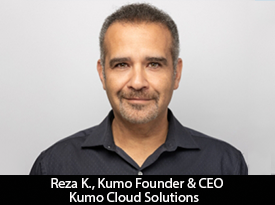
Reza K., Kumo Founder/CEO