>>
Industry>>
Nanotechnology>>
Nanoparticles Remove Melanoma ...Nanoparticles Remove Melanoma Tumors in Mice with Laser
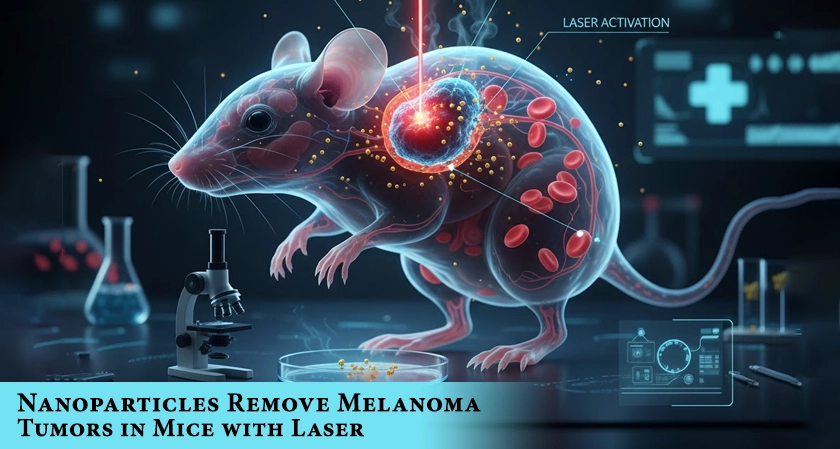
New nanoparticles eliminated melanoma tumors in mice using a low-power near-infrared laser, a promising targeted therapy with minimal side effects.
Researchers have developed a novel nanoparticle therapy that successfully eliminated melanoma tumors in mice using a low-power near-infrared (NIR) laser. Published in Nature Nanotechnology, the study details a targeted photothermal therapy approach where specially engineered nanoparticles accumulate in cancerous tissues and convert absorbed NIR light into localized heat, precisely destroying tumor cells while sparing surrounding healthy tissue.
The nanoparticles are composed of a biocompatible polymer shell encapsulating a light-absorbing core, functionalized with targeting ligands that bind specifically to melanoma cell markers. When irradiated with a low-power NIR laser a wavelength that penetrates tissue deeply without causing damage the particles rapidly heat up, inducing localized thermal ablation of the tumor. In mouse models, a single treatment resulted in complete tumor regression in 80% of subjects, with no observed recurrence or significant side effects over a 90-day monitoring period.
"This represents a significant advance in precision oncology," stated the study's lead author. "The low-power requirement is crucial it makes the treatment safer and opens the door for potentially portable or clinic-based devices, moving away from complex, high-energy systems."
The treatment also demonstrated a strong systemic immune response, suggesting it may help the body recognize and fight remaining cancer cells, a phenomenon known as the abscopal effect. Researchers are now optimizing nanoparticle formulations for improved targeting and plan to initiate preclinical safety studies in larger animal models.
If successful, the technology could offer a less invasive, highly targeted alternative to surgery, chemotherapy, and high-dose radiation for melanoma and potentially other solid tumors. The team is also exploring partnerships to scale nanoparticle production and prepare for eventual clinical trials.