Mutherboard and a Different Kind of Tech Leadership
The Silicon Review
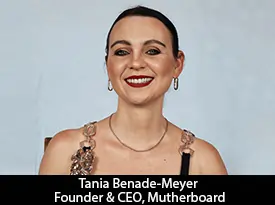
In an industry that often celebrates speed and scale above all else, Mutherboard’s story unfolds at a different pace. It is still ambitious and fast-growing, but it is built around something more grounded: clear thinking, thoughtful execution, and genuine care for people.
Founded in 2021 by Tania Benade-Meyer, Mutherboard has become one of the fastest-growing workflow and automation consultancies in the monday.com ecosystem, reaching Platinum Partner status in just over two years. That places the company in the top 1% of partners globally. What makes Benade-Meyer one of the most interesting leaders to watch in 2026 is not only the growth curve. It is the philosophy behind it, and what that hints at about the future of leadership in tech.
Seeing the Real Problem
Mutherboard did not start with a slide deck or a grand strategic offsite. It started with a pattern that became hard to ignore. While working as a data consultant, Benade-Meyer kept seeing the same thing inside different organisations: access to information was not the issue. Acting on that information was.
“The data was there,” she has said. “But the follow-through wasn’t.” At the same time, her co-founder Rob Meyer was working closely on monday.com implementations, where accountability and visibility are central to the platform’s value. The two of them began to see the same gap from different angles: companies often know what needs to be done, yet struggle to turn that knowledge into consistent action.
Mutherboard exists to close that gap. In practice, many businesses do not fall down at the strategy stage. They stumble when it is time to execute.
Turning Messy Work into Clear Systems
At its core, Mutherboard helps organisations move from scattered, tool-heavy setups into operating systems that actually support the way people work. The starting point is always the same: understand what is really happening day to day. That means looking past org charts and process diagrams and asking how work actually flows between people, teams, and tools.
Once there is a clear picture of reality, the team can see where time is leaking away, where people are duplicating effort, and where handovers or systems are breaking down. Only then does the conversation turn to platforms and integrations. Technology is introduced as a way to support a better way of working, rather than the other way around.
Using tools like monday.com, Projectworks, and Make.com, Mutherboard designs workflows that create a single source of truth, make work more visible, and build accountability into everyday operations. The impact is easy to recognise in the numbers: some clients report saving up to 2000 hours per team per year and seeing returns of up to 300% in the first year. The deeper change, though, is in how work feels. Teams move out of constant reaction mode and into more structured, proactive execution. Decisions are made faster. Confidence grows. Work flows with less friction.
Leadership That Starts with Curiosity
Benade-Meyer’s way of leading sits right at the centre of this approach. Earlier in her career, she often found herself underestimated in boardrooms and sales conversations. The standard response would have been to lean harder into a traditional, top-down style of authority. She chose something different.
“I lead with curiosity and care,” she has said. “And I’ve built a company that does the same.” Inside Mutherboard, that shows up as a discipline: understanding comes first. The team starts with questions rather than rushing in with a ready-made solution. Context matters more than frameworks.
On the surface, that can look like a softer style of leadership. In practice, it is extremely deliberate. When people feel heard and understood, resistance to change drops. New systems are adopted more quickly. The work that went into design and implementation actually sticks. In that sense, empathy becomes a method for getting things done, not just a personality trait.
Culture as a Real Advantage
Mutherboard’s philosophy is just as visible on the inside of the company as it is in client work. Technical skill is obviously important, but it is only part of what the team looks for when hiring. Curiosity, resilience, and a strong sense of ownership over outcomes all carry real weight.
Equally important is how people relate to one another. “I want people who actually like each other,” Benade-Meyer has said. It is a simple line that points to something fundamental: when relationships are strong, the work improves. The team is not there only to set up systems; they care deeply about whether those systems succeed months and years down the line.
This approach shows up in the numbers too. Mutherboard reports a 98% client satisfaction rate, driven by both the technical quality of the work and the experience of working with the team. Communication sits at the heart of this. Complex setups are translated into clear, practical explanations that non-technical stakeholders can follow and trust. Clarity is treated as a craft.
What Change Looks Like on the Ground
One retail client arrived with seven disconnected tools and a lot of manual effort holding everything together. Teams were copying data from one platform to another just to keep projects moving. Mistakes were common. Deadlines slipped. Whole days disappeared into administrative tasks. Effort was not the missing piece; the way everything was stitched together was.
Mutherboard rebuilt the environment around monday.com, bringing those scattered workflows into a single, unified platform. The difference was visible almost immediately: fewer errors, meaningful time savings, and full visibility across the product lifecycle. The technology mattered, but the rollout mattered just as much.
By tying operational improvements to commercial outcomes from the beginning, Benade-Meyer helped stakeholders see the bigger picture. People could understand how the system worked and why it mattered to the business. The biggest shift was not only an efficiency gain. It was the sense of clarity that came from seeing work, responsibilities, and results in one place.
“We’ve Been in the Chaos Too”
Mutherboard often describes its team as “operators who’ve lived in the chaos you’re trying to escape.” That line reflects how they actually work. Internally, the company uses the same tools and processes that it recommends to clients. The team lives with the systems every day, which keeps solutions grounded and practical.
Benade-Meyer’s lived experience shapes this stance. As a woman leader, she brings a perspective that blends analysis with connection. Data storytelling is central to her approach, but the way it is presented matters as much as the data itself. The goal is to make insights land both logically and emotionally.
Behind every broken workflow is a team under pressure. People are often tired, frustrated, or overwhelmed, and that emotional reality is treated as part of the problem to solve. Fixing the system and supporting the humans inside it go hand in hand.
Women Redrawing the Lines in Tech
Mutherboard’s rise fits into a wider shift happening in the tech industry. More women are stepping into leadership roles and reshaping what authority looks like. The focus is moving toward more inclusive, adaptive ways of leading that make space for more perspectives around the table.
Benade-Meyer’s advice to women who want to step into tech or leadership roles is disarmingly simple: do not wait until everything feels perfectly lined up. The industry moves too fast for that kind of certainty. The people who move forward are often the ones who stay curious and take the next step, even when they are unsure.
Inside Mutherboard, this belief turns into concrete decisions. The company is intentional about bringing more women into the business, seeing diversity as a strategic strength. Different viewpoints lead to richer discussions and better solutions. Visibility matters too. A woman-led company operating at the top tier of a global partner ecosystem sends a clear signal about who can lead in tech.
Building the Next Generation of Workflows
Looking ahead, Mutherboard is turning more attention to what Benade-Meyer calls a hybrid human–agentic operating model. In everyday terms, that means weaving AI agents into business workflows in ways that support and extend human teams, rather than pushing them aside. It is an area packed with opportunity and a fair amount of anxiety.
Many organisations feel the pressure to “do something with AI,” but worry about disrupting operations or overwhelming their teams. This is exactly the kind of challenge Mutherboard was created to handle. The company is building frameworks that help businesses introduce AI gradually, so teams stay confident and systems remain scalable as capabilities grow.
The destination is not AI for its own sake. The aim is to align human strengths and machine strengths in a way that lifts overall performance. Mutherboard is positioning itself for a future where humans and AI agents share workflows as a matter of course. It is a grounded, practical approach in a space that is easily dominated by hype, and it carries through the same principle that has guided Benade-Meyer from the start: choose clarity over noise.
Search Magazine
Latest Listings