Leading Companies of the Year 2026
Rebuilding Education Where it Breaks: How New Leaf Organization Is Redefining Student Success
The Silicon Review
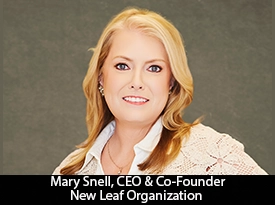
New Leaf Organization was not created to fit within the existing education system —it was built to fix what the system could not. It did not begin as a concept on a whiteboard, but as a response to a problem demanding deeper, more flexible solutions. For Mary Snell, CEO and Co-Founder of New Leaf Organization, the cracks in the education system were impossible to miss. Long before New Leaf existed, she encountered students whose struggles had little to do with academics and everything to do with life outside the classroom. Housing instability, trauma, economic pressure, and systemic blind spots followed them into school every day. Traditional models, even with committed educators, were not built to meet those realities head-on. The turning point came when a sponsoring body abruptly withdrew support from multiple counties, leaving thousands of students without access to educational services. Rather than accept the fallout, Snell and her colleagues made a decisive call. They would build something new, not out of ambition, but out of responsibility to the students and educators who would otherwise be left behind. That resolve was shaped by experience. Early in her career at London Academy in Ohio, Snell found herself operating in a two-person leadership team responsible for an entire school. It was demanding, imperfect, and formative. It also reinforced what she had already felt during her own turbulent middle school years: disconnection, when ignored, becomes destiny. When addressed, it becomes possibility.
Operating as Buckeye Community Schools across Ohio, New Leaf Organization is a nonprofit management organization overseeing a network of dropout prevention and credit recovery schools. New Leaf focuses on more than diplomas. Its work centers on rebuilding confidence, restoring dignity, and creating real pathways forward for students who have been written off by conventional systems.
In conversation with Mary Snell, CEO and Co-Founder of New Leaf Organization
New Leaf is described as a pioneer with a unique alternative education model. What are the core components that make it more effective than traditional high school systems?
New Leaf’s model is built on personalization, trust, and mastery—three interconnected components that redefine how students experience education. Every student begins with an individualized learning plan shaped through intentional listening. Educators take the time to understand each student’s barriers, goals, and aspirations, and then co-create a clear roadmap toward post-graduation success, whether that path leads to higher education, skilled trades, military service, or direct workforce entry.
A defining pillar of the model is intentional relationship-building grounded in trust. Many students arrive at New Leaf having experienced repeated disruption and disengagement. Re-engagement begins not with coursework, but with connection. Trust is treated as a prerequisite to learning, not a byproduct of it. Staff are trained to build authentic, consistent relationships that establish safety, stability, and belief. Students are known by name, story, and circumstance, allowing educators to identify barriers early, intervene with purpose, and hold students accountable in ways that feel supportive rather than punitive. When students trust the adults around them, they are more willing to take academic risks, persist through challenges, and re-envision their futures.
Academically, New Leaf operates on a mastery-based learning model where progress is earned through demonstrated understanding rather than seat time. Students must achieve a minimum of 75 percent mastery on assessments before advancing, ensuring deep learning and long-term retention. Curriculum and assessments are rigorous and aligned with state standards, preparing students not only for graduation but for success beyond the classroom.
The physical and cultural environments of New Leaf schools further reinforce this approach. Campuses are intentionally designed for wellness, with calming colors, open spaces, and areas for connection and quiet reflection. The culture balances empathy with accountability. Educators are selected as much for their ability to build relationships as for their credentials, and professional development emphasizes collaboration, consistency, and student-centered practice. Policies and schedules remain flexible—not to lower expectations, but to meet students where they are and remove unnecessary barriers to success.
Together, these components create an environment where students feel seen, supported, and capable, allowing meaningful academic progress and personal growth to occur simultaneously.
Can you explain your services in brief?
Founded as a nonprofit organization managing dropout prevention and credit recovery schools across Ohio, New Leaf Organization has reimagined education for students who have faced significant barriers along the way.
Operating as Buckeye Community Schools, New Leaf delivers a comprehensive, no-cost educational model that blends academic rigor with emotional support and real-world preparation. The organization’s services extend well beyond classroom instruction and include:
- Personalized learning plans
- Mastery-based academics
- Wraparound student and family services
- Job readiness and career pathways
- College Credit Plus opportunities
- Career and technical education
- Community and business partnerships
- Holistic student development
At its core, New Leaf is not focused solely on keeping students enrolled—it is focused on restoring belief, purpose, and direction so students graduate prepared for life, work, and continued learning.
How do your wraparound services translate into stronger graduation outcomes and more stable, productive citizens?
At New Leaf, academic success is inseparable from meeting basic human needs. Wraparound services are embedded directly into the educational experience and include access to mental health counseling, healthcare resources, housing support, and family services.
“These are not add-ons,” Mary Snell emphasizes. “They are foundational. You cannot expect a student to focus on algebra if they don’t know where they’ll sleep tonight.”
By addressing non-academic barriers proactively, students are able to fully engage in learning, build resilience, and develop the stability required to succeed beyond graduation. The result is not only higher graduation rates, but graduates who are better prepared to contribute positively to their communities as healthy, capable, and productive citizens.
What foundational belief about education did you have to “replant” to build New Leaf’s model?
One of the most important beliefs Mary Snell had to challenge was the idea that uniformity equals fairness. Traditional systems often equate equal treatment with equity, yet Mary saw firsthand that students arrive with vastly different needs and starting points.
At New Leaf, equity is rooted in flexibility. By meeting students where they are—and holding them to meaningful, personalized standards—education becomes both rigorous and humane. Replanting this belief allowed New Leaf to grow a model where success is not defined by conformity, but by progress, mastery, and purpose.
What does the future hold for New Leaf Organization and its students?
The future of New Leaf Organization is both ambitious and deeply mission-driven. Over the next five years, the organization plans to expand into communities where resources may be limited but student potential is abundant. Priorities include strengthening career and technical education, expanding mental health and wellness initiatives, and deepening community partnerships.
The goal remains clear: not just graduation, but life preparation. New Leaf is committed to ensuring students leave with confidence, credentials, and a clear sense of purpose.
For Mary Snell, leadership is an ongoing journey. She remains committed to listening, learning, and evolving—always with students at the center of every decision.
Meet the leader behind the success of New Leaf Organization
Mary Snell is a compassionate, purpose-driven leader who has reshaped alternative education in Ohio. As CEO and Co-Founder of New Leaf Organization, she brings more than two decades of experience leading dropout prevention and credit recovery schools.
Under her leadership, more than 5,500 students—many at risk of being left behind—have earned high school diplomas and reclaimed their futures. Her work extends beyond academics, focusing on holistic development and long-term impact.
At the heart of Mary’s leadership is a simple yet powerful belief: every student deserves the opportunity to recognize their potential and believe in a brighter future. For her, New Leaf is not just a network of schools—it is a movement rooted in hope, possibility, and transformation.
Mary Snell, CEO and Co-Founder
“New Leaf delivers a comprehensive, no-cost educational model that blends academic rigor with emotional support and real-world preparation.”
“At New Leaf, equity is rooted in flexibility. By meeting students where they are—and holding them to meaningful, personalized standards—education becomes both rigorous and humane.”
Search Magazine
Latest Listings