Fastest Growing Companies of the Year 2026
Timothy Blair, iCHOR Vascular Inc. CEO: “What drives me is simple: we’re saving lives, and we’re doing it with elegant simplicity. That’s a mission worth every ounce of effort.”
The Silicon Review

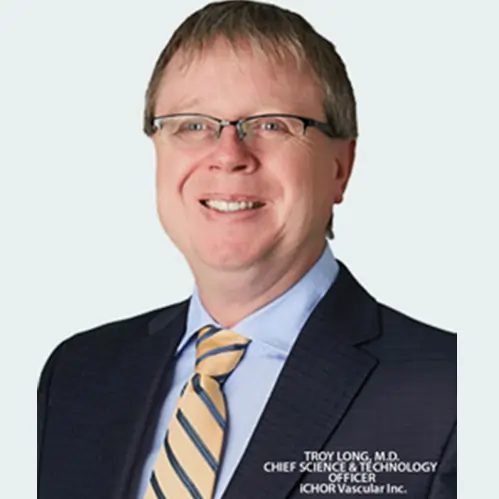
Founded in 2014, iCHOR Vascular Inc. was built around a bold yet practical idea: peripheral vascular occlusion treatment should be simpler, safer, and far more cost-effective than the outdated standards dominating the industry today. Headquartered in Boca Raton, Florida, the company was co-founded by CEO Timothy Blair and CTO Dr. Troy Long, an experienced interventional radiologist who witnessed the shortcomings of existing thrombectomy approaches firsthand in clinical practice. Together, they explored a wide range of aspiration systems and metal-based clot retrieval technologies in pre-clinical settings, carefully studying both effectiveness and vessel safety through histopathology evaluations. What they discovered was striking. Despite decades of innovation and escalating healthcare costs, none of the modern devices consistently outperformed the traditional Fogarty balloon catheter, a surgical thrombectomy tool that has remained the gold standard for more than sixty years. That realization became the foundation of iCHOR’s mission: to translate the proven effectiveness of surgical thrombectomy into a minimally invasive endovascular solution capable of delivering rapid reperfusion without the risks, complexity, and costs associated with open surgery or thrombolytic drug therapy.
Today, iCHOR Vascular is positioning itself as a transformative force in peripheral vascular intervention by developing simple, versatile, and predictable technologies designed specifically for vascular surgeons and interventional radiologists seeking better patient outcomes with fewer procedural burdens. The company’s approach addresses a major unmet need in vascular care, where patients suffering from dangerous peripheral blood clots are often forced to choose between invasive surgery with ICU recovery or clot-dissolving drugs that increase bleeding risk and prolong hospital stays. By reimagining the surgical “wall-to-wall sweep” mechanism through an endovascular platform, iCHOR aims to create a first-line therapy that combines clinical reliability with operational efficiency. The company has already treated more than 100 patients through its limited market release, demonstrating growing clinical confidence in its technology and validating its real-world potential. For medical device investors, iCHOR represents an opportunity at the intersection of vascular innovation, procedural efficiency, and cost-conscious healthcare delivery. With a focused leadership team, strong clinical insight, and a mission rooted in solving longstanding industry challenges, iCHOR Vascular is steadily advancing toward redefining the future of peripheral vascular occlusion treatment.
In conversation with Timothy Blair, CEO of iCHOR Vascular Inc.
Can you briefly explain iCHOR Vascular’s core technologies and solutions?
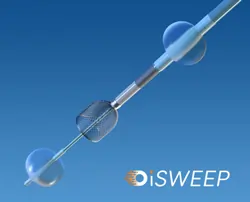
Our flagship innovation is the iSWEEP platform; an all-in-one combination thrombectomy and embolic protection system designed to simplify peripheral vascular clot removal. Think of it as an “Endo-Fogarty”, we’ve converted the trusted, 60-year surgical Fogarty balloon sweep technique into a minimally invasive endovascular procedure.
The platform currently includes two FDA-cleared systems with a 3rd product line coming. The architecture is the same across all three peripheral vascular solutions, creating a scalable portfolio that enables a repeatable training model across product lines:
-
iART (7F Arterial Reperfusion System) is designed to treat arterial vessels up to 10mm. Ideal for acute limb ischemia, occluded SFA stents, occluded bypass grafts, and post-atherectomy debris and other embolic events.
-
iDVT (14F Venous Reperfusion System) is designed to venous anatomy up to 16mm. Ideal for deep vein thrombosis and occluded venous stents.
-
Dialysis (8F Reperfusion System) is designed to treat dialysis grafts and fistulae up to 10mm. Ideal for all grafts and most fistulae work that equally addresses the reimbursement challenges.
Each system is elegantly simple; three components using identical mechanism of action and identical end user architecture: a control sheath with an occlusion balloon for embolic protection, a guide catheter with a nitinol funnel basket to capture debris, and a compliant balloon catheter that sweeps the clot into the funnel for removal. No capital equipment required, no drugs, no complex setup. It’s a single-kit design that aims to completely democratize peripheral thrombectomy and equally enables many patients to be treated in Ambulatory Surgery Centers (ASCs) and Office Based Labs (OBLs).
How does your thrombectomy technology differ from traditional clot-removal methods?
The difference is fundamental. Traditional approaches force physicians to choose between two imperfect paths; “a compromise”: surgical embolectomy is effective but requires an incision, general anesthesia, and significant recovery time; fast moving pharmacomechanical devices often cause kidney damage (hemolysis) and distal embolization; aspiration systems can be effective however all straws come with significant blood loss and distal embolization challenges; and finally metal dragging tools, which can remove clot at the cost of valve damage and vessel scarring leading to bigger problems later.
iCHOR replicates what works well in surgical thrombectomy while eliminating those compromises. The systems use a proven mechanism of action, the compliant balloon sweep surgeons have trusted for decades. But we deliver it percutaneously, through a small puncture rather than a surgical incision.
Three key differentiators set us apart:
-
Built-in embolic protection: Our occlusion balloon arrests blood flow before we engage the clot, preventing distal embolization.
-
Vessel-friendly design: Our compliant balloon conforms to the vessel anatomy as opposed to rigid dragging tools that create significant outward force on vessels. iCHOR’s wall to wall compliance avoids unnecessary scarring and valve damage associated with aggressive devices.
-
Maintained wire access: We never lose sheath and wire access throughout the procedure, promoting multiple passes without starting over. This is key when we think about time to reperfusion for the physician and the patients.
The result? Procedures routinely completing under 30 minutes with minimal blood loss, we’re demonstrating less than 5mL in clinical cases while achieving immediate, brisk flow restoration in almost all cases.

How does innovation drive the development of your vascular treatment solutions?
Innovation at iCHOR isn’t about complexity for complexity’s sake, it’s about intelligent simplification. Our guiding principle is that the best medical device is one that takes a proven mechanism of action and makes it easier, safer, and more accessible for patients.
We started by asking: what has actually worked in clot removal for six decades? The answer was clear, the Fogarty balloon sweep. It’s gentle on vessels, highly predictable, and a single balloon can be effective across a wide range of clot morphologies and anatomy. Our innovation was converting this open surgical technique into something simple and obvious; something that could be easily and repeatedly used in a large academic teaching institution but also use the same system in an office-based lab or ambulatory surgery center, not just a hospital OR. The common architecture, all-in-one packaging, and simplicity will drive adoption because its trusted, economical, and efficient.
We continuously iterate based on real-world feedback. Our limited market release approach, working closely with physicians across multiple sites with varying skill sets allows us to validate clinical utility and identify design improvements prior to broad commercialization commitments. We’ve already achieved 100% technical success across a wide range of clot types and locations in our clinical evaluations and are excited about our future designs and commercialization steps.
Looking ahead, we’re expanding our platform with next-generation designs and exploring additional indications including dialysis access, where our low-cost approach will make a significant impact.
How important are affordability and accessibility in your product development strategy?
Absolutely central, this is a core differentiator for iCHOR, not an afterthought.
The peripheral vascular market has a fundamental problem: costs to treat arterial and venous occlusions have skyrocketed over the past 10 years, yet outcomes haven’t shown corresponding improvements. Massive amounts of data, but much of that data is flawed and hasn’t demonstrated significant improvements over previous surgical options. Many existing technologies require expensive capital equipment, lengthy hospital stays, and specialized OR settings. That’s not sustainable, and it limits access for the patients who need help most.
We designed iCHOR from day one with health economics in mind:
-
No capital equipment required: Our system is entirely disposable, eliminating equipment purchases and the ongoing service contracts that come with them. Even when the capital equipment is free, there is a cost that is passed through the disposable pricing and there is always a clinical representative required to make sure everything works properly.
-
Single-kit simplicity: Three components, one kit, one straightforward price. No à la carte complexity. 1 kit for peripheral arterial issues, and 1 kit for peripheral venous issues, 1 kit for all dialysis grafts and fistulae.
-
Site-of-care flexibility: Our technology is designed to work in academic institutions where training requires simplicity and repeatability as well as office-based labs and ambulatory surgery centers. This is critical because healthcare is shifting toward outpatient settings and current technologies and therapeutic options simply can’t make that pivot.
-
Reduced procedural costs: Quick procedures, minimal blood loss, no damage to vessels, and no drug costs translate to lower overall episode-of-care expenses. Also by making these procedures more accessible, we can significantly improve long-term outcomes.
During our limited market release, we validated not just clinical utility but also our economic messaging through hospital value analysis committees. We want to prove that better outcomes and better economics can go hand-in-hand.
How have FDA clearances and clinical feedback influenced your company’s growth?
FDA clearance is always a meaningful milestone for any company, and we will soon have 3 products cleared as part of the commercial launch. We have two FDA 510(k)-cleared devices; our 7F arterial system and our 14F venous system, giving us a complete platform to address both arterial and venous peripheral occlusions.
These clearances validate years of development work and position us for meaningful commercial growth, which is the next gauntlet to navigate. But equally important has been the clinical feedback gathered through our deliberate, measured approach to market entry.
Our limited market release strategy was intentional. As a friends-and-family-backed / angel-backed startup, we were able to focus on quality of procedures over quantity. We completed our initial 7F, 25 procedure evaluations with 100% technical success across a wide range of clot morphology and location followed by our 14F, 60 patient results demonstrating 100% technical success as well as significant validation around key clinical endpoints such at eliminating blood loss, reducing distal embolization, and reducing vessel trauma. By collecting data in systematic and clinically meaningful manner, we were able to validate future claims, iterate based broader feedback, and perfect our messaging based on confidence and real-world results. Every case teaches us something about real-world performance, how the device handles organized versus acute thrombus, how it performs in different vessel anatomies, where we can improve the user experience. That learning cycle accelerates our development roadmap and gives our commercial efforts a better chance of success.
This combination, FDA clearance establishing our regulatory foundation, plus rigorous post market validation establishing our clinical credibility has positioned iCHOR for significant growth. We’ve raised $14M in capital to date with some good runway to achieve our development and market release data. In 2024 we completed our Series A at an $18M pre-money valuation and will be positioning for Series B later in 2026 to scale the commercial validation and real-world clinical data; both significant value drivers for iCHOR.
What are iCHOR Vascular’s expansion and innovation goals for the next 3–5 years?
We’re at a genuine inflection point, and the next 3-5 years are about scaling what we’ve proven while expanding our reach i.e. commercial scale, clinical validation, OUS expansion opportunities.
Near-term (2026):
-
Continue our limited market release data collection for the 14F venous system and 7F arterial system, incorporating our design improvements based on real-world feedback
-
Expand commercial footprint with our cleared devices, building our sales infrastructure, CRM database, and key physician adoption
-
Generate additional clinical validation data to strengthen our evidence base to be presentable at several major conferences in 2026
Platform expansion: We’ve built iSWEEP as a platform technology with significant pipeline potential. Beyond our current 7F arterial and 14F venous systems, we’re developing:
-
8F Dialysis Access system: A low-cost solution for the massive dialysis access maintenance market. We have overcome the reimbursement hurdles and expect this product line to be a fast mover in our commercial models.
-
Next-generation designs incorporating physician feedback and lessons learned from our limited market release: The end user improvements further guarantee simplicity, intuitiveness, and robustness which will be major contributions to adoption in high volume centers.
Strategic positioning: We’re positioned at the intersection of two powerful trends: (1) the shift of vascular interventions from hospitals to office-based labs and ambulatory surgery centers, and (2) the growing global demand for cost-effective, minimally invasive solutions. Current technologies cannot easily pivot to these outpatient settings and current cost structures are prohibitive in many global markets iCHOR can address these new markets. This does not suggest we ignore high volume teaching institutions, it simple suggests an emerging trend that iCHOR will capitalize on while simultaneously gaining traction in high volume centers and community hospitals.
Our goal is to establish iCHOR as the first line, go-to thrombectomy solution across peripheral vascular indications. Based on vascular market comparables, we see potential exits above $300M as we start to execute the commercialization roadmap.
“My journey to iCHOR was shaped by diverse experience spanning sales, marketing, regulatory strategy, managing GPOs, and executive leadership both at multinationals and startups. A pivotal chapter was my tenure at NAMSA, where we transformed the company into the world’s largest and most complete Clinical Research Organization, taking devices from concept all the way to commercialization.” “Changing the game takes a bold commitment, belief, and time.”
“iCHOR utilizes a proven mechanism of action to achieve substantial reperfusion with the least amount of effort in the least amount of time with the least amount of cost.”
Search Magazine
Latest Listings