Waabi Builds the Physical AI Platform That Will Reshape Transportation
The Silicon Review
The autonomous vehicle industry has long been defined by a central contradiction: billions of dollars invested, yet limited real-world deployment. The challenge has never been about whether autonomous technology could work it was about whether it could scale. Traditional approaches required endless real-world testing, millions of miles driven, and years of incremental progress. Waabi was founded to break that pattern, positioning itself at the intersection of artificial intelligence and physical transportation.
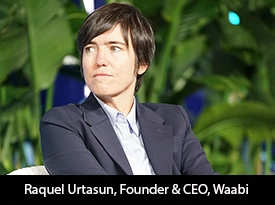
Founded in 2021 by AI visionary Raquel Urtasun, Waabi has pioneered a revolutionary Physical AI Platform that enables, for the first time, true scale across different form factors, geographies, and environments. The company's breakthrough is powered by the same AI model acting as a shared brain for both autonomous trucks and robotaxis a unified architecture that eliminates the fragmented approaches that have held the industry back. This unified intelligence, combined with the world's most advanced neural simulator, has established Waabi among the companies to watch in the autonomous vehicle sector.
As the autonomous transportation industry enters its next phase, Waabi's simulation-first approach represents a fundamental shift. Rather than requiring billions of real-world miles to validate safety, the company tests thousands of safety-critical scenarios in its high-fidelity neural simulator before they ever happen on public roads. This approach makes every mile driven more valuable and creates a path to commercialization that traditional approaches cannot match.
The Physical AI Platform as a Revenue Engine
Waabi's most distinctive competitive advantage is its Physical AI Platform, which generalizes across different form factors, geographies, and environments. This breakthrough architecture means the same AI model that powers autonomous trucks can also operate robotaxis, eliminating the need to build separate systems for each application. For investors and partners, this platform approach creates a more defensible business model with broader addressable markets. For Waabi, it enables faster scaling, lower development costs, and more efficient deployment.
The Simulation-First Safety Advantage
Waabi's high-fidelity neural simulator, Waabi World, represents a paradigm shift in autonomous vehicle development. The platform replicates both routine situations and rare edge cases with remarkable realism, enabling the company to test thousands of safety-critical scenarios in simulation before they ever occur on public roads. This simulation-first approach dramatically reduces the need for expensive real-world testing while improving safety outcomes. For partners and regulators, this creates confidence in the technology's reliability. For Waabi, it accelerates the path to commercial deployment while reducing capital requirements.
The Mixed Reality Testing Capability
Waabi has pioneered Mixed Reality Testing, combining real trucks with real-time synthetic scenarios to unlock testing possibilities that were previously impossible to achieve safely. This capability allows the company to inject rare and dangerous situations into live operations without putting people or cargo at risk. For logistics partners, this means more reliable autonomous operations. For Waabi, it creates a competitive advantage in safety validation that competitors cannot replicate.
The Unified Architecture for Autonomous Trucks and Robotaxis
Waabi's architecture is built on the same AI model acting as a shared brain for both autonomous trucks and robotaxis. This unified approach eliminates the fragmentation that has plagued the industry, enabling faster development and more efficient scaling. For logistics companies, this means access to autonomous trucks that can operate across diverse environments. For Waabi, the unified architecture creates a more capital-efficient path to market, with technology developed for one application benefiting the other.
The Commercial Partnerships as a Growth Accelerator
Waabi has established partnerships with industry leaders including Volvo Autonomous Solutions and Uber, validating its technology and creating pathways to commercial deployment. The partnership with Volvo Autonomous Solutions advances autonomous technology while building the broader ecosystem required for commercial deployment. The partnership with Uber accelerates Waabi's expansion into robotaxis. For Waabi, these partnerships provide revenue visibility and accelerate the path to commercialization.
The Vision for Physical AI
Waabi's vision extends beyond autonomous trucks and robotaxis to the broader Physical AI category. The company believes that the same platform that powers autonomous vehicles can be applied to other physical systems—robotics, logistics, and beyond. This long-term vision attracts investors seeking exposure to the next wave of AI innovation. For Waabi, it creates a revenue opportunity that extends beyond transportation.
Raquel Urtasun, Founder & CEO