>>
Industry>>
Gaming and vfx>>
Breaking Down the Latest Trend...Breaking Down the Latest Trends in Game Design VFX for 2024
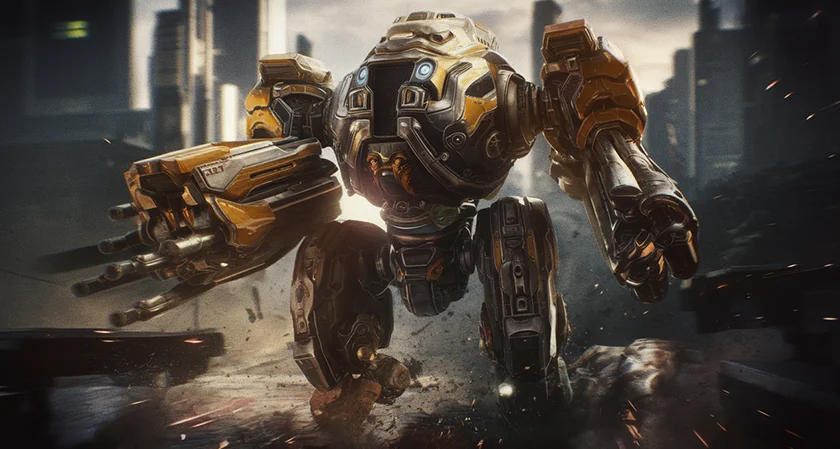
Visual effects (VFX) and game design have advanced to levels that were previously unattainable in 2024, with technological advancements that make it tougher to distinguish between the actual and virtual worlds. Visual effects (VFX) tendencies are dominating the gaming industry, influencing how developers approach game creation and expanding the avenues for player experiences. Some examples of these trends include dynamic in-game effects and hyper-realistic environment. Understanding the newest VFX trends in game design is essential for developers looking to stay ahead of the curve as the industry shifts towards more immersive settings. The effect of cutting-edge VFX techniques, the cutting-edge VFX trends influencing game design in 2024, and the growing importance of real-time rendering and UI design in the contemporary gaming experience will all be covered in this article.
The Rise of Real-Time Rendering in Game Design
The emergence of live rendering in recent decades is considered one of the biggest changes in game design. In the past, rendering was a tedious procedure that frequently took hours or even days to complete it. Nonetheless, real-time rendering technologies have advanced significantly by 2024, allowing developers to view the results of their work instantly. This advancement makes it feasible for design processes to be more dynamic and adaptable, resulting in a smooth transition from concept to final product. In multiplayer games and live events, where developers must create stunning graphics while preserving performance across a range of devices, real-time rendering has become particularly crucial. In addition to expediting game production, the capacity to present complex visual effects instantly has allowed for the creation of extraordinarily intricate and immersive environments without sacrificing gameplay quality.
Innovative VFX Techniques Pushing the Boundaries of Immersion
In 2024, a handful of the latest and greatest visual effects techniques are set to be used, many of which are aimed at improving realistic and immersion. For example, ray tracing's incorporation into game design continues to push the limits of visual realism. The process of ray tracing creates incredibly lifelike lighting, shadows, and reflections by simulating the interaction of light with objects. Players can enjoy accurate visuals in real time thanks to this approach, which improves the realistic appeal of both settings and character models.
Furthermore, more interactive and fascinating worlds are being made with the help of powerful particle effects. Particle systems in game design are enabling intricate simulations of anything from weather to magical abilities, from floating particles in water to explosive fireballs. Now that these effects are dynamic and react to player actions in real time, this magical and ROI generating feature enhance player immersion by introducing a realistic and interactive layer. Plus, machine learning is being utilized more and more by VFX artists to further enhance and automate their workflows. Developers may develop complex visual effects that are economical and time-efficient by optimizing visual effects with algorithms. Game studios can now produce more intricate visual effects more quickly thanks to breakthroughs in AI-powered VFX automation, which is an invaluable resource in a field where resources and time frames are sometimes constrained.
How Game Design UI is Evolving with VFX
The user interface (UI) of games has changed considerably in response to the increasing demand for dynamic and smooth interaction and aesthetic flare. In 2024, visual effects (VFX) will be vital for improving the responsiveness, intuitiveness, and engagement of user interfaces (UI). The days of static, uncomplicated menus were ended; modern user interfaces are dynamic and interactive, with discreetly placed visual effects that improve the user experience without interfering with gameplay.
More engaging and eye-catching interface are being made with advanced visual effects techniques like lighting effects, animated transitions, and fluid animations. For instance, menus may now smoothly slide in with particle effects, or a health meter may now pulse or change color according on the player's current status. By bringing life to the game's interface and improving navigation, these VFX-driven UI adjustments increase player engagement. Plus, these advancements in UI design are beneficial as well as to being aesthetically pleasing. For instance, VFX may help in effectively communicating important in-game information by accentuating important actions or alarms using animations and effects. Players can swiftly evaluate their environment or make decisions thanks to this visual input, which makes the gaming experience more fluid and seamless.
The Impact of Game Design Conferences on VFX Trends
Game design conferences are now key venues for discussing the newest advancements in visual effects and game creation. Designers, developers, and VFX artists can exhibit their work at these events and get knowledge about the latest tools, trends, and technologies from experts in the field. It is anticipated that a number of significant conferences will highlight innovative game design techniques and VFX trends in 2024. Developers will deal with the difficulties and benefits of pushing creative boundaries at these conferences, as well as best practices for integrating visual effects into their games. These events also offer beneficial networking chances, allowing developers to connect with like-minded experts and share concepts that will shape VFX trends in the future. The development of real-time rendering technologies, including new hardware and software developments that allow for more realistic and performance-optimized visual effects, will likely be discussed at these conferences. There will likely be a lot of debate about the increasing significance of machine learning in VFX workflows, with speakers demonstrating how AI is changing the game development landscape.
Game Development VFX Trends for 2024: Moving Beyond Visual Appeal
Though visual effects are frequently linked to a game's aesthetic appeal, their contribution to gameplay mechanics is growing in importance. Developers are investigating in 2024 how visual effects might affect a game's entire experience, narrative, interactivity, and visual appeal. VFX, for example, is essential to reflecting player decisions and actions in role-playing games (RPGs). VFX is a potent storytelling tool that may be used in everything from how a character's skills appear to how environments react to player choices. Immersion has also reached new heights with the incorporation of visual effects (VFX) into virtual reality (VR) and augmented reality (AR) experiences. Developers are using visual effects (VFX) to produce increasingly realistic and interactive immersive environments as VR and AR gain traction. Conventional games are unable to provide the visual fidelity and immersion needed for the integration of digital and physical realities. VR and AR experiences are growing more and more similar to the real world by utilizing VFX trends like dynamic lighting, particle effects, and interactive surroundings.
The Future of Game Design VFX: What's Next?
VFX will continue to advance at a swift rate as we look to 2024 and beyond for the future of game creation. Game developers are in an advantageous position to create even more captivating and immersive experiences for players as real-time rendering progresses. While advancements in UI design will make interactions more natural and intuitive, the addition of cutting-edge VFX techniques, such ray tracing and AI-powered effects, will move us closer to photorealistic game worlds. Additionally, as VR and AR become more popular, VFX's position in these technologies is expected to grow significantly. Gaming experiences will become more dynamic, responsive, and customized as a result of the confluence of AI, machine learning, and visual effects.
Game design conferences will continue to have an impact on VFX trends. These conferences will act as notion incubators, extending the industry's boundaries of creativity and laying foundations for the upcoming generation of game developers. VFX will continue to be at the forefront of gaming's evolution, offering gamers with an experience that is more immersive, engaging, and aesthetically spectacular than in the past. All things considered, 2024 will be an essential year for game design visual effects, with real-time rendering, modern VFX methods, and developing user interfaces at the forefront. Using visual effects to improve gameplay, story, and user engagement, game developers are always pushing the envelope. The future of game design appears more promising than ever as the industry adopts cutting-edge technology like ray tracing, AI automation, and VR/AR integration. To create successful, captivating games that will enthrall players for years to come, developers must stay ahead of these trends and comprehend their possible effects.
The VFX environment will continue to change as a result of ongoing innovation and cooperation at game design conferences, guaranteeing that the upcoming generation of games will offer even more engaging, visually spectacular, and interactive experiences.