>>
Industry>>
Nanotechnology>>
Nanotechnology revolutionizes ...Nanotechnology revolutionizes avionics, boosting efficiency, safety, and sustainability
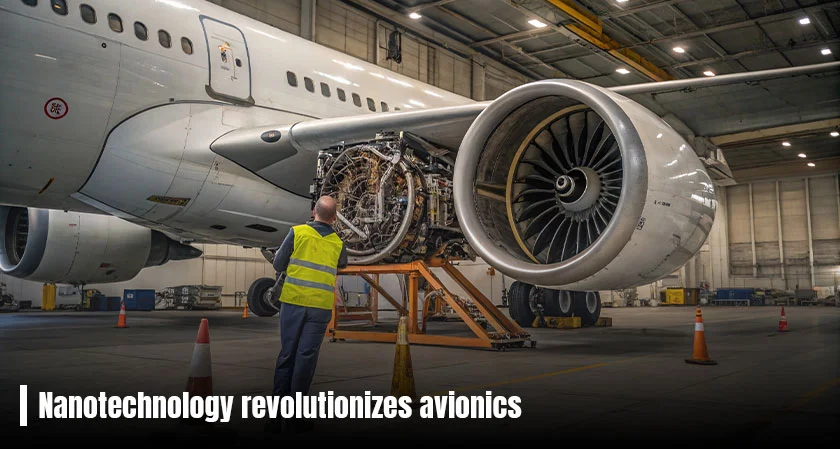
Nanotechnology is transforming avionics by enhancing efficiency, performance, safety, and sustainability in aircraft design.
Nanotechnology is revolutionizing avionics at a rapid rate, pushing the limits of aircraft performance, design, and efficiency. Nanotechnology enables one to produce lighter, smaller, and stronger components by manipulating material at the molecular or atomic level, significantly increasing the performance of avionics systems.
Miniaturization is one of the most valuable applications of nanotechnology in the field of avionics. Nanomaterials such as nanocomposites are used in aircraft sensors, wiring, and panels to reduce their weight without compromising on their strength. Lighter aircraft consume less fuel, hence leading to reduced costs of operating and higher sustainability, a key feature in the modern world of aviation. Weight reduction is connected with increased flight ranges and reduced fuel consumption, thus making aircraft energy-efficient.
And yet another important evolution is the development of nanoelectronics, which are revolutionizing aircraft electronic systems. Gyroscopes and accelerometers at the nanoscale have been developed and are improving flight control systems to be more accurate and reliable. These sensors use less power, are smaller in size, and give better information, with the overall capability of the plane being enhanced. Additionally, nanoscale semiconductor material and quantum dots are enhancing the cockpit display monitors, giving richer, brighter images with the energy usage minimized.
Nanotechnology is also improving the safety of airplanes. Micro-Electro-Mechanical Systems (MEMS) gyroscopes and accelerometers, which contain nanoscale components, are more accurate than existing systems and are used to a key extent in inertial navigation and autopilot. Additionally, nanoscale sensors integrated into airplane components can check structural condition, sensing fatigue or damage before it reaches a point to become catastrophic and leading to failure, enabling predictive maintenance and mitigating the risk of catastrophic failure.
The increasing application of nanotechnology in avionics is revolutionizing the aerospace industry by lowering the cost, enhancing safety, and making aviation more sustainable. As the aerospace nanotechnology market is expected to rise to USD 8.10 billion by 2034, the future of avionics will be dominated by these advanced technologies.