>>
Industry>>
Energy and Utility>>
Explore Advanced Solutions For...Explore Advanced Solutions For Purifying Large Fluid Containers
The Silicon Review
29 December, 2025
Author:
The Silicon Review Team
Large-volume tanks present a unique mix of mechanical, chemical, and biological challenges. As volumes grow, simple approaches like tablet drops or basic cartridge filters stop being enough, and the margin for error shrinks fast. The right plan blends smart pretreatment, predictable automation, and safety practices that keep people out of harm’s way.
This guide walks through modern options for purifying fluids in storage tanks and process vessels. You will find ways to cut downtime, reduce waste, and extend asset life while meeting quality targets. The aim is practical clarity - pick the tools that fit your risks, budget, and regulatory needs.
Understanding The Challenge Of Large-Volume Purification
Purifying thousands of gallons is not just a scaled-up version of treating a small tote. Sediment settles differently, thermal layers form, and dead zones collect sludge where microbes thrive. Any solution has to reach every surface and move the full volume with a predictable contact time.
Access is limited, so you cannot rely on manual scrubbing or frequent entries. Automated nozzles, mixing patterns, and controlled recirculation reduce confined-space exposure and keep cleaning consistent. The goal is to make the process repeatable and verifiable across shifts.
Regulatory expectations rise with capacity. Integrity checks, recordkeeping, and documented methods are part of the job. Designing purification with validation in mind saves time when audits arrive.
Building A Smart Pretreatment Train
Start by taking out what is easy to remove before you attempt fine polishing. Coarse strainers and basket filters intercept rust flakes, scale chips, and gasket crumbs that would otherwise blind finer media. A stepped approach protects downstream equipment and keeps the flow steady.
Depth or pleated cartridges then handle smaller suspended solids. Select micron ratings based on inlet quality and target clarity, and meter differential pressure, so you know when to change elements. This prevents bypass and keeps the process efficient.
For tougher loads, add media filters with sand, anthracite, or specialized blends to capture stubborn turbidity. Pair them with flow rates that promote even bed utilization, and schedule backwashes so you preserve capacity without wasting water.
Advanced Disinfection And Polishing Technologies
Ultraviolet treatment offers non-chemical disinfection that avoids taste or odor changes. Correct sizing depends on UV transmittance, sleeve cleanliness, and lamp intensity, and a wiper system keeps output steady over long campaigns. UV is often paired with filtration to limit shadowing by particles.
Oxidants such as ozone or hydrogen peroxide attack microbes and oxidize organics. In advanced oxidation processes, combining UV with peroxide or ozone generates radicals that work quickly on hard-to-kill contaminants. Dosing control and vent management are key to safe, reliable operation.
Membrane options like ultrafiltration and reverse osmosis provide sharp cutoffs for particles, pathogens, and dissolved salts. They shine when you need consistent, low-turbidity results, and they respond well to automated clean-in-place routines that restore flux without opening the system.
Automation, Monitoring, And Documentation
Automation reduces variability and keeps crews out of hazardous spaces. Programmable sequences can manage valve states, pump ramps, chemical dosing, and rinse verification with timestamps for each step. This gives you the same outcome on Monday night as on Friday morning.
Digital sensors for flow, pressure, turbidity, conductivity, and ORP make the process transparent. Trends reveal fouling early and show when a filter or membrane needs attention. You can click here to explore a service partner that integrates cleaning, monitoring, and safe entry practices. Then, return to refining your internal standards.
Good records build trust. Batch logs, calibration checks, and deviation notes form a traceable path from raw condition to finished quality, which is exactly what stakeholders expect when volume is high and risk is nontrivial.
Sludge Removal And Confined-Space Safety
Sludge makes purification harder by sheltering microbes and consuming oxidants. Hydrojetting, controlled agitation, and vacuum extraction remove layers without stirring contaminants into suspension for long periods. The less material left behind, the less chemistry you will burn later.
Confined-space entry should never be routine. Remote equipment, gas monitoring, and mechanical ventilation reduce exposure to low oxygen or harmful vapors. Rescue plans and trained responders are part of the job before anyone breaks the plane of the hatch.
Lockout-tagout and hot-work controls protect the team while pumps, heaters, or mixers are isolated. It is easier to prevent accidents than to fix them, and standardized permits make the safe choice the default choice.
CIP Strategies For Membranes, Tanks, And Loops
Clean-in-place methods treat internal surfaces without disassembly. Alkali cycles remove organics and biofilm, while acid cycles dissolve scale and metal oxides. Rinses between steps prevent unwanted reactions and protect system materials.
Temperature and flow matter as much as chemistry. Higher temperatures speed reactions, and turbulent flow improves contact with rough surfaces and gaskets. Validation means measuring what you can - conductivity shows rinse endpoints, while swabs or ATP tests verify hygiene.
Design details make CIP efficient. Smooth welds, sloped lines, and self-draining valves prevent pockets that never see flow. The result is shorter cycles, less water use, and better repeatability.
Materials Compatibility And Corrosion Control
Choose materials that match your fluid and disinfectants. Stainless grades resist many oxidants, but chloride levels and temperature can drive pitting or stress cracking. Linings and coatings extend life when conditions are too harsh for bare metal.
Gasket and seal choices affect both purity and uptime. Elastomers swell or harden in different chemistries, which can create bypass paths or particle shedding. Selecting compatible compounds reduces both contamination and maintenance.
Corrosion monitoring helps you catch trouble early. Coupons, probes, and routine inspections show whether conditions are trending the wrong way, giving you time to adjust treatment or flow patterns before leaks appear.
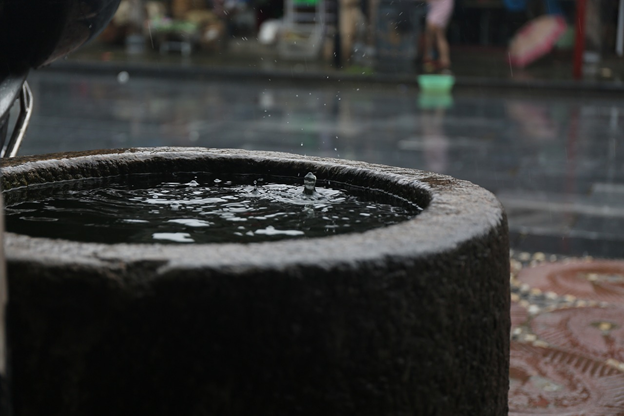
Purifying large fluid containers is a systems problem, not a single gadget fix. The best programs blend pretreatment, mixing, disinfection, and verification so every gallon sees the right conditions and every surface stays clean.
When the pieces work together, you get steady quality, fewer entries, and less waste. That is how large volume operations keep production moving while protecting people, assets, and the environment.