>>
Industry>>
Architecture and interior design>>
How Technology, Inclusive Thin...ARCHITECTURE AND INTERIOR DESIGN
How Technology, Inclusive Thinking, and a Deeper Understanding of Client Needs Are Reshaping Luxury Residential Design
The Silicon Review
15 December, 2025
Author:
The Silicon Review Team
- Sashindra Suresh
A beautiful home and a well-designed home are not always the same thing. Many of Miami's most expensive residences photograph extraordinarily well and function poorly in the details that matter most to the people living in them.
For example, a kitchen designed to impress at dinner parties, might not function properly when used and create bottlenecks on a school morning.
Or the open-plan layout that looked expansive in the listing and feels exposed in daily life. These are design problems that require a fundamentally different conversation to resolve.
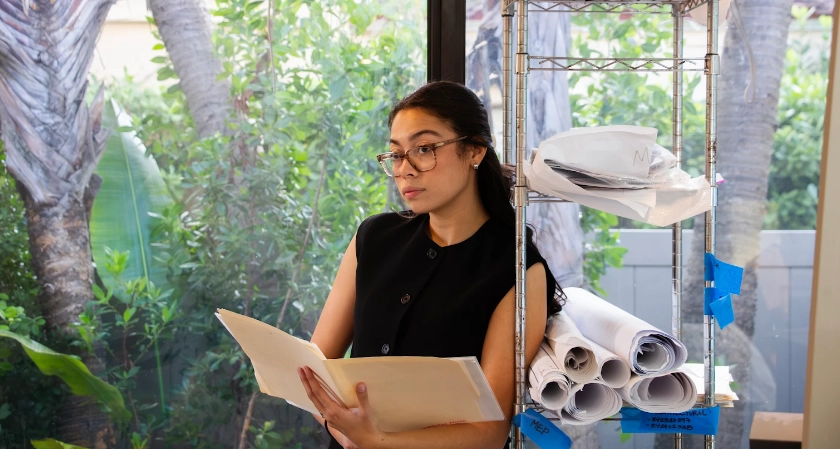
"Most say the current layout doesn't flow well or function for their needs," says Francis Castro, Project Architect Manager at Mirador 3426 LLC, a Miami Beach design-build firm focused on high-end single-family residential architecture.
"We solve that by truly listening and designing for the user, catering to their specific lifestyle rather than imposing a generic style." That commitment to the person over the aesthetic is the organizing principle behind a practice that has made Castro one of Miami Beach's highly sought-after architects in luxury residential design. In a market where Miami Beach posted the highest year-over-year growth in both sales and pricing among all Miami submarkets in 2025, clients investing at this level want more than a beautiful home. They want one that actually works.

The Philosophy Behind the Practice
Most residential design processes begin with a visual brief. The client describes what they want the space to look like. They share reference images. They discuss finishes and fixtures. The designer takes that information and produces something that satisfies those preferences. The result can be genuinely beautiful. It can still fail the people living in it because the conversation never went deep enough to understand how they actually use their home.
Francis begins differently. "Before I make any design decisions, I work to understand exactly how the client lives," she explains. "How does the household move through the home on a typical morning? What happens in the kitchen beyond cooking? I take a look at which rooms in the home get used most, and how do they relate to each other?
“It is also important to look at daily friction in the current layout, and what would the home feel like if that friction were removed entirely?" These are not finishing questions. They determine structural decisions that are expensive and disruptive to undo once construction has begun.
This approach represents a meaningful departure from how luxury residential architecture has conventionally been practiced. The high-end market has long rewarded visual distinctiveness above almost everything else. A recognizable aesthetic builds a designer's reputation, attracts clients, and generates attention. Francis treats the aesthetic as something that should follow from a deep understanding of the client's needs, not precede it. The result is spaces that feel personal in a way that purely style-driven design rarely produces.
"Style is important, but it comes after function, not before it," she says. For Francis this straightforward to describe. But it is genuinely difficult to execute consistently across a portfolio of high-end clients. These type of clients often have very strong visual preferences. To execute, it requires the architect to spend real time understanding before she begins designing, and to hold that understanding firmly when aesthetic preferences and practical requirements point in different directions.
"As an architect, I really enjoy solving problems for clients, making spaces more functional, especially when they need to be rethought and catered to their specific needs," she explains. "I use all my knowledge to deliver the most tailored design and see it actually work for them." That satisfaction in seeing a solution land correctly for a specific person, in a specific home, is what drives the methodology rather than any abstract design principle.
The foundation for that philosophy was built at the Universidad Nacional Autónoma de Honduras, where Francis earned her Bachelor of Architecture in a program that treated design and construction as a single integrated practice. Architecture education in the United States tends to emphasize design theory and conceptual development. Her training in Honduras demanded deeper engagement with how buildings are actually made. She arrived at Florida International University to complete her Master of Architecture not as a student encountering construction thinking for the first time, but as a practitioner building on a foundation already laid through years of hands-on experience.
The Scholarship That Shapes the Work
The most intellectually distinctive dimension of Francis's practice grew from her graduate research at FIU, where she served as a highly regarded Sloan Graduate Research Assistant at the College of Communication, Architecture, and the Arts.
Her research addressed a question at the intersection of technology and human experience. And it was a question that scholarly literature had not yet systematically explored. It looked at how Extended Reality tools, specifically Virtual Reality, Augmented Reality, and Mixed Reality, can be deployed to advance Diversity, Equity, and Inclusion outcomes at Minority Serving Institutions? Answering it meant building a comprehensive picture of what existing research revealed across eleven distinct areas, from XR technology broadly to DEI frameworks, Minority Serving Institutions, and the specific intersections between all three.
She went on to work on the co-authored publication, "The Inclusive Campus of the Future: Diversity, Equity, and Inclusion, Extended Reality, and Student Success in Minority-Serving Institutions" (Stuart, Castro, Gebelein, Luis; FIU Immersive Learning in Extended Reality Lab, 2023), is one of the first studies to bring together XR research, DEI frameworks, and student success data at minority-serving institutions within a single unified analysis.
A grant from the Alfred P. Sloan Foundation, as well as a sponsorship by HP, gave Francis the support she needed. The research she carried out informed a landmark conference at FIU in December 2022, bringing together scholars, developers, and practitioners to address questions of inclusion in immersive digital environments.
"What the research revealed, and what I carry into every project, is how profoundly physical environments either include or exclude the people who use them," Francis explains. "Environments built around assumptions about who will use them and how they will move through them create genuine difficulty for anyone outside those assumptions. What XR tools gave me was the ability to simulate how a space will perform for users with different physical needs and movement patterns before construction begins, catching problems at the concept stage rather than after walls have been built."
"During that year of research, I was able to formulate an understanding of how immersive technology intersects with questions of equity and belonging in physical environments," she continues. "It directly shapes how I evaluate every design decision I make today."
She also received both the Latin American and Caribbean Fellowship and the Sia Bozorgi Scholarship during her time at FIU, recognitions that reflect the strength of her academic contributions alongside her professional development.
John Stuart, AIA, is a Distinguished University Professor of Architecture and Associate Dean for Strategic Communication and Alliances at Florida International University, where he supervised Francis's research work throughout 2022.
He speaks with particular clarity about what made her intellectual contribution distinctive: "What set Francis apart from others working in this space was that she never treated Extended Reality simply as a technology platform," he reveals.
"She brought her architectural training directly to bear on the research. I saw her apply concepts like universal design, spatial perception, wayfinding, and environmental psychology to the digital context in ways that fundamentally reshaped how our team was thinking about inclusive learning environments.
"That perspective, treating the virtual environment as a designed space with the same obligations to its users as any physical building, proved invaluable in shaping both the research itself and the conversations that took place at the conference."
Technology in Service of People
The software toolkit Francis brings to every project at Mirador reflects the same philosophy as her research: technology should serve people, not perform for them.
"Each tool in my toolkit has a specific job," she explains. "Revit and AutoCAD give me the precise architectural drafting and coordination that complex residential remodels demand. SketchUp lets me iterate on conceptual ideas quickly without locking in details before the design direction has been properly tested. Enscape generates real-time visualizations that let clients actually experience a proposed space before construction begins, so we can refine decisions while changes are still affordable." Together, these tools close the gap between what a designer intends and what a client actually understands about the proposal in front of them, one of the most persistent sources of dissatisfaction in residential architecture.
"Technology isn't about gadgets," she says. "It's about making spaces smarter and more equitable, using insights to visualize how a home performs for everyone before a single wall moves." The goal is never technical sophistication for its own sake. It is clarity, efficiency, and outcomes that serve the people the project is being built for.
Anthony Leon is the Principal Architect at 3design in Miami, Florida, who collaborated with Francis on multiple high-end residential projects in Miami Beach between 2023 and 2025. He speaks directly to the technical quality of her work: "Francis brings a strong and immediately apparent command of the full architectural software toolkit to every project," he says. "Her proficiency in AutoCAD and Revit allowed her to develop precise, well-coordinated construction drawings, while her use of SketchUp and Enscape to generate three-dimensional visualizations gave clients and consultants a clear and compelling understanding of the design intent at every stage of the project. "That combination of technical accuracy in documentation and clarity in visual communication, delivered consistently across complex, multidisciplinary residential projects, reflects a professional with a genuinely sophisticated understanding of what collaborative architectural practice requires."
Francis also integrates visualization technology into the client consultation process, which has raised the standard for what clients can reasonably expect from a design engagement at this level. Rather than approving abstract drawings and trusting the designer's judgment about how a finished space will feel, clients at Mirador can move through a proposed design in real time, test their reactions to specific spatial decisions before those decisions become structural commitments, and arrive at final approvals with genuine confidence. That shift in how the client experience works is a direct consequence of how she deploys the tools available to her.
"In our multidisciplinary studio, we maintain collaborative systems so no one backlogs another," she explains. "I complete architectural phases quickly to allow seamless handoff to interior design, landscape, and other disciplines, fostering harmony and efficiency across the team." Regular attendance at industry conferences and active monitoring of emerging trends in architecture and construction technology keep her practice ahead of what clients will need rather than simply responsive to what they are already asking for. "I adapt technologies to optimize resources, time, and cost efficiency," she adds.
The Inclusion Imperative
The research Francis produced at FIU gave intellectual structure to something she had understood from personal experience long before she encountered it in a scholarly context. Her sister is deaf. That fact has shaped how she thinks about designed environments in ways that no textbook could replicate.
"Growing up alongside someone who navigates spaces built around assumptions that exclude her makes those assumptions impossible to overlook," Francis says. "The layout that works for most people but creates real difficulty for others. The threshold width that feels generous in a standard context and becomes a barrier in a specific one. The visual logic embedded in a space that is simply unavailable to someone who cannot rely on sound to supplement it." She is fluent in both American Sign Language and Honduran Sign Language, and that fluency keeps her commitment to inclusive design grounded in lived human experience rather than design theory alone.
In Miami's luxury residential market, where accessible design has historically been treated as a concern for institutional or commercial buildings rather than high-end homes, Francis is actively reframing what the category can mean. She builds inclusivity into every project from the first client conversation rather than addressing it as a requirement at the permitting stage. "I think about wider thresholds that accommodate different mobility needs without drawing attention to the accommodation," she explains. "Layouts that work across different ages and physical abilities. Features that adapt as a household's needs shift over time. These decisions make spaces more livable for every resident across the full span of life in that home, and they do so without compromising the design quality that clients at this level are investing in."
"Every project I work on asks the same question: does this space genuinely serve the person living in it, or does it just look like it does?" she says. In a market as competitive as Miami Beach, that combination of rigorous functionality and embedded inclusivity is not simply ethically sound. It produces a better home.
A Different Kind of Luxury
Francis is doing something in Miami Beach that the luxury residential market does not always demand of itself. She insists that a beautiful home and a functional one are not competing ideas. She also believes technology is most valuable when it makes spaces work better for the people inside them. Inclusive design is also not a constraint on quality but a direct contributor to it.
"The thinking behind my practice did not arrive fully formed," she says. "It was built through rigorous scholarship, through years of hands-on construction experience that began in Honduras and developed across every project I have managed since.
“It also developed through a personal history that made the question of who a space is designed for feel genuinely important rather than abstractly admirable." She is direct about the legacy she wants her work to leave. "I want to be remembered as an architect who truly understands and listens to the user and client, and as a great leader in project management," she says. That is a straightforward ambition, and one that her body of work is already moving steadily toward.
Luis Rivera, is an Architectural Designer at Arrquitectos in Tegucigalpa, Honduras. He has observed Francis's development across both academic and professional contexts over several years. Luis is unequivocal about the trajectory her work represents.
He says: "I have supervised Francis across multiple professional projects, and I can state confidently that she possesses abilities well above the norm for architects at her career stage," he says.
"She has an adept technical proficiency, design sensibility, and professional discipline. All these things reflect her exceptional promise and genuine capacity in architecture.
"I strongly believe she will continue to make meaningful contributions to architectural practice, particularly in design innovation, visualization, and project coordination."
Miami's luxury residential market will keep producing visually extraordinary homes. The ones clients will still feel good about living in years from now, the ones whose layouts still make sense, whose features still serve the household, whose design decisions still hold up against the reality of daily life, will be the product of the kind of thinking Francis brings to every project. Starting not with how the space should look, but with who will live there, and what they genuinely need.
About the Author
Sashindra Suresh is an experienced writer specializing in artificial intelligence, software development, and emerging technologies. With a strong ability to translate complex technical concepts into clear, engaging insights, she has contributed to a wide range of publications and platforms. Her work focuses on making cutting-edge innovations accessible to both industry professionals and curious readers alike.