>>
Industry>>
Management consulting>>
Workplace Lifeboat: A Confeder...Workplace Lifeboat: A Confederacy of Careers
The Silicon Review
19 December, 2025
Author:
The Silicon Review Team
- Danielle Foster
We have an opportunity to change the meaning of a business. We have an imperative to understand that new ways of cooperation, coordination, management, and professional work is possible by way of the new structure provided by digital tools, and web-enabled platforms. We live in the future. Therefore the design of business depends on realizing it, and what it means for people going to work, and even what that means.
The working world is dominated by men; however, women are making moves in the modern workplace. Remote work has enabled working mothers to have careers–and the result is new workplaces redefining what business means in the 21st century. Gone is the office–while most corporations have paid lip service to the ‘office-less’ workplace, women leaders are making it happen sans the trappings of the 20th century office.
A key differentiator of these new businesses is the iconoclasm towards working mothers. Emergent remote businesses have the flexibility unattainable by the 20th century legacy brick and mortar workplace structure. Technology has enabled an unserved employment demographic; it’s no longer Rosie the Rivetor, it’s Rosie the Remote Worker. This is an untapped labor pool that the biases against, mostly on the basis of outdated cultural norms, have been made obsolete by the modern workplace. Working mothers continue to be untapped; almost half a million women have left their jobs this year, according to analysis by CNN[1]. Childcare remains a big issue, with costs nationwide ranging from 6k to 28k a year. Here is what one mother said about leaving the workforce:
As a C-suite executive and a mother of two young children, I was expected to be available for last-minute client meetings while also managing every detail of home and family life. The juggling made burnout inevitable. It wasn’t one big breaking point — it was the slow accumulation of unrealistic demands that made it clear the system wasn’t built to support working mothers.
It is hard not to think that the unrealistic demands mentioned and inflexibility of this working environment is driven by 20th century workplace assumptions.
However, this shows that the adoption of new technologies is contingent, not inevitable. Millions are poured into artificial intelligence, dependent upon an unwavering faith that every facet of human industry will be improved by the promise of emergent tech. This attitude stands opposed to what we already know. Technology always has a user, even if autonomous. As the makers of Betamax, an 8-track cassette are well aware, the market can produce an advanced, novel technology that just isn’t generally used; no one can predict the whims and aesthetics of tool adoption.
Here we come to a more extreme point. What is operative in the use of technology is in fact our mentality around it. Remote work has been around for a while. That doesn’t mean anything in terms of the relationship. There is a stratification of use; some of that use is novel and some of it is simply replicating past models with nothing new.
Out there in the working world the complete opposite is happening. On the edges of the stratification of remote work implementation, pioneers are using the same technology employed by the stagnant corporate giants for something different. To improve the lives of working employees. To make possible what was not before–to enable true flexibility with regard to scheduling and time management. The management techniques of the 20th century are ossifying.
Remote work used to be the dream of the executive’s fantasy of working, but not really working, the 15, 20 hour work week. That is not where the bleeding edge of technology is leading us. It is on the ground level, where the basic worker is enabled to interface with a company outside of the 9-5 paradigm, outside of the ‘over-the-shoulder” management style that has plagued the brick and mortar business model.
About the Author:
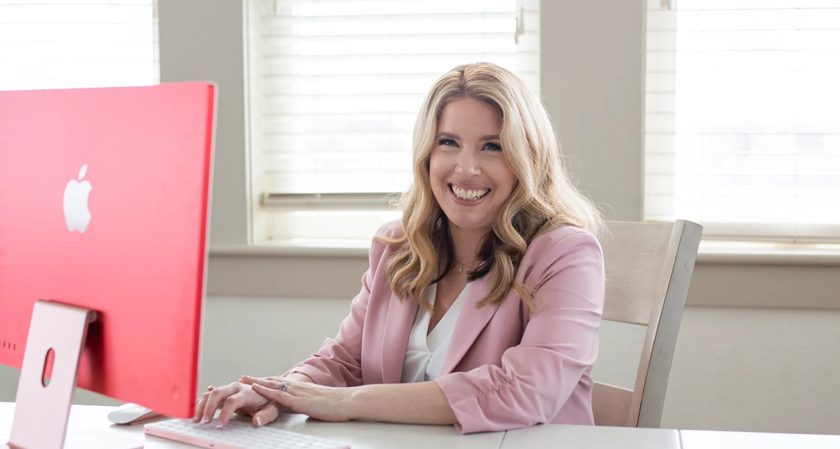
Danielle Foster is the Founder and President of D Foster Consulting, a firm dedicated to providing U.S.-based lead generation, customer service, and virtual support teams. With over 20 years of experience in Sales, Customer Service, Executive Leadership, and Human Resources, Danielle helps support small to enterprise businesses by consulting or having their companies utilize D Foster Consulting.
Reference:
Nearly half a million women have left their jobs so far this year. Here’s why, in their own words. Alicia Wallace, Soph Warnes, Leah Abucayan and Marco Chacon, CNN. October 17, 2025