>>
Industry>>
Architecture and interior design>>
How One Architect Is Revolutio...ARCHITECTURE AND INTERIOR DESIGN
How One Architect Is Revolutionizing City Living With Bold Mixed-Use Designs That Slash Carbon Footprints
The Silicon Review
10 January, 2026
Author:
The Silicon Review Team
~Gauri Singh
Many fast-growing cities promise a wealth of opportunity but frequently fail at delivering the basics of everyday livability. Residents are trapped in exhaustive commutes because homes, workplaces, schools, and shopping hubs are scattered across the city. This persistent pattern strains urban infrastructure and diminishes the quality of life.
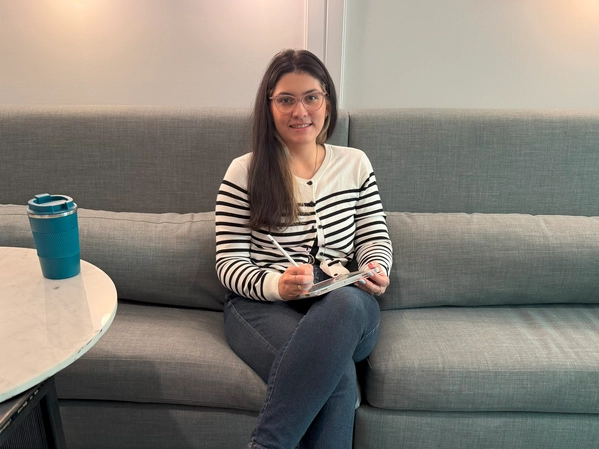
Architect Paula Alejandra Diaz Muñoz, widely recognized for her work in neuroarchitecture, believes that cities can—and must—do better. The solution is through an intentional, ground-up approach to design: “I’ve seen how poorly planned cities force people to commute for hours each day. But when neighborhoods place homes, schools, shops, and parks within walking distance, life becomes simpler and people feel more connected to their community,” Paula explains.
Well-regarded among contemporary architects, Paula plans cities at the neighborhood level. Contrary to many urban designs that focus exclusively on density, Paula considers how people actually live in that space: “Architecture does not end with designing buildings. What I focus on is livability. That’s why I consider how people move through the spaces and how those spaces influence everyday life,” she shares.
Because of this philosophy, she intentionally integrates green spaces, noise-reduction strategies, and accessible public areas. Thanks to housing and business being in walkable districts, daily necessities are close by, which slashes carbon footprints.
This belief in mixed-use designs for urban areas stems from Paula’s experiences: “I notice that in many cities, people have to drive everywhere just to get through their daily routines,” she shares.
Aside from that, her global experience also influenced her: “Growing up in Bogotá exposed me to the challenges of a large urban environment. Later, working in the United States helped me understand different planning systems and development strategies. When you combine those experiences, you start to see cities more holistically.”
Her academic background is equally diverse. Paula earned a Bachelor of Science in Industrial Design and a Bachelor of Architecture from Fundación Universidad de Bogotá Jorge Tadeo Lozano. She later completed an Associate of Science in Graphic and Interactive Design at Valencia College in Orlando.
Turning Livability Into Measurable Data
Known for her work in neuroarchitecture, Paula utilizes a data-driven framework to improve urban life. This sought-after expert uses composite livability indices to measure land-use diversity, accessibility, and environmental quality: “Urban planning decisions affect thousands of residents and often last for decades. That’s why it’s important to support design choices with real data. I don’t want to simply rely on assumptions,” she explains.
This philosophy is the reason why she uses quantitative data rather than relying solely on intuition or aesthetic judgment.
Spatial analysis underpins her approach. By examining factors across neighborhoods, she can see patterns that reveal how urban layouts function in real life. Her research shows that areas with more mixed-use development—where homes, businesses, and public spaces are together—tend to do better in many ways. These neighborhoods usually have better accessibility, stronger community connections, and more sustainable environmental results.
Along with her professional projects, this respected architect contributes to research. Her peer-reviewed studies focus on how land-use planning can improve both livability and environmental effects.
One paper, “Mixed-Use Urban Planning Strategies for Enhancing Livability in Rapidly Growing Cities,” explains how combining homes, shops, and public spaces can reduce the need for travel and build stronger communities. Another study, “Urban Planning Frameworks for Integrating Commercial and Residential Spaces in Modern Cities,” looks at ways cities can stay both economically active and environmentally friendly.
This evidences Paula’s belief that including livability is a non-negotiable in planning: “We often hear about livability in general terms, but it’s hard to know what that really means. By using combined indexes, we can pinpoint how things like access to services, mixed-use neighborhoods, and environmental quality make a difference in people’s everyday lives,” she explains.
Her research process begins with stratified sampling of urban zones representing different levels of mixed-use intensity. She gathers data through field surveys, observational studies, and stakeholder interviews. She then uses the data to construct both a mixed-use index and a livability index. Each variable receives normalized scoring before weighted aggregation allows direct comparison between high, moderate, and low mixed-use districts.
This methodology reflects concepts explored in her research on data-driven urban systems. In her study “Resilient Urban Design: Evaluating Mixed-Use Development Models in Emerging Economies,” this renowned architect found that compact, mixed-use neighborhoods often beat traditional zoning when it comes to both environmental and social benefits. To measure this, she created livability indexes that assess factors such as land-use diversity, ease of mobility, and environmental health. These indices help planners figure out what actually works in real neighborhoods.
By using heat maps and XY cluster plots, Paula turns complicated city data into something easy to understand: “Data helps planners spot patterns that aren’t always easy to see. Once you study how neighborhoods work, you can easily pinpoint which layouts support stronger community connections.”
Using Technology to Test and Communicate Urban Design
Paula combines her analysis with powerful digital tools. She’s an expert in urban site studies, 3D modeling, and design visualization using AutoCAD, Revit, Lumion, and GIS mapping systems.
These tools help her test her design ideas before anything is built: “Technology allows us to try out ideas before construction. With GIS and digital models, we can see how people move. It can also help us spot problems in accessibility, as well as study how different layouts affect transportation.”
Her academic work reflects her practical style. In “Digital Transformation in Architecture: Integrating BIM Workflows with 3D Visualization Tools,” Paula explains how tools like digital models, maps, and simulations let planners try out city designs prior to constructing anything.
Equally important is how these complex findings are communicated to decision-makers and the communities. One of Diaz’s signature strengths is in translating technical data into clear visual strategies. This skill comes partly from her background in graphic design: “Graphic design helped me learn how to translate complex architectural ideas into visuals that people can easily understand. That makes it easier for communities, developers, and city officials to engage with planning decisions,” Paula shares.
Thanks to her graphic and interactive design expertise, Paula can turn complex datasets into maps, diagrams, and visual presentations that policymakers, developers, and community stakeholders can quickly understand.
Designing Communities That People Actually Use
Sweetbay, a community in Panama City, Florida, is a real-life example of Paula’s approach. Instead of having car-heavy streets, mixed-use blocks and green corridors encourage residents to walk between homes, parks, and public spaces.
Paula shares that one of the most rewarding parts of her work is seeing people use the spaces she helps design: “When you visit a place like Sweetbay and see families walking in parks or neighbors gathering in public areas, you know the design really works. That’s proof of how urban planning isn’t limited to abstract drawings, it’s a real living space.”
Moments like these remind her why she chose architecture in the first place: “One of the best parts of this profession is seeing something that once existed only as a sketch become a real place where people live their daily lives.”
This is why in her designs, she makes sure they include green spaces, quieter areas, and public spots where people can gather: “When we talk about sustainability, it isn’t just about lowering emissions. The goal is to make people feel at ease, connected, and inspired to interact.”
Paula’s commitment to people-centered design is praised by those who have collaborated with her. Paul Rosero, Senior Project Designer at Studio 407 in Orlando, recalls working with her on several urban development projects: “Paula always prioritizes the success of the project. Whatever stage of the design process it is, she always has that energy. She always delivers the best possible outcome,” Rosero explains.
He points out that Paula’s wide range of skills helps the team at every stage of a project. From early design ideas to final presentations for clients, she’s able to jump in wherever she’s needed. Whether we were planning the first concepts or getting the final deliverables ready, you can always count on Paula,” he says.
Rosero adds that Diaz’s ability to combine sustainable design thinking with urban planning principles makes her stand out: “By integrating adaptive sustainable design into strong urban planning, she designed cities that care for the environment and also for the people living in them,” he explains.
Others who have collaborated with Paula echo similar observations about the impact of her work and her commitment to thoughtful urban design.
Marc Newman, Principal at PLACE Alliance, has worked with Diaz for years and commends the distinctive quality of her work: “Paula brings technical expertise. and a deep sense of place to every project. Aside from checking the sustainability boxes, her mixed-use strategies create environments where people genuinely want to live.”
Newman’s perspective comes from a professional relationship that began early in Diaz’s career. At the time, Diaz joined PLACE Alliance as a Graphic Designer Intern, where she created visual planning presentations and development materials. That experience helped her develop a key skill—turning complex urban planning concepts into clear visual narratives that developers, city officials, and community stakeholders could easily understand.
A Broader Vision for Sustainable Cities
Beyond her design work, Paula is also widely recognized in academic and professional circles for her contributions to interdisciplinary research connecting architecture, urban systems, and digital technologies. She has served as a peer reviewer for multiple scholarly publications examining topics ranging from smart infrastructure to construction data engineering. In addition, she currently holds an editorial role as Associate Editor for the Sarcouncil Journal of Engineering and Computer Sciences.
As her research and professional work have expanded, Paula’s influence has begun to extend beyond the individual projects she personally designs. Developers now reference her composite livability indices when evaluating new proposals, while municipal planners cite her spatial analysis techniques when revising zoning codes and long-term urban growth strategies. Outside her research work, Paula is also involved in professional planning communities. Some of the organizations she joins are the Congress for the New Urbanism (CNU), the American Planning Association (APA), the Urban Land Institute (ULI), and the Sociedad Colombiana de Arquitectos (SCA). Through these connections, she collaborates with planners, architects, and policymakers to address major global challenges—from housing and transportation to sustainable city design.
Paula shares that being part of professional communities is important, especially in a fast-evolving industry: “Cities are always changing. These networks let planners share ideas and figure out better ways to handle housing, transportation, and sustainability,” she explains.
That collaborative mindset also reflects in Paula’s long-term mission: helping cities address the growing need for affordable housing as urban populations continue to expand. She believes sustainable urban design should benefit many communities, and should not just be limited to high-end developments: “Urban planning should ultimately improve people’s lives. If we design cities more efficiently, we can provide housing closer to jobs, services, and transportation. That improves quality of life while also reducing environmental impact,” Diaz explains.
At the heart of Paula’s work is the belief that environmental performance and human well-being are not competing priorities but deeply interconnected goals.
Ultimately, she believes well-designed cities make it easy for the residents to make sustainable choices: “Cities should work for people first. When we design neighborhoods that prioritize walkability, accessibility, and shared public spaces, sustainability naturally follows. Change daily habits without asking people to sacrifice convenience. The environment benefits because the design makes sustainable choices feel natural,” she explains.
About the Author: Gauri Singh is a content contributor with experience writing business and technology-focused articles for professional audiences. Her work covers leadership profiles, operational strategy, and emerging trends across industries. Gauri has contributed to long-form editorial content designed to present complex topics in a clear, structured, and accessible way. She works closely with editorial teams to ensure accuracy, clarity, and alignment with publication standards..