>>
Industry>>
Supply chain management>>
From Stockouts to Sustainabili...From Stockouts to Sustainability: How Muhammad Shahid's Bold RDC Overhaul Slashed Carbon Emissions 97% Across Southeast Asia
- Rajdeep Kumar
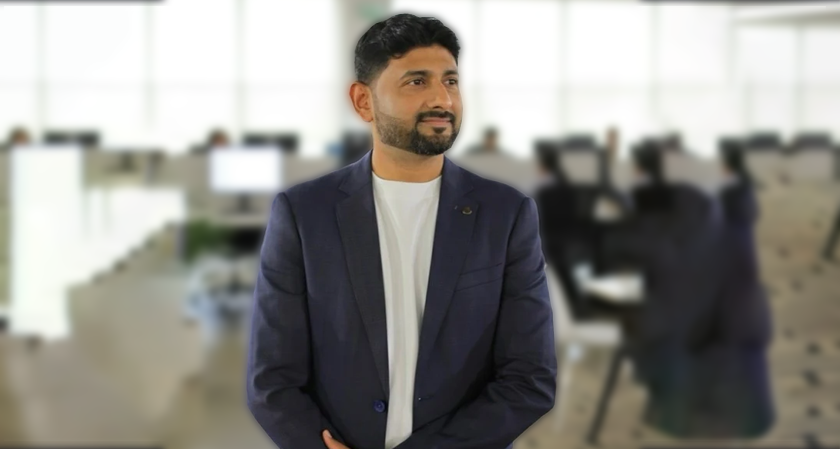
When medicines arrive late, patients pay the price. High emissions, rising logistics costs, and limited visibility forced pharmaceutical companies to rely on fast but unsustainable air freight. This trade-off between speed and sustainability has long been accepted as unavoidable in the industry, making logistics one of the sector’s most significant and hardest-to-abate sources of carbon emissions.
Facing this challenge, Muhammad Shahid, Senior Manager Supply Chain Development for Novo Nordisk Asia-Pacific, set out to change the system: “On paper, it looked like the smartest option. In reality, it delivered a huge sustainability win. When we shifted from air freight to a regional hub model, we cut emissions by up to 97 percent in some Southeast Asian countries. At the same time, medicines reached patients even faster,” Muhammad explains.
With more than 18 years in the field, Muhammad has witnessed—and helped drive—the evolution of supply chains from a back-office function to a strategic force: “People once saw us as just the logistics guys. Now, supply chain teams actually influence the entire business,” he shares.
Trained in both technology and business, Muhammad holds a degree in Information Technology and an MBA in Business Administration. This dual background allows him to connect operational execution with strategic decision-making: “Pharma supply chain isn’t just numbers. It’s temperature control, regulatory complexity, and making sure a patient doesn’t miss a single dose,” he explains. His perspective was shaped early in his career, particularly during his transition from the automotive industry to the pharmaceutical industry. That cross-industry experience gave him a problem-solving mindset that challenged long-standing pharma norms, especially the assumption that risk mitigation must always come at the expense of sustainability.
That rare combination of technical depth and human leadership is something Mustafa Tarcan, AMET Senior Supply Chain Director, observed firsthand over nearly a decade of working with Muhammad at Novo Nordisk. From 2015 to 2020, Tarcan managed Muhammad directly when he served as Supply Chain Lead in Pakistan, and later collaborated with him on global demand planning transformation initiatives: “Muhammad consistently impressed me with his ability to manage one of the most complex, highly regulated supply chain environments, while still keeping service levels high and inventory under tight control,” Tarcan says.
He describes Muhammad as having “exceptional competence with a rare degree of tact, and empathy,” noting that he never deflected accountability during supply disruptions but instead took full ownership, resolving issues promptly and in compliance.
Beyond execution, Tarcan highlights Muhammad’s standout expertise in S&OP and forecasting: “He can translate market volatility into actionable supply plans,” he recalls. That capability was later recognized at a regional level when Muhammad was named “Best Sales Forecaster of the Year” in 2019.
Zeeshan Rab, currently Diabetes Data Processing & Digital Services Manager for the Scandinavian markets at Medtronic, offers an earlier view of Muhammad’s career. From 2009 to 2010, Zeeshan worked closely with Muhammad at Novo Nordisk Pakistan, where he led Business Operations, and Muhammad was one of his direct reports. At the time, Muhammad was a young business analyst responsible for logistics operations and inventory planning: “He was very young, bright, and eager to learn, but already deeply committed to contributing beyond his role,” Zeeshan recalls.
Despite working in a more minor affiliation with limited regional visibility, Muhammad’s innovative solutions were recognized and adopted as regional best practices. This opened doors to more complex international projects early in his career.
Zeeshan saw this in action and commends Muhammad’s rare blend of technical and interpersonal skills, specifically his strong forecasting and supply chain execution paired with exceptional stakeholder management: “Beyond solid planning, his clear communication and strong relationships made sure our market stayed a priority, and everything ran smoothly,” he says.
Zeeshan adds that Muhammad could lead high-stakes negotiations with suppliers and public authorities without ever compromising ethics or compliance: “What began as a professional relationship has since evolved into a lasting friendship, one built on trust, mutual respect, and ongoing personal and professional exchange,” he adds.
Today, Muhammad supports Novo Nordisk’s APAC Supply Chain Strategy for 2025–2027, ensuring regional operations align with global priorities. He also leads large-scale programs across multiple markets and serves as the regional lead for implementing the company’s Customer Centricity Framework: “In pharma, the customer is real, it’s the patient waiting for their next injection. That’s what keeps me grounded in every decision,” he shares.
One of his most significant achievements is the establishment of the Regional Distribution Center in Singapore. The project resolved long-standing medicine shortages while setting a new benchmark for sustainable pharmaceutical logistics in Southeast Asia: “There were moments when it felt impossible, multiple audits, validations, and regulatory approvals… but persistence paid off,” Muhammad recalls.
At a time of growing climate concerns and ongoing supply chain disruptions, this highly-regarded supply chain expert’s work shows that pharmaceutical logistics can be both resilient and responsible: “Supply chain shouldn’t just support the business. When it’s done right, it drives the business while doing the right thing for patients and the planet,” he explains.
The Stockout Shadow: A Regional Crisis Demanding Action
Across Southeast Asia, pharmaceutical supply chains were struggling under the weight of inefficiency. Medicines were shipped by air from distant production hubs in Denmark, France, and China. This system looked fast on paper, but costly in reality. Emissions were high, customs delays were common, and when disruptions like COVID-19 hit, the system quickly showed its weaknesses: “Before the Regional Distribution Center (RDC) project, products flew straight into individual countries. It burned a huge amount of carbon and still left us exposed to delays—delays that ultimately meant patients were waiting,” Muhammad recalls.
Between 2022 and 2024, in his role as Supply Chain Manager for Business Area South-East Asia, Muhammad witnessed how this fragmented setup worsened stockouts, especially for diabetes and obesity treatments.
Muhammad’s remit covered more than 15 highly diverse markets, ranging from well-established systems such as Australia and Singapore to emerging markets such as Cambodia and Myanmar.
He was able to step in because of deep technical and operational experience—a Certified Supply Chain Professional (CSCP) with formal training in Lean Six Sigma methodologies—this sought-after expert brought strong leadership in Sales and Operations Planning (S&OP).
He mapped value chains across multiple Southeast Asia markets. Using structured Value Chain Mapping, he identified bottlenecks and inefficiencies, reviewed inventory settings, and helped affiliates adopt standardized planning practices. These capabilities would later be scaled across the region. One opportunity quickly stood out: Singapore’s bonded warehouse model, which offered tariff-free re-exports and a strategically central location: “Singapore gave us tariff-free re-exports and a central hub, but the challenge was enormous. Multiple quality audits, cold-chain validations, and regulatory approvals—it felt impossible at times,” he shares.
Muhammad drew on the skills he had developed earlier in his career to address the issues—negotiating and renewing distributor contracts, and balancing compliance, service levels, and cost efficiency.
Those skills helped him navigate the complexity of aligning regulators, quality teams, and partners across borders. But beyond credentials and experience, colleagues point to his defining trait: a relentless ‘can-do’ attitude that turned skepticism into a possibility. That same mindset would soon be tested at a far larger scale, when the region’s fragmented supply chain demanded not just improvement, but reinvention.
Engineering the Overhaul: Innovation Meets Execution
Launched in 2023 under Muhammad’s leadership, the Regional Distribution Center (RDC) marked a shift in how medicines are transported across Southeast Asia. Instead of flying products country by country, shipments were brought in by sea to Singapore, then distributed by road and rail across the region. The change reduced cost and emissions: “Instead of flying everything country by country, we centralized control and visibility,” Muhammad explains.
But the overhaul went far beyond rerouting freight. This highly-regarded expert introduced Power BI dashboards, giving teams a clear, end-to-end view of the supply chain. These dashboards connected production schedules in Europe, warehouse inventory in Singapore, and consignment stock levels across affiliates. Such a system made it easier to spot risks early and reallocate supplies before shortages reached patients: “If decisions are based on guesswork, the system will fail,” he says.
This digital foundation was supported by strong cross-functional execution. Drawing on his experience in building and managing business intelligence systems, Muhammad ensured clear KPIs and strict inventory discipline across markets. He co-designed the OMP forecasting tool, improving forecast accuracy to 75%, and led regional training sessions to help teams adopt new planning tools for the long term. Affiliates and global Product Supply teams stayed closely aligned through transparent governance and hands-on leadership.
Muhammad thrived in this complexity: “I love these sorts of challenges most. I like it when it seems very difficult and impossible at first,” he says. A structured approach, guided by quarterly OKRs, kept the transformation focused, measurable, and accountable. Backed by his Lean Six Sigma Yellow Belt certification, he simplified validation processes and championed continuous improvement, especially for temperature-sensitive medicines like insulin, which must be stored at 2–8°C.
The results were striking. Lead times were reduced by 50%, exposure to currency volatility fell through redesigned import structures, and carbon emissions dropped significantly. In Thailand alone, CO₂ emissions from Denmark imports fell from 197 tons to just 5 tons for the same volume: “Instead of air freight, now they use sea and road freight,” Muhammad notes.
Beyond the operational gains, the RDC became a tangible proof that digital clarity, disciplined execution, and sustainability can work together. But its true value only became clear once those principles translated into real-world outcomes.
Ripple Effects: Empowering Partners and Patients
The RDC’s impact extended far beyond internal performance metrics. Wholesalers that once struggled with inconsistent supply began achieving fulfillment rates above 95%. Under Muhammad’s Customer Centricity Framework, this reliability helped elevate Novo Nordisk from 96th to number one in Australian customer surveys.
What had once been a source of friction evolved into a platform for trust. This strengthened partnerships, improved patient access, and reinforced the company’s reputation for reliability where it mattered most: “The supply chain stopped being transactional. It became a relationship engine,” Muhammad explains.
That trust was sustained through disciplined execution. Stronger S&OP and S&OE processes helped balance supply with rapidly shifting demand. At the same time, redesigned distributor agreements generated over $ 4 million in cost savings. Drawing on his earlier experience in institutional sales and tender management, Muhammad aligned commercial priorities with supply chain realities, ensuring that decisions made upstream translated into real results on the ground.
For patients, the impact was tangible and often life-changing. Fewer stockouts meant uninterrupted access to therapies in underserved markets such as Laos and Myanmar. As the primary supply chain contact for Full Agency Markets, including Sri Lanka, Maldives, Cambodia, Myanmar, and Laos, Muhammad ensured these countries received the same service-level improvements as larger affiliates: “Neutral-label stock was allocated ethically, based on verified medical need. No favoritism, it was all about fairness,” he shares.
At the regional level, Muhammad also ensured the model could scale sustainably: “The supply chain is now a true commercial business partner,” he notes, pointing to stronger S&OP processes that helped manage demand surges without compromising availability.
Colleagues often describe his approach as “jolly extraordinary,” a work ethic recognized internally when he was named Supply Chain Manager of the Year in 2022. As Muhammad puts it, “I gravitate toward fear-factor projects. That’s where supply chain magic happens, turning chaos into control.”
A Greener Horizon: Lessons for Global Leaders
As tariffs increase and customer needs become more personalized, Muhammad’s RDC proves just how supply chains step into a more strategic role: “I want to change the way people see it, so the supply chain isn’t just a support function, but a true business partner,” he says.
Shaped by Korn Ferry’s Leadership Development Program, Muhammad’s leadership focuses on building people capability, ensuring long-term adoption, and strengthening collaboration across markets: “Transformation only works when people understand why we’re doing it, and not just how,” he explains. He has upskilled teams in more than 14 APAC countries, placing strong emphasis on explaining the why behind changes. As he notes, “I’m the one who creates the supply chain strategy for the region, conducts the monthly calls, and ensures we can confidently present our work to headquarters.”
Drawing on insights from Gartner workshops in Barcelona, this supply chain expert continues to mentor APAC teams: “Right product, right time; it’s an ethical imperative. Through the supply chain, we’re not just moving medicine. We’re protecting lives and the planet,” Muhammad explains.
As the industry pushes toward its 2030 sustainability goals, Muhammad proves that expertise shouldn’t sit in silos; it should move progress forward. Through the Singapore RDC, he helped cut carbon emissions by up to 97% by shifting to sea and road freight.
What he’s built goes beyond a win for Novo Nordisk. It offers a replicable model for pharmaceutical companies globally: one where visibility, discipline, and human-centered leadership redefine how medicines move through the world.
Muhammad’s systems show that some of the most significant changes in healthcare don’t happen in labs. They happen behind the scenes, in the systems that make sure medicines reach patients on time.
As the pharmaceutical industry faces growing pressure to reduce its environmental impact while meeting patient needs, this approach points to a practical way forward: invest in visibility, support people, and lead responsibly. The future of supply chains won’t be measured by speed alone, but on how wisely they balance speed with care and accountability.
About the Author
Rajdeep Kumar Roy is a content writer with experience covering business, technology, and industry trends. His work focuses on translating complex subjects into clear, engaging narratives for professional audiences. Rajdeep has contributed to editorial pieces and research-driven articles that highlight insights across markets and innovation sectors. He works with editorial teams to ensure tone, clarity, and accuracy meet publication standards.