>>
Technology>>
Artificial intelligence>>
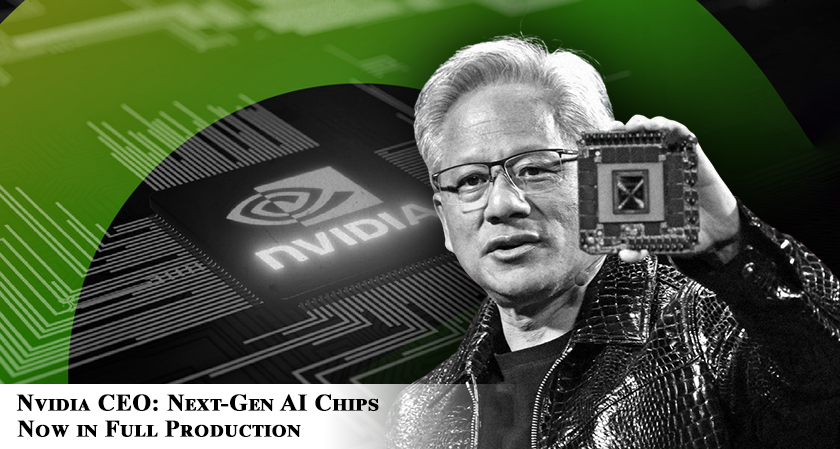
Nvidia CEO: Next-Gen AI Chips ...Nvidia CEO: Next-Gen AI Chips Now in Full Production
The Silicon Review
06 January, 2026
Nvidia CEO Jensen Huang announces the company's next generation of AI accelerator chips is now in full production, meeting massive market demand.
Nvidia CEO Jensen Huang has announced that the company's highly anticipated next generation of AI accelerator chips is now in full production. The declaration signals that Nvidia is ramping up supply of its newest hardware, designed to train and run even more complex generative AI models, to meet seemingly insatiable market demand. This production milestone is critical for AI developers, cloud providers, and enterprises racing to deploy advanced AI applications, as it promises to ease the severe supply constraints that have characterized the market for high-end AI processors.
This full production status contrasts with the previous phase of limited sampling and pilot builds. Moving to volume manufacturing represents the culmination of a complex semiconductor fabrication and supply chain orchestration. Achieving this production scale is the critical operational deliverable for sustaining Nvidia's market leadership. This matters because it determines the near-term availability of the computational power needed to fuel the next wave of AI innovation and deployment, impacting timelines for everything from scientific research to consumer AI products.
For data center operators, AI startups, and competing chipmakers, the implications are immediate. This development necessitates a review of hardware procurement strategies and infrastructure roadmaps. The forecast is for intense competition to secure early shipments, with major cloud hyperscalers likely receiving priority. Decision-makers must evaluate the performance-per-dollar and energy efficiency of the new chips against alternatives. The next imperative for Nvidia is to ensure a smooth and rapid rollout through its partners, demonstrating that increased production volume translates into real-world availability for customers, not just an announcement, to maintain its dominant position in the AI hardware ecosystem.
MOST VIEWED ARTICLES
RECOMMENDED NEWS








LATEST NEWS


Artificial Intelligence News
Startups News


_2025-11-17_06-38-14.webp)