>>
Other>>
Politics>>
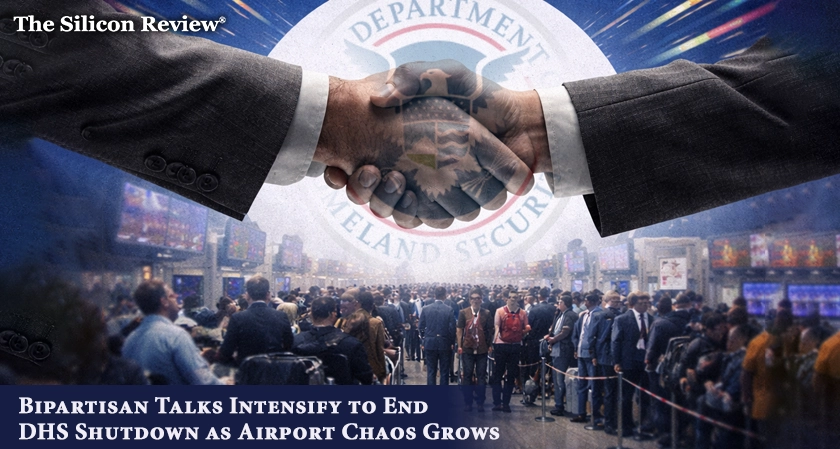
Bipartisan Talks Intensify to ...Bipartisan Talks Intensify to End DHS Shutdown as Airport Chaos Grows
The Silicon Review
20 March, 2026
Author:
The Silicon Review Team
A bipartisan group of senators met Thursday with White House border czar Tom Homan in the most serious talks yet to end the Homeland Security shutdown, with TSA workers missing paychecks & airport lines growing.
A bipartisan group of senators huddled behind closed doors Thursday with White House border czar Tom Homan, marking the most serious talks to resolve a Homeland Security shutdown now entering its fifth week. The meeting, which included top appropriators from both parties, signaled that negotiations are finally getting serious after more than a month of stalemate.
Funding for the Department of Homeland Security lapsed Feb. 14 after Democrats refused to fund Immigration and Customs Enforcement and Customs and Border Protection without policy changes. The standoff was triggered by the fatal shootings of two Minneapolis protesters, Alex Pretti and Renee Good, by federal agents in January.
The consequences are now impossible to ignore. More than 50,000 TSA officers worked through their second missed paycheck Friday, and call-out rates have soared past 30% at major airports. Travelers face hours-long waits from Austin to Philadelphia, with some airports reporting lines snaking out of terminals and into parking garages. Transportation Secretary Sean Duffy warned the current delays are "CHILD'S PLAY" compared to what's coming if another paycheck is missed.
Thursday's meeting produced no breakthrough, but participants described it as a genuine effort. Sen. Katie Britt, R-Ala., said the White House will now prepare another counteroffer, after which lawmakers will regroup. Sen. Patty Murray, the top Democratic appropriator, emerged saying "we're still a long ways apart" but acknowledged that White House involvement was a necessary step.
Democrats are demanding a sweeping set of reforms: warrants for home entries, body cameras, bans on mask-wearing by agents, restrictions on operations at schools and churches, and independent misconduct investigations. The White House has offered concessions on body cameras and sensitive locations, but with caveats undercover officers would be exempt, and "immediate needs" could override location restrictions.
As bipartisan talks intensify and airport chaos deepens, The Silicon Review examines what the Homeland Security shutdown reveals about the limits of political brinkmanship and the human cost when essential workers become pawns in a funding fight neither side seems willing to end.