>>
Industry>>
Digital marketing>>
Enhancing Customer Retention i...Enhancing Customer Retention in the Digital Entertainment Sector through UX Personalization
Bringing in new customers is only half the fight in the world of digital entertainment. Getting them to commit, stay, and return is the true challenge. As sites compete for dominance and attention, players hold all the power. And they can switch sides in a click.
This also goes for the iGaming industry, where new games, promotions, and sites keep stealing the spotlight. That’s why simply offering a large game library is no longer enough. What we do know makes the difference is UX personalization. Engagement rises naturally when users can effortlessly and quickly find what they enjoy.
Does UX Personalization Really Matter?
Think about the last time you returned to a website without thinking twice. Chances are, it felt comfortable to use and easy to navigate—It felt like home. Maybe the games you previously launched were waiting for you right there on the homepage. Or perhaps the site remembered which game verticals you were interested in. That’s the silent power of personalization.
In the digital entertainment sector, players rarely have the patience to search for games or features they enjoy. If navigation feels confusing or generic, many will simply move on to another site. On the other hand, when a platform adapts to the user’s behavior by highlighting favorite game categories, suggesting new titles, or recommending the most appropriate bonuses, the experience flies to new heights.
Just like that, someone visiting an Australian online casino can benefit from quick access to popular slots or personalized recommendations based on previous gaming sessions. The moral of the story is: The less effort players have to invest, the more likely they are to stay!
Practical UX Personalization Strategies: Improving Retention
So how do digital entertainment sites implement personalization in practice? It’s rarely one big feature. Instead, retention typically gets a boost through a series of smaller, but interlinked, UX characteristics that in the end make the site feel more intuitive.
Let’s take a quick look at a few strategies most modern gaming sites swear by:
- Personalized Game Recommendations: to reduce the time spent surfing through large game libraries
- ‘Recently Played’ Widgets: to help players instantly return to the games they’ve already tried
- Dynamic Game Lobbies: to rearrange game verticals based on popularity or individual preferences
- Smart Notifications and Promotions: to offer personalized bonuses, reminders, and updates
None of these features looks like a game-changer at first glance, but together, they form a smoother experience that keeps users coming back.
Generic UX vs. Personalized UX: The Showdown
The battle is on! To better understand who wins the fight, it’s best to compare personalized UX with the one-size-fits-all approach, side by side.
|
Feature |
Generic UX |
Personalized UX |
|
Game recommendations |
Same suggestions for every user |
Games suggested based on the player’s history |
|
Lobby navigation |
Static categories for all players |
Dynamic layout highlighting preferred games |
|
Returning to games |
Player searches again |
Recently played section provides quick access |
|
Promotions |
General offers sent to everyone |
Offers tailored to the player’s interests |
As you can see, entertainment sites with personalized UX interfaces win the game. Especially in the long run. In practice, personalization eliminates a number of small frustrations and delays that add up over time. Instead of scrolling through hundreds of titles, players quickly find games that match their interests, preferences, and needs.
UX Personalization in Action
As we mentioned earlier, most modern digital entertainment sites like online casinos and bookmakers already swear by UX personalization. Instead of overwhelming players with endless lists and offers, sites now aim to guide users toward content they’re most likely to enjoy.
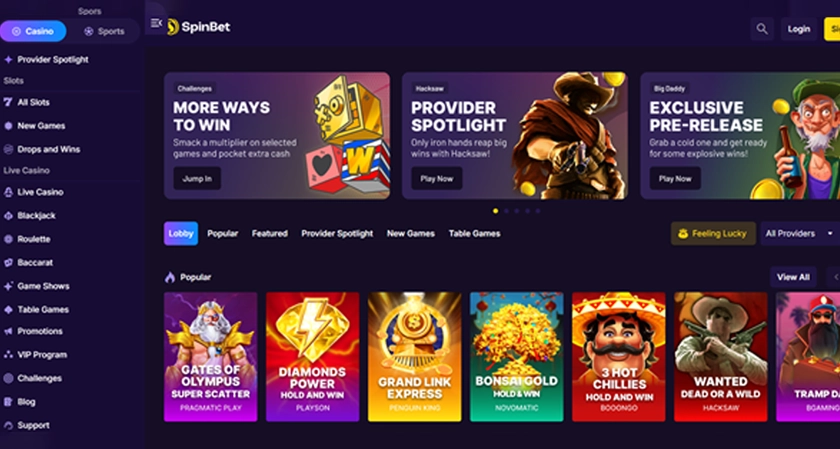
A fine example of such a player-oriented approach is SpinBet. This online casino sees returning users greeted by a personalized gaming lobby. Players exploring online pokies at SpinBet can therefore easily filter games or revisit recent favorites. Even discovering new titles based on popular trends takes just a few clicks.
This type of structure reflects a broader shift in digital entertainment design. The goal isn’t just to offer hundreds of games—many sites already do that anyway. The real challenge is helping players find the right games without unnecessary browsing.
Responsible Gambling Notice
Thanks to UX personalization, gambling has become more fun than ever before. And with that come certain risks, such as overplaying and overspending. Here are a few small habits that can help you stay safe without compromising on fun:
- Set a clear and firm budget before you start playing
- Take regular breaks
- Avoid chasing losses
- Keep it social and balanced
- Don’t gamble under the influence of strong emotions