>>
Industry>>
Lifestyle and fashion>>
Redefining Commercial Storytel...Redefining Commercial Storytelling - Why Modern Brands Need Strategic Videographers Like Rosanna Peng
The Silicon Review
31 March, 2026
Author:
The Silicon Review Team
~Akanksha Harsh
In today’s digital economy, brands are producing more content than ever, yet much of it fails to resonate. The issue is not volume but clarity. As platforms accelerate and attention spans shrink, storytelling has become fragmented, often reduced to trends rather than intentional narratives.
In an era where every brand has a camera crew and a social media calendar, the scarcest commodity in commercial filmmaking is not equipment or budget; it is editorial instinct. The average viewer decides whether to keep watching within the first three seconds of a video. What follows must justify that attention immediately, or the story is lost before it begins.
Many companies invest heavily in production, but without a cohesive visual language, their messaging becomes indistinct. Too many productions still treat editing as a final step, something to be sorted out in post after the shoot. The result is footage that captures the surface of a moment without communicating what lies beneath.
A Different Kind of Videographer
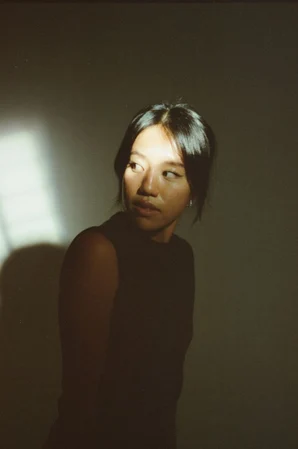
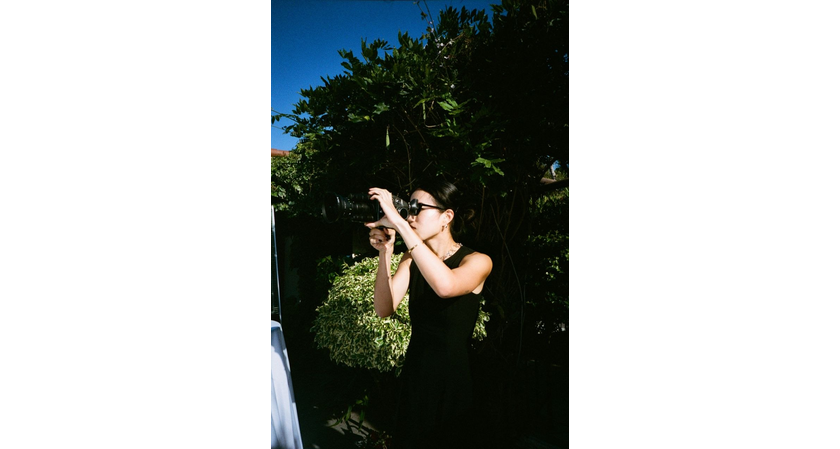
In response to the gap between content creation and meaningful audience connection, Rosanna Peng emerges as a creative anchor for brands seeking work that resonates beyond the screen.
As a professional videographer working within the commercial film industry, she approaches storytelling with a level of precision that aligns creative intent with audience impact. Peng is not a videographer who shoots first and figures it out later. Over more than a decade working in the commercial film industry, she has built a practice grounded in the belief that a video is made before the camera ever rolls. It is structured like a story, in the rhythm of how moments are sequenced, and in the understanding that every frame either earns a viewer's attention or loses it. That philosophy has taken her from a small town in British Columbia to sets around the world.
Over the past decade, Peng has built a portfolio that reflects both scale and consistency. She has collaborated with globally recognized companies such as Google, Nike, Canon, Spotify, and Strava. These partnerships indicate a sustained ability to operate within high-performance creative environments where expectations are exacting, and timelines are compressed. Alongside her commercial work, Peng has also earned industry recognition for her narrative film development.
Her short film project Bowling Bao earned a Gold award in the Dreampitch Short Film category at the Young Director Award, recognized for its concept and storytelling potential. The same project was selected from over 200 nationwide submissions to receive the $10,000 BIPOC Woman Filmmaker Grant from BendFilm, an award designed to support underrepresented voices in independent film. These are not peripheral achievements. They are evidence of a creative whose ambitions extend well past the commercial brief.
The Edit-First Approach: A Core Value Proposition
What makes Peng's approach meaningfully distinct from the majority of working videographers is where her process begins. While most of the practitioners start with the production, the shot list, the gear, and the location, Peng’s projects begin with the editing. She thinks about rhythm, pacing, and emotional flow before a single frame is captured. By thinking from the edit backwards, she designs each shot to serve a precise function within the final sequence. This reduces redundancy, sharpens narrative flow, and ensures that every visual element contributes to a cohesive outcome.
That is not a stylistic preference, but a structural commitment that produces fundamentally different work. When you plan a shoot with the edit already in mind, you know exactly which moments matter and which ones do not. You know how long to hold on a face, when to cut away, and what the transition into the next sequence needs to feel like. You are not gathering material and hoping something useful emerges from the pile. You are building something with intention from the first frame to the last. That discipline is what separates footage that communicates from footage that merely documents.
Proof in Practice: Roblox, Silicon Valley, and Athlete Content
Peng’s editorial approach and skill set are clearly translated into her commercial projects. One example is a series of social media videos she created for Roblox, documenting the company’s Silicon Valley presence across multiple instalments. Peng’s approach to this series reflects her edit-first philosophy in action. Each video functions as a self-contained piece with its own internal rhythm, with sequences carefully calibrated to maintain engagement while conveying a distinct brand voice. This is not simply content production; it is content engineering.
A similar approach is evident in her work with brands such as 3sixteen and Lojel. In these projects, Peng applies the same precision in pacing and sequencing to visually driven storytelling. Rather than relying on overt spectacle, she focuses on structure, tone, and flow, ensuring each frame contributes to a cohesive narrative. This demonstrates her ability to adapt her methodology across different industries while maintaining consistency in execution.
Representation, Mentorship, and Making the Industry More Visible
Peng's influence in the commercial filmmaking space is not limited to the work itself. It extends into how she shows up for the next generation of creatives navigating an industry that has historically been difficult to enter, particularly for women and people from underrepresented backgrounds.
Peng actively works to make this path more visible through one-on-one guidance, conversations with emerging talent, and participation in industry discussions. Her perspective is also informed by her background. Growing up in a Chinese-Canadian immigrant household, she encountered expectations that emphasized stability and humility over creative risk. Entering an industry where representation was limited required both persistence and a recalibration of self-perception. Over time, this experience has become a defining strength. It informs her sensitivity to identity and community, which is increasingly visible in her narrative work. That journey has shaped how she speaks about the industry and what she believes needs to change within it.
Not Optional: Why Rosanna Peng's Voice Matters Now
Today, the line between commercial videography and narrative filmmaking is not as fixed as it once was. The platforms where audiences now spend the most time have collapsed the distinction between advertising and storytelling. A brand film and a short film are often competing for the same thirty seconds of attention in the same feed. That convergence is creating a new kind of creative professional, one who can operate fluidly across the commercial and narrative registers, bringing the structural discipline of one to the expressive freedom of the other.
Rosanna Peng represents a model of this precision and intent. Her approach challenges the assumption that speed and quality are mutually exclusive. By integrating editorial thinking into every stage of production, she demonstrates that efficiency can coexist with depth. This positions her not as an optional creative resource, but as a necessary voice in modern commercial filmmaking.
Peng continues to build within the commercial sector while developing narrative films that allow for deeper exploration of character and theme. This dual focus reflects a larger evolution within videography itself. As boundaries between commercial and narrative formats become less rigid, practitioners who can operate across both will shape the future of the medium. Peng’s ability to maintain technical discipline while pursuing creative depth positions her within this emerging category.
In a media environment saturated with content that looks like content, Rosanna Peng makes work that looks like something someone actually meant. That is not a small thing. In fact, right now, it might be the most important thing.