>>
Industry>>
Fintech and Financial Services>>
Securing the Digital Backbone ...FINTECH AND FINANCIAL SERVICES
Securing the Digital Backbone of Financial and Critical Infrastructure Networks

The Silicon Review
09 April, 2026
~Gauri Singh
The threats to modern economies are no longer simply about stolen information or interrupted email. They include pipelines, power grids, water plants, and factory floors, where a cyberattack can have an immediate, tangible impact in the real world.
This fusion of information technology and operational technology has brought efficiency and economies of scale, but it also means the world of industrial operations is facing a threat environment it was never designed to handle.
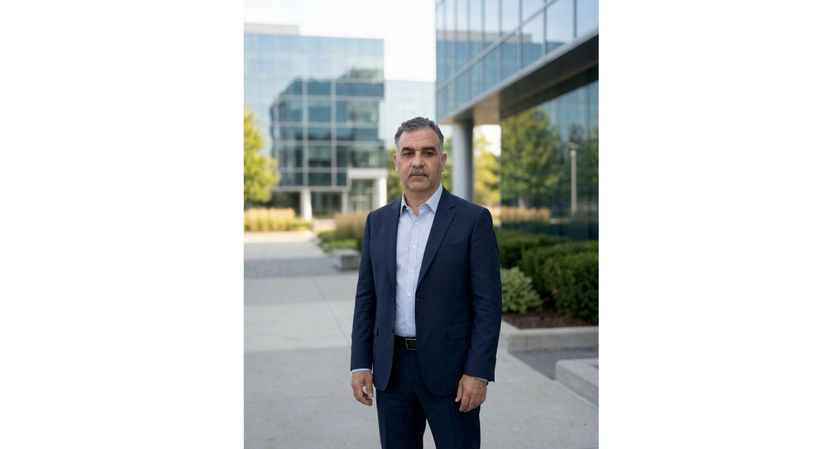
When Fayyaz Ahmed entered this scene, the stakes had already been made very clear.
With his decades of experience in both worlds, he says: “The projects that excite me most today are in operational technology (OT)—manufacturing, industrial control systems, and critical infrastructure. The basics that have driven me for decades still apply today – but the stakes are even higher. A threat in an OT environment is not just about data – it's about people and operations.”
His career—spanning government organizations, Oil & Gas industries in Abu Dhabi, financial networks across continents, and now advisory work at PricewaterhouseCoopers (PwC) —maps closely to the evolution of critical infrastructure itself.
Few engineers have traversed both enterprise IT and industrial systems with such continuity, and fewer still have translated lessons from one domain into the other with equal fluency.
The Industrial Foundation
Long before “OT security” became a defined discipline, industrial systems were quietly undergoing digital transformation. Ahmed’s early work at Emirates Computers placed him at the center of this shift, supporting more than 20 oil & gas companies in Abu Dhabi.
Among the most significant was a large-scale migration project for Zadco Petroleum, involving over 700 servers and 3,000 users—a reminder that even in heavy industry, network complexity rivals that of any modern enterprise.
Ahmed recalls those formative years with clarity: “My career began with a system integrator having clients from the public sector, oil & gas, and financial companies in Abu Dhabi—long before ‘OT security’ was a term. From those initial projects, I learned that there is a different set of priorities in an industrial world: uptime, safety, and physical process integrity. That perspective has informed everything since.”
These priorities would guide his cybersecurity work. In the world of IT in an enterprise, downtime is often measured by its impact on the business, such as reduced productivity or revenue. In the industrial sector, the risk profile is different: equipment failures, environmental hazards, and even the potential for loss of human life.
Ahmed's move to Abu Dhabi Islamic Bank (ADIB) began a new chapter in his career, one that transitioned from the industrial world to one of the most heavily regulated industries: banking. Ahmed spent 13 years overseeing the network infrastructure of 85 to 90 branches, international operations, and tens of thousands of ATMs and point-of-sale devices.
Reflecting on that period, Ahmed says: '’When I joined ADIB in 2010, the bank was growing rapidly. We expanded from 50 branches to nearly 90, opened operations in the UK, Qatar, Saudi Arabia, and Iraq, and launched digital initiatives like mobile banking and online/biometric account opening. Every step required infrastructure that was not only secure but also flexible enough to support new services while meeting strict regulatory requirements.'’
The importance of this experience was soon realized during a March 2016 crisis, when flooding in the data center occurred during peak business hours. Ahmed’s business continuity planning ensured that the core banking systems were restored within just two hours—an achievement that has since set the benchmark.
As he later shared: '’That day proved that years of investment in disaster recovery weren't theoretical. What we saw was the difference between a brief interruption and a catastrophic failure.'’
Syed Fahimuddin, the erstwhile Vice President of IT Infrastructure and Operations, ADIB, first worked with Ahmed during the expansion of the ADIB Data Center, which started in 2008
He says: “Ahmed was instrumental in the design and delivery of the production data center with zero impact on operations. The accuracy with which he works in a situation like this speaks volumes about the kind of person he is.
“He is as calm as a cucumber in the face of the most impossible deadlines and still manages to lead from the front. It’s the kind of guy you want in the room when everything is going wrong, because he’s the kind of guy who’s going to keep everybody’s eyes on the ball.”
Throughout his 13-year tenure at ADIB, Ahmed ensured that the infrastructure was properly aligned with the Payment Card Industry Data Security Standard (PCI DSS) for payment systems and with the Society for Worldwide Interbank Financial Telecommunication (SWIFT) standards for international financial communication.
The Pivot to OT
Ahmed’s decision to join PwC in 2025, however, was a strategic move to return to his industrial background, albeit from a cybersecurity perspective.
Here, he focused on the convergence of enterprise security with operational technologies, not just the technical aspects of the job, but the actual functioning of industrial systems in real time.
He says: “When I joined PwC, I dove deep into operational technology. It's still networking and security at its core, but the context is different—these are systems that control physical processes. I recently earned my Global Industrial Cybersecurity Professional certification last December, and it’s opened up an entire new dimension in terms of what I’m doing.”
Ahmed’s current focus is on the design of IT/OT cybersecurity solutions, including secure SD-WAN, secure networking, and vulnerability management in industrial environments. Key to this is frameworks that help structure the process in an area that can be very unstructured.
As he puts it: “When I guide clients through OT security transformations, IEC 62443 (the international standard for industrial automation and control systems security) is my anchor. It's not just a checklist; it's a philosophy for segmenting industrial control systems, defining zones and conduits, and ensuring that security doesn't disrupt production. Standards like that give us a common language with engineers who've spent decades focused on reliability, not cybersecurity.”
Technical Pillars for OT Security
The translation of enterprise security principles into industrial environments begins with segmentation—a concept that has long been standard in IT but remains unevenly implemented in OT.
Ahmed explains: "One of the most common debates I encounter is whether IT and OT environments should remain connected. Clients often resist segmentation because 'it's always worked this way.' But when I show them the NIST guidelines, they understand. You need that separation to contain the blast radius."
This principle of containment is one Ahmed has proven at scale in financial services.
By implementing microsegmentation and next-generation firewalls, he isolated individual workloads from one another. He applies the same philosophy to OT, but with careful respect for industrial control systems that rely on legacy protocols and real-time communication.
This approach, now a key element of the zero-trust model used in regulated industries, ensures that a potential breach in one area cannot bring down the entire system.
Ahmed shares: “The convergence of IT and OT creates immense efficiency gains—but also immense risk. You're connecting systems never designed for connectivity to enterprise networks and the cloud. My role is to architect that connection safely, applying micro-segmentation and next-generation firewall (NGFW) policies that respect the real-time requirements of the shop floor.”
Connectivity is another critical pillar. As industrial organizations adopt cloud services and distributed architectures, technologies such as Software-Defined Wide Area Networking (SD-WAN) and Secure Access Service Edge (SASE) frameworks become essential. Ahmed’s experience designing secure connectivity for distributed banking networks—such as retail branches and ATMs—translates directly to industrial sites, where reliability and security must coexist.
Ramprasath Sadasivam, a Principal Infrastructure Engineer who worked alongside Ahmed for 12 years at ADIB, witnessed this firsthand.
He says: “I watched Ahmed shape not just infrastructure but people. I grew from an L2 engineer to a Principal Engineer under his mentorship. He gave me the autonomy to architect these systems while providing guidance to ensure our success. When the March 2016 flood hit our data center during peak hours, Ahmed's planning and preparation turned a potential disaster into a textbook example of disaster recovery. I had the chance to work with him as we worked to bring services back online, and his leadership and precise technical expertise were the difference between chaos and control.”
Beyond the Architecture: Global Scale, Local Resilience
Ahmed's influence extends globally through his work designing and building a Global Access Point Name (APN)—a private network that allows secure cellular connectivity for point-of-sale machines deployed at foreign government offices worldwide. This infrastructure enabled secure, centralized collection of various fees across continents, illustrating how robust network design can support national interests and international diplomacy.
Closer to the industry, his achievement in growing ADIB’s point-of-sale business to over 40,000 terminals, thereby becoming one of the top five players in UAE, while at the same time reducing fixed telecom costs by more than 70 million AED (approximately $19 million USD) to less than 50 million AED (approximately $13.6 million USD), thereby reducing costs by approx 25%. This achievement set a new standard for operational efficiency in the UAE banking industry.
These projects demonstrate a characteristic common to all projects in which Ahmed has been involved throughout his career.
Another defining achievement reflects the intersection of architecture and execution:
At ADIB, Ahmed has led a comprehensive data center transformation that has involved upgrading the LAN infrastructure with Cisco Nexus switches and migrating more than 300 business applications.
Using Cisco OTV for Data Center Interconnect, Ahmed has achieved this in record time with zero impact on the business. This demonstrated the power of modern network architecture to facilitate, rather than hinder, business agility, even in a heavily regulated industry.
Ahmed is currently applying his expertise to the next frontier of industrial systems: fully automated production environments.
He reveals: “I'm particularly interested in dark manufacturing—fully automated, lights-out production facilities. The security architecture for these environments has to be embedded from the ground up. It's not something you can bolt on later.”
And the implications are profound: “Dark manufacturing—fully automated lights-out production—is the frontier. Here, there is no human being who can say, 'Hey, I think something is wrong.' This is the ultimate test of whether we've learned to design for operational continuity.’’
The Credentials Behind the Control Room
Ahmed's expertise is backed by a suite of elite certifications including his CCIE (Lifetime Emeritus #14258), CISSP, CCSP, and the GICSP for industrial security, as well as his recognition as an IEEE Senior Member.
However, the most telling testament to his impact comes from those he has worked with and mentored.
Nick Sanders, Manager of Network Engineering at Triumph Financial, describes his impact: “Ahmed stood out among a competitive field of candidates because of his depth of knowledge and professional approach. He had exactly the kind of experience we needed, particularly with complex network designs and implementations, at a time when we needed him most. He mentored everyone on our team, from junior engineers to our lead architect. We were all better at our jobs because of the time we spent working alongside him. He also developed a reputation for being reliable across the organization. Countless late nights, never a complaint—just steady, expert work.”
Strategic Insights for Critical Infrastructure Leaders
From the perspective of executives seeking to navigate the intricacies of critical infrastructure, Ahmed’s story offers several lessons.
First, cybersecurity in OT environments cannot be approached as an extension of IT alone; it requires an understanding of physical processes and operational constraints.
He says: “The gap between security theory and operational reality is where most failures happen. In OT, that gap can have physical consequences. I've seen proposals that looked great on paper but would have shut down a production line because they failed to consider the legacy industrial protocols and the need for real-time performance.”
Reflecting on the importance of frameworks, Ahmed explains: "IEC 62443 and NIST 800-82 aren't just compliance checkboxes. They're practical guides that help align security with engineering priorities. They give us a common language—so when I talk to an engineer who's spent 20 years focused on keeping a production line running, we're not speaking past each other."
He adds: "And resilience—true resilience—has to be designed in from the start. Whether it's a flood, a fire, or a cyberattack, the question is the same: Can this system keep working when things go wrong? At ADIB in 2016, we proved that the answer is yes—if you've done the work beforehand."
Ahmed’s career path has demonstrated the applicability of these principles across oil fields, financial networks, and industrial cybersecurity. As interconnections and vulnerabilities in critical infrastructure increase, the importance of this cross-disciplinary approach will only grow.
About the Author: Gauri Singh is a content contributor with experience writing business and technology-focused articles for professional audiences. Her work covers leadership profiles, operational strategy, and emerging trends across industries. Gauri has contributed to long-form editorial content designed to present complex topics in a clear, structured, and accessible way. She works closely with editorial teams to ensure accuracy, clarity, and alignment with publication standards.
MOST VIEWED ARTICLES
RECOMMENDED NEWS









TOP NEWS
YOU MAY ALSO LIKE


_2025-11-17_06-38-14.webp)