>>
Industry>>
Industrial Automation>>
Smart Cleaning Technologies Tr...Smart Cleaning Technologies Transforming Modern Workplaces in 2026
Introduction
The modern workplace in 2026 looks very different from the office environment businesses operated just a few years ago. Employees now expect healthier spaces, organizations pursue sustainability goals, and flexible work models have changed how office environments are used every day. As a result, traditional cleaning schedules and manual maintenance practices are no longer enough to meet modern expectations.
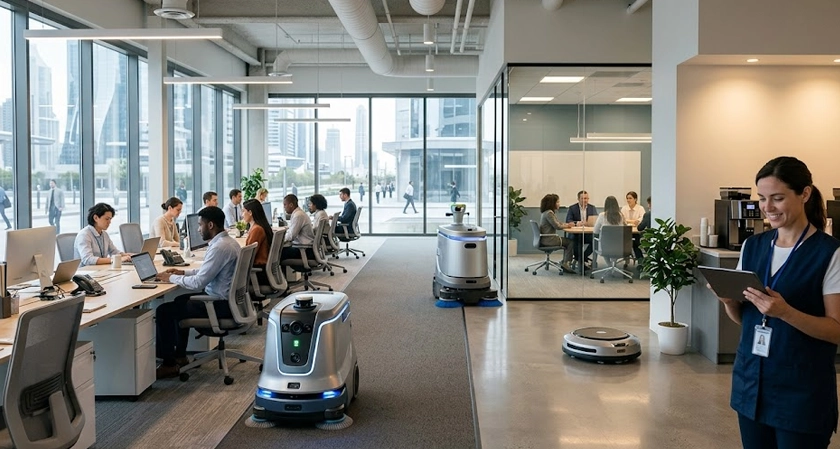
Businesses are increasingly turning toward smart cleaning technologies to create cleaner, healthier, and more efficient workplaces. These advanced solutions combine automation, artificial intelligence, sensors, connected devices, and real-time data to transform how cleaning services operate. Rather than following fixed routines, smart systems adapt based on actual workplace usage and conditions.
This evolution is changing the role of cleaning from a basic operational necessity into a strategic business function that supports employee wellbeing, productivity, workplace experience, and long-term cost efficiency.
What Are Smart Cleaning Technologies?
Smart cleaning technologies refer to intelligent cleaning systems that use digital tools and automated processes to improve cleaning performance and resource management. Unlike conventional approaches where areas are cleaned at set intervals regardless of need, smart cleaning responds dynamically based on occupancy, environmental conditions, and usage patterns.
Modern workplaces generate large amounts of operational data every day. Smart cleaning platforms collect and interpret this information to determine where attention is required, allowing cleaning teams to work more effectively and efficiently.
This approach ensures resources are allocated where they create the greatest impact while maintaining consistently high hygiene standards throughout the workplace.
Why Modern Workplaces Are Moving Beyond Traditional Cleaning
Traditional office cleaning was designed for workplaces with predictable schedules and fixed occupancy. Employees arrived at the same time, used the same spaces, and followed relatively consistent routines.
Today, office environments operate differently.
Hybrid work schedules mean that some departments may remain partially empty while meeting rooms and collaborative spaces experience heavy use throughout the day. Cleaning every space equally often results in wasted labor, unnecessary chemical use, and increased operational costs.
Organizations are also under greater pressure to improve sustainability performance while maintaining exceptional workplace experiences. Smart cleaning technologies provide a practical solution by creating responsive and efficient maintenance systems.
As businesses compete to attract employees back into offices, cleanliness has become an important part of workplace satisfaction and company reputation.
AI-Powered Cleaning Systems Are Redefining Workplace Hygiene
Artificial intelligence has become one of the most important technologies shaping modern cleaning operations. AI-powered platforms collect information from multiple sources and automatically optimize cleaning schedules.
Instead of assigning teams manually, intelligent systems identify which areas require immediate attention and adjust cleaning plans throughout the day.
This allows organizations to maintain cleaner environments while reducing unnecessary operational effort.
AI systems also support better forecasting and long-term planning. By analyzing historical workplace usage patterns, businesses can anticipate demand and improve staffing decisions.
As workplaces become increasingly data-driven, AI is helping organizations move from reactive cleaning practices to proactive workplace management.
The Sparkle Office Approach to Smart Workplace Cleaning in 2026
In 2026, workplace cleaning is no longer treated as a routine operational task but as a strategic part of building management that directly influences employee wellbeing, productivity, and business performance. Within this evolving landscape, Sparkleoffice has developed a forward-thinking approach that integrates modern cleaning practices with smart technologies to deliver consistently high standards across commercial and office environments.
At the core of this approach is a shift from fixed cleaning schedules to responsive, data-informed cleaning systems. Instead of relying solely on traditional time-based routines, Sparkle Office focuses on understanding how workplaces are actually used throughout the day. High-traffic zones such as meeting rooms, collaborative spaces, and shared amenities receive attention based on real usage patterns, while less active areas are maintained more efficiently. This ensures that cleaning resources are deployed where they are needed most, improving both effectiveness and cost efficiency.
Technology plays a central role in this transformation. Sparkle Office incorporates modern workplace insights, sensor-driven data where applicable, and structured cleaning workflows that align with contemporary office demands. This allows cleaning teams to respond more quickly to changing conditions, maintain higher hygiene standards, and reduce unnecessary repetitive work. The result is a smarter system that prioritizes precision rather than repetition.
Another important aspect of Sparkle Office’s methodology is its emphasis on workplace experience. Cleanliness today is closely tied to how employees feel in their environment. A well-maintained office contributes to better focus, reduced absenteeism, and a more professional atmosphere for clients and visitors. By combining structured cleaning processes with modern operational insights, Sparkle Office ensures that workplaces consistently reflect a high standard of care and professionalism.
Sustainability is also embedded into this approach. Smart cleaning practices naturally reduce waste by minimizing excessive use of water, chemicals, and energy. Rather than over-cleaning or duplicating efforts, Sparkle Office aligns its services with actual demand, supporting environmentally responsible operations while maintaining excellent results. This balance between efficiency and sustainability is becoming increasingly important for businesses across Australia.
The Future of Smart Cleaning in Workplaces
The next generation of workplace cleaning will become even more connected, predictive, and automated.
Future developments are expected to integrate artificial intelligence more deeply into building operations and facility management.
Organizations will continue adopting technologies that support healthier work environments while improving business efficiency.
Smart cleaning is no longer viewed as an optional innovation. It is becoming a practical business strategy that helps companies create workplaces aligned with employee expectations and long-term operational goals.
Businesses that invest in intelligent cleaning technologies today will be better positioned to create productive, sustainable, and future-ready workplaces.
Conclusion
Smart cleaning technologies are transforming modern workplaces in 2026 by introducing intelligent systems that improve hygiene, efficiency, and employee experience.
From AI-driven scheduling and connected sensors to robotic cleaning and environmental monitoring, businesses are redefining how workplace maintenance operates.
As organizations continue adapting to changing workplace expectations, smart cleaning will remain a critical part of creating healthier and more productive environments.
Companies that embrace these technologies now are not simply improving cleanliness—they are shaping the future of work.
FAQs
What is smart cleaning technology?
Smart cleaning technology uses automation, sensors, AI, and connected systems to improve cleaning efficiency and workplace hygiene.
Are cleaning robots replacing human workers?
No. Cleaning robots support cleaning teams by handling repetitive tasks while professionals focus on detailed and specialized services.
Why are workplaces adopting smart cleaning?
Businesses want healthier work environments, improved sustainability performance, stronger employee experiences, and better operational efficiency.
Is smart cleaning suitable for small offices?
Yes. Smart cleaning solutions can be adapted to businesses of different sizes and operational requirements.









Comments