>>
Industry>>
Environmental sustainability>>
Taiwan Typhoon Alarm: Why Are ...Taiwan Typhoon Alarm: Why Are 200 People Evacuating Before the Worst of the Rain Has Arrived?
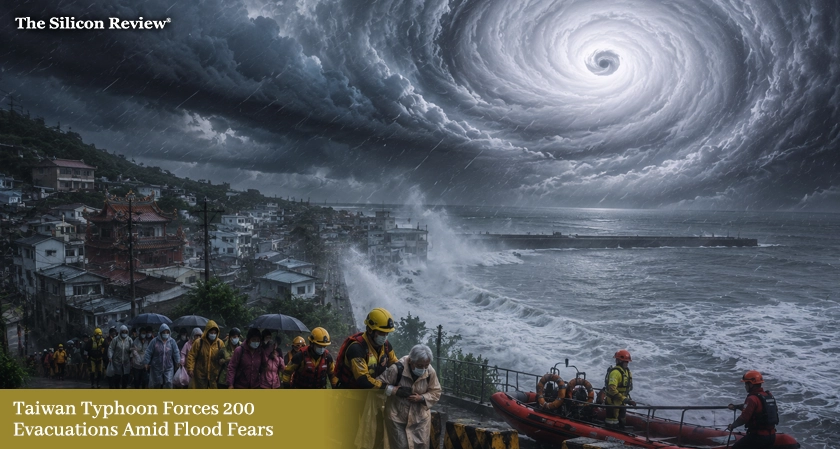
The Taiwan typhoon hasn't hit the island, but more than 200 people are already being evacuated as floodwaters rise and a barrier lake threatens to burst. If this is only the outer edge of the storm, what happens when the next major typhoon arrives?
Heavy rains linked to a nearby Taiwan typhoon have flooded parts of the island, triggered emergency evacuations, and raised fears of another deadly disaster. As authorities rush more than 200 residents to safety, a pressing question emerges: is Taiwan prepared for increasingly unpredictable weather threats?
A powerful Taiwan typhoon may never make landfall, yet it is already disrupting daily life across the island. Streets are underwater, schools have closed, and emergency teams are working around the clock to prevent a potential catastrophe.
Can a storm that stays offshore still push a nation into crisis?
Torrential rain from the typhoon's outer bands has drenched Taiwan, flooding parts of Taipei and southern cities while forcing evacuations along the east coast. In Taipei's Neihu district, floodwaters nearly swallowed parked vehicles. Further south, authorities in Pingtung and parts of Kaohsiung suspended work and school operations as conditions rapidly deteriorated.
But the most alarming threat may be hidden high above the floodwaters.
In eastern Taiwan's mountains, a rapidly expanding barrier lake is putting nearby communities on edge. Officials fear that if the natural blockage gives way, a powerful wall of water could surge downstream with little warning.
Is Taiwan facing a disaster before the typhoon even arrives?
The concern is not hypothetical. Similar incidents in the past have transformed heavy rainfall into deadly emergencies within hours. While no casualties have been reported, relentless rain is keeping emergency responders on high alert and accelerating evacuation efforts.
Forecasters warn that the Taiwan typhoon could continue drenching parts of the island for days, increasing the risks of flash floods, landslides, and infrastructure damage. Yet the crisis highlights a difficult reality. Taiwan depends on seasonal typhoons to replenish reservoirs after dry winters, but the same storms that secure water supplies can also threaten lives, homes, and entire communities.
How much rain is too much before nature takes control?
For now, Taiwan remains caught between relief and danger. As floodwaters rise and the barrier lake continues to swell, the island is confronting an uncomfortable truth: the weather systems it relies on are becoming increasingly difficult to predict and control.
Authorities remain focused on preventing tragedy, but as the Taiwan typhoon continues to test infrastructure, emergency planning, and public resilience, the bigger question is whether these events are becoming the new normal rather than the exception. The Silicon Review asks if Taiwan has spent years preparing for typhoons, why are more than 200 residents still evacuating before the worst of the storm has even arrived?
FAQ:
Q: What is causing the severe weather in Taiwan?
A: Heavy rainfall from the outer bands of a nearby Taiwan typhoon is triggering flooding and dangerous weather conditions across the island.
Q: Why are people being evacuated in eastern Taiwan?
A: Authorities fear a rapidly filling barrier lake could breach and unleash flash flooding on downstream communities.
Q: Has the Taiwan typhoon made landfall?
A: No. The Taiwan typhoon is passing nearby, but its rain bands are strong enough to cause widespread disruption.
Q: Which areas are most affected by the Taiwan typhoon?
A: Taipei, Pingtung, Kaohsiung, and parts of eastern Taiwan are experiencing heavy rain, flooding, and evacuation alerts.
Q: What is a barrier lake?
A: A barrier lake forms when landslides or natural debris block a river, trapping water and increasing the risk of sudden flooding.
Q: What are the biggest risks from the Taiwan typhoon?
A: Flash floods, landslides, infrastructure damage, transportation disruptions, and potential barrier lake failures.


















Comments