>>
Industry>>
Agritech>>
Agricultural Technology From C...Agricultural Technology From China: Can Indonesia’s Farming Future Be Built on Another Nation’s Model?
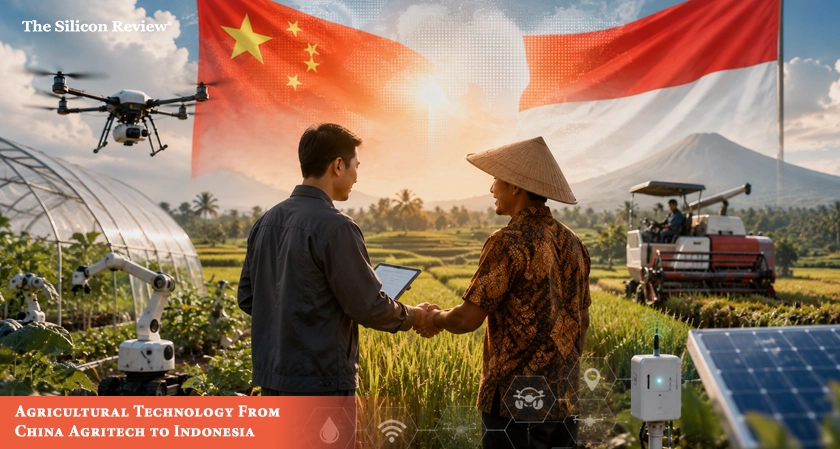
Agricultural technology from China is becoming Indonesia’s new farming weapon as Jakarta targets higher productivity and food security. But can imported innovation transform farms without fixing deeper challenges?
Agricultural technology is driving a bold new Indonesia-China farming push as Jakarta looks to China’s agritech success to transform rural production. The mission is clear: increase yields, strengthen food security, and modernize Indonesia agriculture. Can technology alone fix a struggling farming system?
Indonesia’s Ministry of Transmigration is studying China agritech solutions involving irrigation systems, land optimization, farm machinery, and resource efficiency. Deputy Minister Viva Yoga Mauladi said Indonesian officials will learn directly from China’s agricultural experience and adapt successful practices to local conditions.
“We hope that by learning directly in China, we can adapt this knowledge into several transmigration areas,” said Deputy Minister Viva Yoga Mauladi.
Can machines and methods imported from China transform farms that face decades-old challenges?
The initiative reflects Indonesia’s urgency to strengthen Indonesia agriculture as demand for food continues to rise. Officials believe advanced technology can help farmers increase production, reduce waste, and turn underdeveloped regions into stronger economic centres.
The Beijing seminar will focus on water management, irrigation development, productive land use, and agricultural mechanization. After the program, participants are expected to prepare recommendations for pilot projects across Indonesian transmigration areas.
Beyond farming, Indonesia is also looking at China’s rural development model, especially the connection between agriculture, industries, and micro, small, and medium enterprises. The goal is to help local products move beyond basic commodities and create stronger value chains.
However, the biggest challenge may not be technology itself. China’s farming success was built through specific policies, infrastructure, and economic conditions. Indonesia’s diverse geography, smaller farms, and different rural realities may require more than simply copying another country’s approach.
Who will gain the most from agricultural innovation the farmers on the ground or the systems controlling the technology?
The push for agricultural technology highlights a global race to secure future food supplies. Yet history shows that technology only creates impact when farmers can access, afford, and effectively use it.
Indonesia’s decision to learn from China signals ambition, but it also creates a critical debate. The Silicon Review asks If technology is truly the solution to food security, why do many farming communities worldwide remain vulnerable despite decades of innovation?
FAQ:
Q: What is agricultural technology?
A: Agricultural technology uses modern tools, machinery, and digital solutions to improve farming productivity, efficiency, and resource management.
Q: Why is Indonesia adopting agricultural technology from China?
A: Indonesia is exploring agricultural technology from China to increase farm productivity, modernize agriculture, and strengthen food security.
Q: What is China agritech?
A: China agritech includes advanced farming solutions such as smart irrigation, mechanization, land optimization, and technology-driven crop production.
Q: How can agricultural technology improve Indonesia agriculture?
A: Agricultural technology can help Indonesia agriculture increase yields, reduce waste, improve efficiency, and support farmer incomes.
Q: What agricultural technology is Indonesia learning from China?
A: Indonesia is studying irrigation management, farm machinery, productive land use, and resource-efficient farming methods from China.
Q: What challenges does Indonesia face in adopting agricultural technology?
A: Indonesia faces challenges including infrastructure gaps, technology access, affordability, and ensuring small farmers benefit from innovation.
Q: What is the future of agricultural technology in Indonesia?
A: The future depends on successful adaptation, farmer access, investment, and the ability to turn innovation into real agricultural growth.













Comments