>>
Platform>>
Google>>
China AI Catching Up Silicon ...China AI Catching Up Silicon Valley: Is Google Losing the Race It Once Dominated?
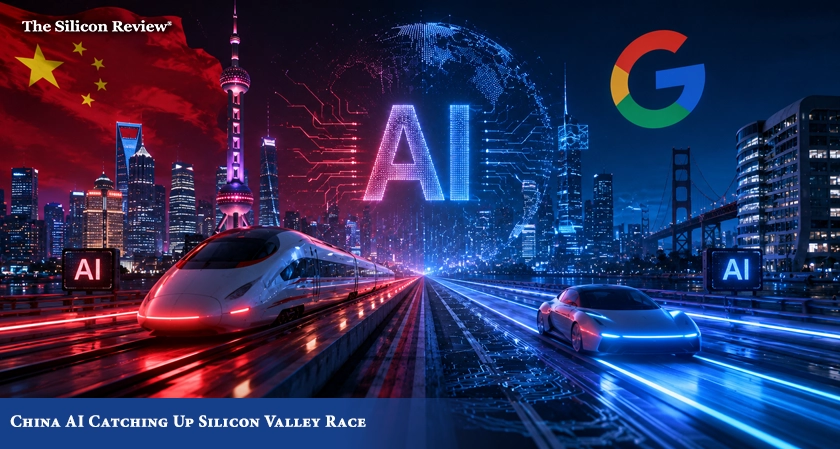
China AI catching up Silicon Valley as affordable, powerful AI models challenge US dominance. Is America still leading, or is Beijing rewriting the AI race?
China AI catching up Silicon Valley has become the biggest warning sign for America’s artificial intelligence ambitions as Chinese startups release powerful, low-cost models that are challenging the dominance of US technology giants. Is the AI advantage disappearing faster than expected?
Google’s delays with its next-generation Gemini model have added pressure on the US tech industry. The company is working to improve coding performance and strengthen its position against rivals, but the timing has raised concerns among investors watching China’s rapid progress.
If America invented the AI race, why is China suddenly setting the pace?
The latest shock came from Moonshot, a Chinese AI startup that launched its Kimi K3 model with impressive coding capabilities. The model gained massive attention as users rushed to test its performance, pushing the company’s computing capacity close to its limits.
“Kimi K3 has received far more love than we expected, and our GPUs are feeling it. Over the past 48 hours, demand has pushed close to the limits of our current capacity,” Moonshot Kimi AI posted on X.
Unlike many expensive US AI systems, Chinese companies are increasingly focusing on open-weight and affordable models. This strategy allows developers to access, modify, and deploy AI systems at lower costs, creating a direct challenge to Silicon Valley’s premium business model.
Can billion-dollar AI investments survive against cheaper competitors?
The growing US China AI race competition is no longer just about who builds the smartest model. It is becoming a battle over cost, accessibility, computing power, and global influence. Companies such as Moonshot, DeepSeek, and Alibaba are proving that AI leadership may not belong only to those with the biggest budgets.
China’s support for domestic AI infrastructure, computing resources, and semiconductor development has accelerated its progress. Meanwhile, US policymakers are debating whether stronger restrictions are needed to limit China’s access to advanced AI technology.
Is Washington protecting security, or protecting America’s market advantage?
The Chinese AI chips challenge US debate has intensified as Beijing pushes for greater technology independence. While Nvidia and US companies still maintain major advantages in hardware, software ecosystems, and research, China’s progress shows that the gap may be narrowing.
The Silicon Valley China AI threat raises a difficult contradiction. American companies claim technological leadership, yet they are increasingly responding to cheaper Chinese alternatives instead of ignoring them. The Silicon Review asks If Silicon Valley remains unbeatable, why are Chinese models forcing a global rethink?
FAQ:
Q: What does China AI catching up Silicon Valley mean for the global AI race?
A: It shows that Chinese AI companies are challenging US dominance through affordable, powerful, and open-weight AI models.
Q: Why is the US China AI race competition becoming more intense?
A: The competition is growing as both countries fight for leadership in AI models, chips, computing power, and global technology influence.
Q: How are Chinese AI companies challenging Silicon Valley?
A: Chinese startups are developing low-cost AI models that compete with expensive US systems on performance, accessibility, and efficiency.
Q: Are Chinese AI chips a threat to US technology companies?
A: Chinese AI chips challenge US companies by reducing dependence on foreign hardware and supporting China’s goal of technology independence.
Q: Why is Silicon Valley concerned about China AI progress?
A: Silicon Valley faces pressure because cheaper Chinese AI models could disrupt business models built around high-cost AI systems and premium services.

















Comments