>>
Platform>>
Cisco>>
Cisco AI Automation Vision: Ca...Cisco AI Automation Vision: Can AI Create More Jobs Than It Destroys?
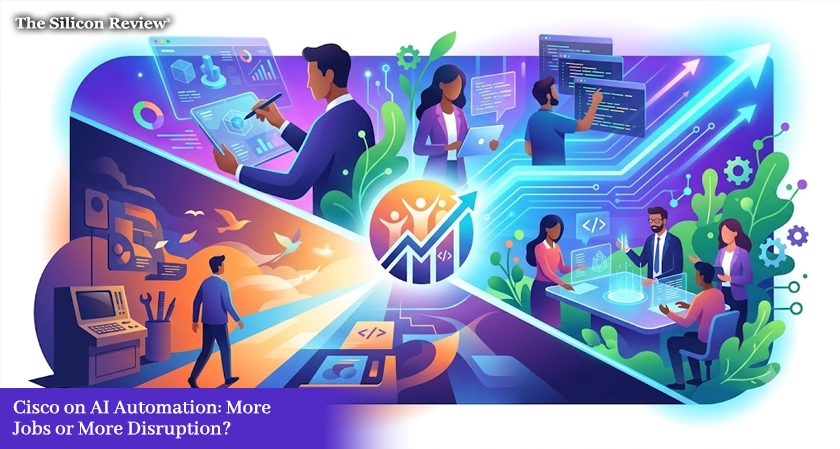
Cisco is challenging the biggest fear surrounding AI automation as President Jeetu Patel claims artificial intelligence could create more jobs than it eliminates. But as companies race to automate work, will AI create new opportunities for everyone, or only reward those who can adapt fastest?
Cisco is taking a bold position in the AI debate, arguing that artificial intelligence will not become a job destroyer but a force that creates new opportunities. Cisco President Jeetu Patel believes AI automation could reshape the workforce by generating more jobs than it removes over the next five years. Will his dream come true?
Patel said early evidence is already supporting his prediction that AI will expand human capability rather than replace human contribution. According to him, when AI makes one process faster, businesses do not simply stop; they discover new challenges, create new products, and explore new markets.
“I’ve been saying this for months, and the early data is beginning to support it. Five years from now, I believe AI will create more jobs than it eliminates,” said Jeetu Patel, President of Cisco.
His argument challenges a growing global concern that AI automation will leave millions of workers behind. Patel believes the bigger risk is not AI replacing people, but people failing to develop the skills needed to work with AI.
But is AI truly creating jobs, or simply changing who gets to keep them?
Patel highlighted AI fluency as a defining advantage of the future workforce. He said workers who understand AI tools could become dramatically more productive, suggesting that AI-skilled professionals may outperform traditional workflows by a significant margin.
“AI-fluent people will not be 10% more productive,” Patel said. “In some forms of work, they could be 50x or even 100x more effective.”
The rise of AI automation is already transforming industries including technology, manufacturing, healthcare, and customer service. While companies see efficiency gains, workers face uncertainty about whether new opportunities will appear quickly enough.
Is AI automation the next industrial revolution or the biggest workforce disruption yet?
Cisco argues that protecting jobs by slowing AI progress is not the answer. Instead, Patel believes companies, governments, and workers must focus on AI education and reskilling.
As Cisco promotes a future powered by human-AI collaboration, The Silicon Review asks is AI automation becoming humanity’s greatest productivity tool, or are businesses underestimating the social disruption it could create?
FAQ:
Q: What did Cisco say about AI automation and jobs?
A: Cisco President Jeetu Patel said AI automation is likely to create more jobs than it eliminates over the next five years by driving innovation and new business opportunities.
Q: Why does Cisco believe AI automation will create jobs?
A: Cisco argues that AI automation speeds up work, allowing companies to build new products, enter new markets, and create demand for new roles and skills.
Q: What is AI fluency according to Cisco?
A: AI fluency is the ability to effectively use AI tools. Cisco says it will become a critical skill for improving productivity and staying competitive in the future workforce.
Q: Which industries will AI automation impact the most?
A: AI automation is expected to significantly influence technology, healthcare, manufacturing, finance, customer service, and other knowledge-based industries.
Q: How can workers prepare for the AI automation era?
A: Cisco recommends that workers focus on AI skills, continuous learning, and reskilling to adapt to changing job requirements and benefit from new career opportunities.




















Comments