>>
Industry>>
Nanotechnology>>
DNA Nanotechnology for Brain R...DNA Nanotechnology for Brain Regeneration: Is This the Brain Repair Revolution We Were Waiting For or Just Another Medical Promise?
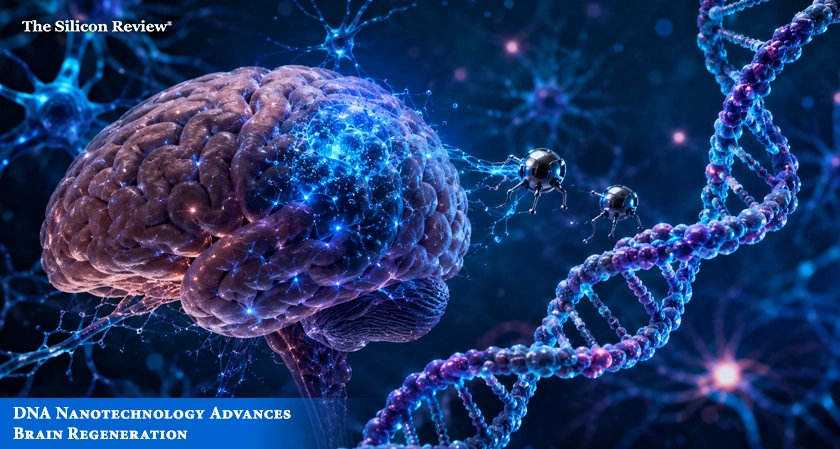
DNA nanotechnology is pushing the boundaries of brain regeneration by creating programmable structures that could deliver therapies, fight inflammation, and repair stroke damage. Are these tiny DNA tools the future of brain repair?
For decades, stroke treatment has focused on one goal: saving brain tissue before it is lost. Now, DNA nanotechnology is raising a bigger possibility repairing the damage after it happens.
A recent review in Communications Biology explores how programmable DNA nanostructures could reshape stroke care by enabling targeted drug delivery, controlled therapeutic release, advanced imaging, and next-generation brain regeneration. Unlike existing treatments that mainly restore blood flow, DNA nanotechnology aims to attack the deeper problem: damaged neurons, chronic inflammation, and lost brain function.
Can tiny DNA structures truly rebuild the injured brain or is science promising more than it can deliver?
After a stroke, oxygen loss triggers a chain reaction of neuronal death, oxidative stress, inflammation, and blood-brain barrier damage. Current treatments, including clot-dissolving drugs and mechanical thrombectomy, can reduce immediate damage but have limited ability to repair destroyed brain tissue.
DNA nanotechnology could change that.
Researchers are developing programmable DNA structures that can carry drugs, RNA therapies, gene-editing tools, and imaging agents directly to damaged areas. Tetrahedral DNA nanostructures, DNA origami, DNA nanocages, and DNA hydrogels are showing potential to cross the blood-brain barrier, reduce inflammation, protect neurons, and support tissue recovery in experimental studies.
According to the study, programmable DNA nanostructures have the potential to advance stroke treatment beyond emergency reperfusion, although significant safety and clinical translation challenges remain.
What if the future of stroke treatment is not just preventing brain loss but rebuilding what was damaged?
Among these technologies, tetrahedral DNA nanostructures are gaining attention for their stability, cellular absorption, and ability to influence biological pathways linked to inflammation and neuron survival. Studies suggest they may reduce harmful immune responses and create conditions that support brain regeneration.
However, the biggest barriers remain outside the laboratory.
Scientists still need to prove long-term safety, prevent unwanted immune reactions, improve stability inside the body, and develop affordable manufacturing methods before DNA nanotechnology reaches hospitals.
Are we standing at the edge of a medical breakthrough or chasing a futuristic idea that may take decades to arrive?
DNA nanotechnology represents one of the most ambitious approaches in regenerative medicine. If researchers overcome today’s challenges, these microscopic platforms could transform stroke recovery from damage control into true brain repair. The Silicon Review asks If DNA nanotechnology can unlock brain regeneration, are we closer than ever to healing the brain or still years away from turning hope into reality?
FAQ:
Q: What is DNA nanotechnology?
A: DNA nanotechnology uses programmable DNA structures to design tiny biological tools for targeted drug delivery, imaging, and medical therapies.
Q: How can DNA nanotechnology support brain regeneration?
A: DNA nanotechnology may help brain regeneration by delivering therapeutic molecules, reducing inflammation, protecting neurons, and supporting tissue repair after stroke.
Q: Can DNA nanostructures cross the blood-brain barrier?
A: Some DNA nanostructures have shown potential to cross the blood-brain barrier in experimental studies, but clinical validation is still needed.
Q: What are the challenges of DNA nanotechnology in medicine?
A: Key challenges include long-term safety, immune response risks, biological stability, and large-scale manufacturing.
Q: Is DNA nanotechnology currently used for stroke treatment?
A: No. Most DNA nanotechnology approaches for stroke and brain regeneration remain in experimental and preclinical stages.
Q: Why is DNA nanotechnology important for future medicine?
A: DNA nanotechnology offers a programmable platform that could combine diagnosis, targeted therapy, and brain repair in a single approach.












Comments