>>
Industry>>
Telecom>>
Emergency Alert Test Sounds Na...Emergency Alert Test Sounds Nationwide as AusAlert Faces Mixed Reactions, 94% Tower Success Rate
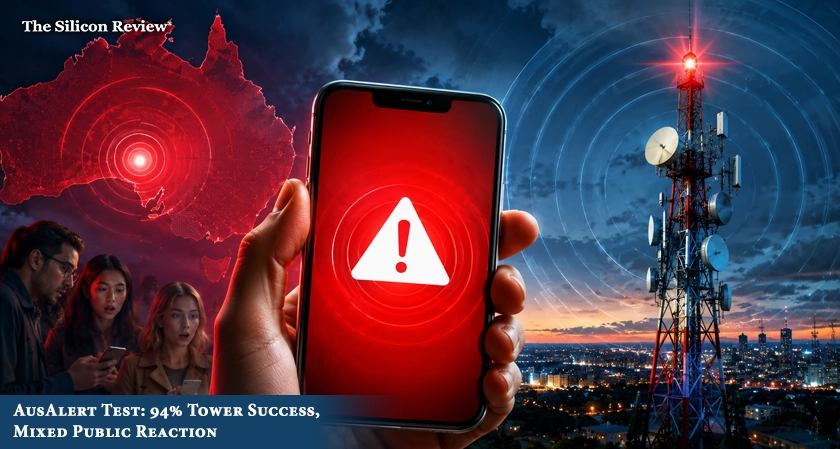
The first national AusAlert test sent warnings to millions of phones, with a 94% tower success rate, but mixed public reactions and 6% of towers offline for maintenance highlighted challenges in the new emergency system.
Millions of Australians heard their phones blare at 2:00 PM on Monday as the federal government conducted the first national test of the AusAlert emergency warning system. The test, designed to evaluate the new cell-broadcast network, achieved a 94 per cent success rate in broadcasting from mobile towers.
Emergency Management Minister Kristy McBain lauded the test as "as successful as it could be," noting that 94 per cent of cell towers successfully broadcast the alert messages. She also acknowledged that six per cent of towers were "offline for maintenance" and would be addressed.
"It exceeded our target of 90 per cent," McBain said, but faced repeated questions about exactly how many individual phones did not receive the alert. "We know that some devices did not receive the alert, and there are a range of reasons for that," she stated, adding that "there is no silver bullet" in emergency communication.
The test drew a flood of feedback from Australians, with reactions ranging from indifference to startlement. A diner in Melbourne's Degraves Street described the alert as "underwhelming," while others questioned if a real emergency warning would be effective. Outside Sydney Town Hall, a 25-year-old who heard the alert said he had no idea what was happening until he read the message confirming it was a test.
The AusAlert system is designed to provide geo-targeted warnings during emergencies such as bushfires, floods, and cyclones. The government plans to work with telecommunications companies and device manufacturers to analyse the results and address any issues before the system becomes fully operational later this year.
"We'll continue to work with our telco partners, as well as device manufacturers, on a range of the feedback that will come in from this test," Minister McBain told reporters. "There is no silver bullet in emergency communication."
Here is the question this test raises. The first national AusAlert test achieved a 94% tower success rate, but six per cent of towers were offline and public reactions were mixed. When a real emergency strikes, will the gaps in the system be closed in time?
As AusAlert faces its first major public test, The Silicon Review asks a final question. When the next disaster arrives, will the emergency alert system be ready to save lives?
FAQ:
Q: What was the AusAlert test?
A: The AusAlert test was the first national trial of Australia's new emergency warning system, which uses cell-broadcast technology to send geo-targeted alerts to compatible mobile devices.
Q: When did the AusAlert test happen?
A: The test took place on July 27, 2026, at 2:00 PM AEST.
Q: How successful was the AusAlert test?
A: The federal government reported a 94% success rate in broadcasting from cell towers, exceeding the 90% target. However, some devices did not receive the alert.
Q: Why did some phones not receive the AusAlert test?
A: Reasons include towers being "offline for maintenance" and a range of technical factors. The government will work with telecommunications companies to analyse the results.
Q: How did the public react to the AusAlert test?
A: Reactions were mixed, with some finding it underwhelming and others being startled. Some questioned whether the alert would be effective in a real emergency.













Comments