>>
Technology>>
Mobile>>
Nubia AI Agent Smartphone Laun...Nubia AI Agent Smartphone Launch Confirmed: World's First Mass-Produced Phone That Acts as Your Personal Assistant
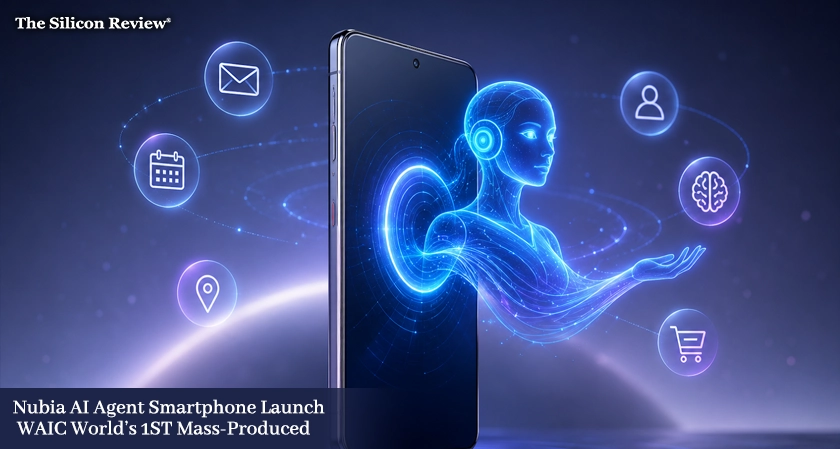
Nubia has confirmed it will launch the world's first mass-produced AI agent smartphone at the 2026 World Artificial Intelligence Conference (WAIC) in Shanghai from July 17-20. The device, built with ByteDance's Doubao AI, can autonomously execute complex multi-app tasks like booking flights, comparing prices, and completing purchases all without user screen interaction.
Nubia is about to redefine what a smartphone can do. The Chinese phone maker, a subsidiary of ZTE, has officially confirmed it will unveil the world's first mass-produced AI agent smartphone at the 2026 World Artificial Intelligence Conference in Shanghai, running from July 17 to 20.
The device is not a concept or engineering prototype. ZTE senior vice president and terminal business president Ni Fei has confirmed it is a mass-produced flagship model that will be available for purchase. The launch follows the company's first-generation Nubia M153 "Doubao phone," a technical preview that sold 30,000 units in a single day in late 2025.
How the AI Agent Works
The Nubia AI agent smartphone represents a fundamental shift from traditional voice assistants. Unlike Siri or Google Assistant, which are essentially question-answering tools, Nubia's AI agent can autonomously perform multi-step tasks.
The core technology is a GUI (graphical user interface) agent capability AI that visually understands on-screen buttons, text, and icons to simulate finger taps, swipes, and operations. The device is built on a three-layer technical architecture: deep system-level AI integration at the operating system layer, on-device large language model inference for privacy and speed, and an open architecture allowing third-party developers to plug in their own AI capabilities .
With this system, users can issue natural language commands like "book the cheapest flight to Beijing" or "compare prices for this item across all shopping apps and order the cheapest one," and the phone will autonomously open apps, search, compare, fill in passenger information, and complete the transaction.
Design and Hardware
The device features a blue back panel with silver metal frame and a distinctive orange dedicated AI button on the side. The rear camera module adopts a horizontal bar design, similar to the iPhone Air. While full specifications have not been disclosed, it is expected to feature flagship hardware, with the previous M153 model featuring Qualcomm's Snapdragon 8 Elite chipset, 16GB of RAM, and 512GB of storage.
Learning from the Past
The new model is widely expected to be the second-generation Doubao phone co-developed with ByteDance. The first-generation Nubia M153, released in December 2025, was a technical preview that demonstrated the potential of system-level AI but faced challenges. The phone used the INJECT_EVENTS system permission to simulate user clicks, triggering security alarms with WeChat, Alipay, and banking apps, leading to blocks within five days of its release.
Industry sources suggest the second-generation device has shifted to MCP and A2A protocol-based agent interaction, eliminating the need for screen recognition and simulated clicks, thereby bypassing the platform blocking issues that plagued the M153.
"You can't keep a good idea down," one industry observer noted, referencing how Nubia's persistence in refining the agent framework has led to this production-ready device that could reshape how consumers interact with smartphones shifting from "human finds function" to "AI proactively executes."
What It Means for the Industry
The Nubia AI agent smartphone marks a major milestone in the evolution of mobile AI. Previous AI phones were essentially voice assistants or AI tools running on top of an OS. This device integrates AI at the system level, giving it the ability to autonomously operate the phone just as a human would.
This represents a paradigm shift from "AI as a tool" to "AI as a digital worker," as one analysis put it, comparable in significance to the transition from keyboards to touchscreens. The device also signals a new era of competition in the smartphone market, where the battleground shifts from hardware specs to AI agent capabilities.
Here is the question this launch raises. Nubia is bringing the world's first mass-produced AI agent smartphone to market, capable of autonomously operating apps and completing tasks without user intervention. But when the first-generation model was blocked by WeChat and Alipay for simulating user clicks, can this production version overcome the security and privacy concerns that come with granting an AI system-level control over your phone?
As Nubia prepares to unveil its AI agent smartphone at WAIC 2026, The Silicon Review asks a final question. When your phone starts acting like a personal assistant that can make decisions across apps on your behalf, is it liberation from repetitive tasks or a surrender of control to an algorithm that now has the keys to your digital life?
FAQ:
Q: What is the Nubia AI agent smartphone?
A: The Nubia AI agent smartphone is the world's first mass-produced phone with a system-level AI agent that can autonomously operate multiple apps to complete complex tasks without user screen interaction.
Q: When will the Nubia AI agent smartphone launch?
A: Nubia will unveil the AI agent smartphone at the 2026 World Artificial Intelligence Conference (WAIC) in Shanghai from July 17 to 20, 2026.
Q: What is the difference between the Nubia AI agent phone and previous AI smartphones?
A: Unlike traditional voice assistants or AI tools, the Nubia AI agent is integrated at the operating system level and can autonomously perform multi-step tasks across apps, such as finding the cheapest flight and completing the booking, without requiring user intervention.
Q: Who developed the Nubia AI agent smartphone?
A: Nubia developed the AI agent smartphone in collaboration with ByteDance's Doubao AI team.
Q: Was there a previous version of the Nubia AI agent phone?
A: Yes. The Nubia M153 "Doubao phone," released in December 2025, was a technical preview that sold out quickly but was blocked by WeChat and Alipay for simulating user clicks.
Q: What AI technology does the Nubia AI agent smartphone use?
A: The phone uses GUI agent technology AI that visually understands on-screen elements and simulates human taps and swipes along with an on-device large language model for privacy and speed.















Comments