>>
Industry>>
Environmental sustainability>>
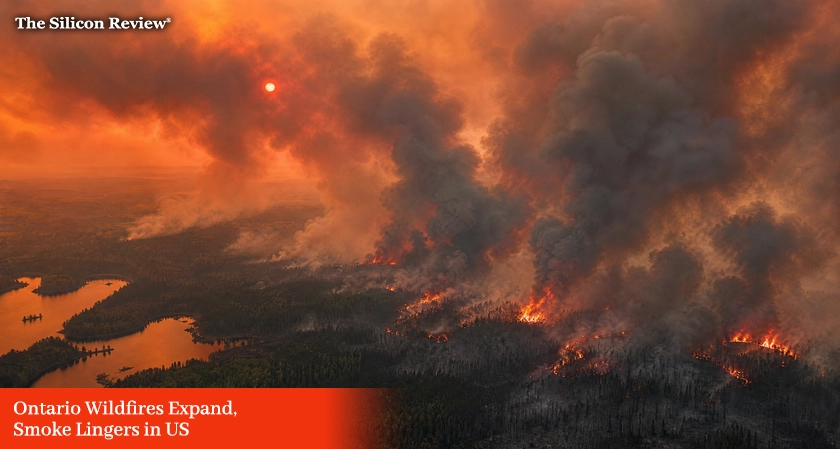
Ontario Wildfires Expand as Sm...Ontario Wildfires Expand as Smoke Lingers in Parts of the US; Air Quality Alerts in Effect
The Silicon Review
21 July, 2026
Author:
Sashindra Suresh
Ontario wildfires have expanded, with smoke drifting into parts of the US and triggering air quality alerts across the Midwest and Northeast as hundreds of fires continue to burn across Canada.
Ontario wildfires have expanded in recent days, with smoke drifting across the border and triggering air quality alerts in several US states. The fires, which have been burning across Canada since early June, have now spread to over 500,000 hectares in Ontario alone, forcing evacuations and prompting the federal government to deploy military personnel to assist firefighting efforts.
"The fire situation is very serious," said a spokesperson for the Ontario Ministry of Natural Resources and Forestry. "We are seeing rapid fire growth, and the smoke is affecting air quality across a wide area."
The smoke has drifted southward, affecting air quality in parts of the Midwest and Northeast, including Michigan, Ohio, Pennsylvania, and New York. The National Weather Service has issued air quality alerts for several regions, urging residents to limit outdoor activities and stay indoors.
"We are closely monitoring the situation and taking steps to protect public health," said an Environmental Protection Agency spokesperson. "Air quality is expected to remain poor in the coming days."
The fires have also had a significant impact on local communities, with thousands of residents forced to evacuate their homes. The Canadian Red Cross has been providing emergency support, including shelter, food, and medical assistance, to those displaced.
"Our team is on the ground, supporting evacuees and helping to coordinate emergency services," said a Canadian Red Cross spokesperson.
"The priority is the safety and wellbeing of those affected."
Climate experts have warned that the frequency and intensity of wildfires are likely to increase as global temperatures rise, with Canada experiencing its worst wildfire season in recorded history. The economic cost of the fires is also expected to be significant, with billions of dollars in damage to property and infrastructure.
Here is the question this wildfire season raises. Ontario wildfires have expanded, with smoke lingering in parts of the US and triggering air quality alerts. When wildfires become more frequent and intense, how can communities and governments adapt to the growing threat?
As Ontario wildfires expand and smoke lingers in parts of the US, The Silicon Review asks a final question. When the climate crisis fuels more frequent and intense wildfires, what measures are needed to protect communities and ecosystems on both sides of the border?
FAQ:
Q: How big are the Ontario wildfires?
A: The Ontario wildfires have burned over 500,000 hectares, with hundreds of active fires continuing to spread.
Q: Where is the smoke from the Ontario wildfires affecting the US?
A: The smoke has drifted into parts of the Midwest and Northeast, including Michigan, Ohio, Pennsylvania, and New York.
Q: What are the health concerns from the wildfire smoke?
A: The smoke can cause respiratory problems, especially for vulnerable populations such as the elderly, children, and those with pre-existing conditions.
Q: Are people being evacuated due to the Ontario wildfires?
A: Yes, thousands of residents have been forced to evacuate their homes due to the fires.
Q: What is causing the increase in wildfires?
A: Climate change is contributing to more frequent and intense wildfires, with Canada experiencing its worst wildfire season in recorded history.




















Comments