>>
Industry>>
Healthcare>>
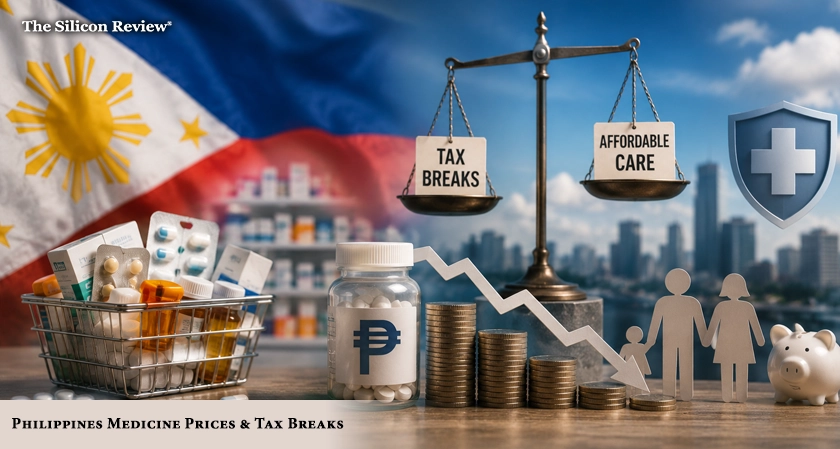
Philippines Medicine Prices: T...Philippines Medicine Prices: Tax Breaks Promise Relief, But Can Patients Finally Afford Care?
The Silicon Review
27 July, 2026
Author:
Jishnuu
Philippines medicine prices are at the center of new tax reforms aimed at reducing drug costs. Will these savings reach patients, or stop at the industry level?
The Philippines is expanding tax incentives to reduce Philippines medicine prices and boost local production, but experts warn that lower taxes alone may not solve the country’s deeper healthcare affordability crisis. Can cheaper medicines become a reality when millions still pay the highest price at the pharmacy counter?
The Bureau of Internal Revenue expanded its VAT-exempt medicine list to 2,263 products from 2,242 in December, a move designed to reduce costs and encourage demand for locally produced medicines, especially generic drugs.
But is a tax break enough to make healthcare affordable?
A BMI report from Fitch Solutions highlighted a critical gap: tax reductions may lower official prices, but they do not guarantee meaningful savings for patients. Out-of-pocket payments accounted for 42.7% of total health spending in 2025, showing that many Filipinos still carry a heavy financial burden when buying medicines.
“Tax breaks lower list prices; they do not change who pays at the counter,” BMI said.
The government is also pushing incentives to strengthen the Philippines pharmaceutical industry, including reduced corporate income tax rates through Philippine Economic Zone Authority-administered industrial parks. The goal is to expand Philippines drug manufacturing and reduce the country’s dependence on imported medicines and pharmaceutical ingredients.
But can a country reduce medicine costs while still depending on foreign supply chains?
The challenge goes beyond pricing. Limited financing, a shortage of skilled workers, and weak research and development capabilities continue to slow the growth of domestic pharmaceutical production.
The Philippine pharmaceutical market is expected to grow from $3.36 billion in 2025 to $3.91 billion by 2034, supported by healthcare reforms and rising medical demand. Manufacturing hubs are also being developed to strengthen local production capacity.
If the pharmaceutical market is growing, why are ordinary patients still struggling with medicine bills?
The government’s approach reveals a major contradiction. Tax incentives may attract investors and support businesses, but affordability depends on whether these savings actually reach consumers. A cheaper manufacturing environment does not automatically mean cheaper treatment.
The future of Philippines medicine prices will depend on more than tax policies. It will require stronger local production, better healthcare coverage, and policies that ensure savings move from companies to patients.
The real question is not whether tax breaks can reduce costs on paper, but whether they can finally change what Filipinos pay at the counter. The Silicon Review asks is the Philippines fixing the medicine affordability problem, or only making the numbers look better?
FAQ:
Q: Why are Philippines medicine prices still high?
A: Philippines medicine prices remain high due to import dependence, supply chain challenges, and significant out-of-pocket healthcare expenses.
Q: Can tax breaks make medicines more affordable in the Philippines?
A: Tax incentives can reduce production costs, but they may not directly lower patient expenses without stronger healthcare reforms.
Q: How can the Philippines pharmaceutical industry reduce drug costs?
A: The Philippines pharmaceutical industry can improve affordability by expanding local production and reducing dependence on imported medicines.
Q: Why is Philippines drug manufacturing important?
A: Philippines drug manufacturing can strengthen medicine supply chains, reduce import risks, and support long-term healthcare security.
Q: Will affordable medicines initiatives in the Philippines help patients?
A: Affordable medicines Philippines initiatives aim to reduce drug costs through tax exemptions, local manufacturing, and improved access to essential medicines.




















Comments