>>
Industry>>
Social Responsibility>>
AI Music Theft to a Child's De...AI Music Theft to a Child's Death in Perth: What Does Social Responsibility Mean in 2026?
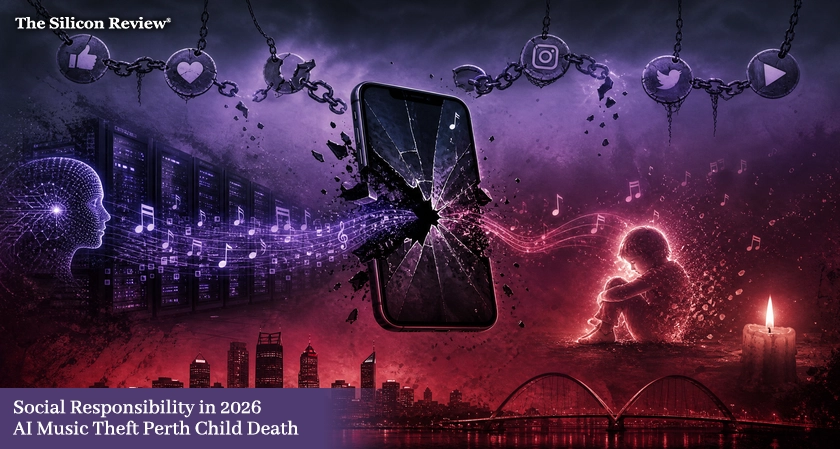
Two crises; AI music theft and a child's death in Perth test Australia's social responsibility, raising questions about what society owes its creators and its children.
Two events in the past week have tested what social responsibility actually means in Australia. The ARIA chief's call for AI music licensing and the tragic death of a five-year-old child in a Perth crash may seem unrelated, but both raise fundamental questions about what society owes its most vulnerable members.
The Music Industry's AI Threat
ARIA chief executive Annabelle Herd has called for an urgent licensing system for AI music generators, warning that "unlicensed use of music must end." Herd argued that AI companies are profiting from the work of Australian artists without consent or compensation.
"The creators who have built this industry are being pushed aside by unlicensed AI," Herd told The Silicon Review. "That is not innovation. That is exploitation. If we do not act, we will have no music industry to protect."
The ARIA call is part of a broader global push to regulate AI's use of copyrighted material. But in Australia, the government is still consulting on its AI regulatory framework, leaving creators exposed.
Here is the question this raises. When the creators who shape our culture are being replaced by machines, which is responsible for protecting them?
A Child's Death in Perth
On July 14, a five-year-old child was killed in a crash on a Perth road. Police are investigating and appealing for witnesses and dashcam footage. The tragedy has left a community in mourning and renewed debates about road safety.
"We are heartbroken. A child's life has been taken, and we need to understand why," said Western Australia Police Inspector David Young. "We urge anyone with information to come forward."
The death has sparked calls for better road safety, including lower speed limits, more pedestrian crossings, and improved driver education. But no single fix can bring back a child.
Here is the question this raises. When a child can be killed on a road in 2026, what does that say about how seriously we take protecting our most vulnerable?
Connecting the Two Crises
At first glance, AI music theft and a child's death in Perth seem worlds apart. But both reveal a society that struggles to protect its most vulnerable. Whether it is creators facing displacement or children facing preventable harm, the question is the same: when do we stop treating these as separate issues and start asking what Australia owes its people?
Here is the final question. When AI threatens the livelihoods of the creators who define our culture, and our roads still claim the lives of children, what does social responsibility really mean?
As the ARIA chief calls for AI licensing and Perth mourns a child, The Silicon Review asks a final question. When the creators who shape our culture are being replaced by machines, and the most vulnerable among us are still dying on our roads, is Australia living up to its social responsibility?
FAQ:
Q: What is ARIA's call for AI music licensing about?
A: ARIA chief Annabelle Herd has called for an urgent licensing system to ensure AI companies pay artists and labels when their music is used to train AI, warning that unlicensed use is threatening the music industry.
Q: What happened in the Perth crash?
A: A five-year-old child was killed in a crash on a Perth road on July 14, 2026. Police are investigating and have appealed for witnesses and dashcam footage.
Q: How are AI music theft and the Perth crash connected?
A: Both highlight Australia's struggle to protect the most vulnerable whether it's artists facing technological displacement or children facing preventable harm on roads.
Q: What is Australia doing to regulate AI?
A: The Australian government is still consulting on its AI regulatory framework, leaving music creators exposed to unlicensed AI use.
Q: What is being done to improve road safety in Perth?
A: The crash has sparked calls for lower speed limits, more pedestrian crossings, and improved driver education, though no immediate policy changes have been announced.












Comments