>>
Industry>>
Travel and hospitality>>
Southeast Asia Tourism Is Losi...Southeast Asia Tourism Is Losing Its Lifeline: Why Are European Tourists Vanishing?
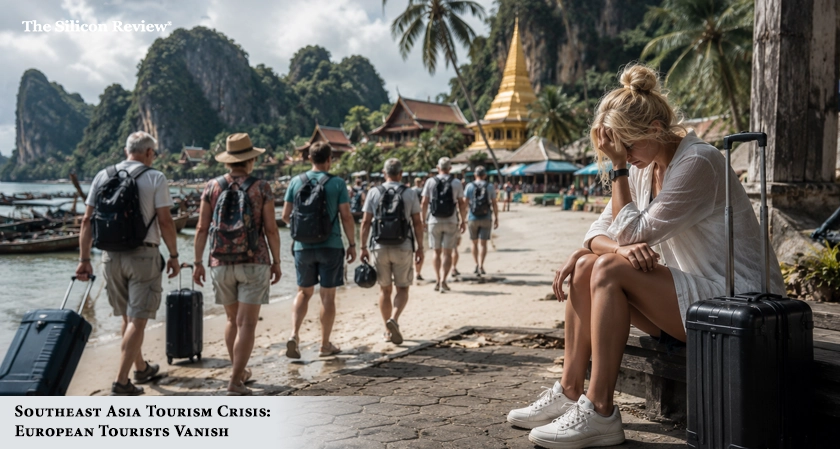
Southeast Asia tourism is losing European tourists as soaring airfares and Middle East disruptions reshape travel. If tourism is recovering, why are local businesses fighting to survive?
Southeast Asia tourism is facing an uncomfortable reality. While governments continue to celebrate a travel recovery, the disappearance of European tourists is exposing deep cracks beneath the surface. Across Cambodia, Thailand, and parts of Indonesia, businesses built around long-haul visitors are watching customers disappear almost overnight. If tourism is truly recovering, who is being left behind?
The downturn follows months of conflict in the Middle East, which has pushed up airfares and repeatedly disrupted key aviation hubs in Dubai and Doha. For many European tourists in Asia, the cost and uncertainty have become enough to cancel long-planned holidays.
Cambodia has become the clearest example of the crisis. International arrivals fell 45% in the first quarter compared with last year. Tuk-tuk drivers, airport workers, and tour guides who once relied on European travelers now struggle to earn enough to feed their families. Some have started farming or taken second jobs simply to survive.
“We expect bookings to drop by 45 percent this year.” Putu Winastra, Chairman of Bali’s tour agency association
The pressure is equally visible in Thailand tourism. Hotel bookings in Phang Nga province have dropped by around 50% since the conflict began. Boat operators who once carried thousands of visitors now spend entire days waiting at empty piers, while local families cut back on even basic household spending.
Who pays the highest price when global conflicts reshape travel?
Bali has avoided the worst of the slowdown thanks to strong demand from Australia and China. But even there, operators focused on European tourists in Asia expect bookings to fall sharply, prompting authorities to chase new markets before the downturn deepens.
Is recovery measured by arrivals or by the people who actually earn a living from tourism?
That contradiction is becoming harder to ignore. Governments continue to highlight rising visitor numbers, yet workers across Southeast Asia describe shrinking incomes, empty hotels, and fading hope.
The travel industry may celebrate returning visitors, but the struggle on the ground tells a different story. The Silicon Review asks if Southeast Asia tourism is truly stronger than ever, why are thousands of workers still waiting for the recovery to reach them?
FAQ:
Q: Why is Southeast Asia tourism facing a slowdown?
A: Southeast Asia tourism is under pressure due to rising airfares, Middle East travel disruptions, and fewer European tourists visiting the region.
Q: Why are European tourists avoiding trips to Asia?
A: Many European tourists in Asia are delaying travel because higher flight costs and uncertainty have made long-distance holidays more expensive.
Q: Which countries are affected by fewer European tourists?
A: Cambodia, Thailand, and parts of Indonesia are experiencing pressure as businesses dependent on European travelers see declining bookings.
Q: How is Thailand tourism being impacted?
A: Thailand tourism is facing lower hotel bookings, fewer boat tours, and reduced income for local businesses in popular destinations.
Q: Is Southeast Asia tourism recovery slowing down?
A: While visitor numbers remain strong in some markets, the loss of high-spending European tourists is creating challenges for local communities.
Q: Why are European tourists important for Southeast Asia tourism?
A: European tourists often contribute significant spending to hotels, restaurants, transport services, and local tourism businesses.
Q: How are tourism workers affected by fewer visitors?
A: Many workers, including guides, drivers, and small business owners, are facing reduced incomes and searching for alternative sources of work.
Q: Can Southeast Asia tourism recover without European tourists?
A: The region can recover by attracting diverse markets, but reducing dependence on major visitor groups remains a key challenge.













Comments