>>
Industry>>
Environmental sustainability>>
China Braces for More Heavy Ra...China Braces for More Heavy Rain as Successive Storms Threaten Flooding, Economic Disruption
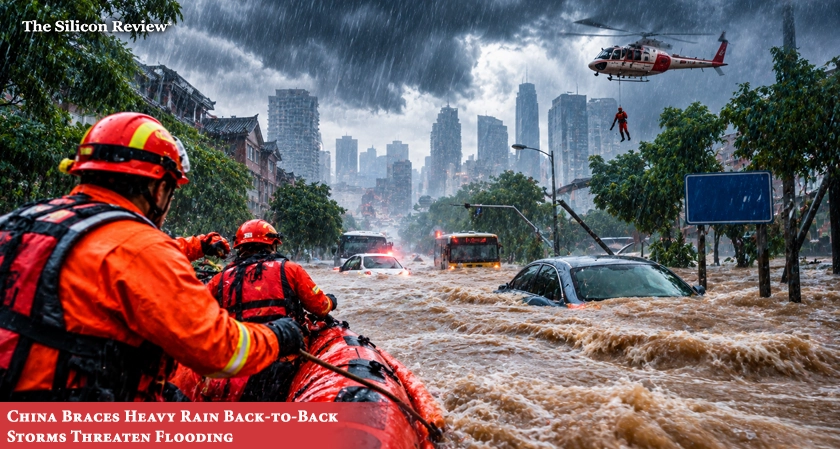
China is preparing for more heavy rain from back-to-back storms after more than 600 rivers rose above warning levels this year, with Typhoon Bavi and Typhoon Dolphin already triggering mass evacuations and widespread transport disruptions.
China is bracing for another round of heavy rain from successive storms, as authorities warn that saturated soil and overlapping rain belts are increasing the risk of flash floods, landslides, and urban waterlogging. The country has already experienced an intense flood season, with more than 600 rivers rising above warning levels 35 per cent more than the five-year average.
"We work with meteorological authorities to issue flash-flood risk warnings for the next 24 hours. We also maintain round-the-clock monitoring and issue rolling forecasts for the next two to three hours," said Yao Wenguang, Director of the Department of Flood and Drought Disaster Prevention at the Ministry of Water Resources.
Successive Storms and Evacuations
Typhoon Dolphin, the 13th typhoon of the year, made landfall in Zhejiang Province on August 9, triggering the evacuation of nearly 400,000 people in Fujian and Shanghai. The storm caused widespread disruptions, with 686 road passenger routes and 658 train services suspended, and 234 major tourist attractions closed. China's National Meteorological Center renewed a blue typhoon alert as the storm gradually weakened but continued to bring heavy rain.
Earlier, Typhoon Bavi prompted the Ministry of Water Resources to upgrade its flood warning to yellow on July 12, as the storm brought accumulative precipitation of up to 260 mm to parts of eastern, central, and southern China. The downpours have triggered numbered floods in the Haihe River basin and raised concerns about major waterways such as Taihu Lake, Liaohe River, and Songhua River.
Technology-Powered Flood Control
In response to the growing climate-related risks, China has accelerated the use of advanced technology in flood prevention. Authorities are increasingly relying on integrated monitoring systems that combine satellite data, weather radar, hydrological modelling, and artificial intelligence to improve early-warning accuracy. In January, scientists from the Hong Kong University of Science and Technology launched a new AI weather forecasting model capable of predicting heavy rainfall and thunderstorms up to four hours in advance, with improved forecast accuracy of more than 15% during testing.
Flood Safety Advice
Authorities urge the public to stay vigilant and follow these guidelines during the flood season:
- Monitor alerts: Check warnings via broadcast, TV, SMS, the "China Weather" app, or social media.
- Understand warning levels: Blue and yellow signals indicate danger is approaching, while orange and red signals indicate danger is imminent.
- Avoid hazardous areas: Do not visit riverbanks, mountain valleys, or reservoirs during heavy rain.
- Driving in rain: Do not drive through flooded roads. If water reaches the bumper, turn around. If the car stalls, abandon it immediately.
- Prepare supplies: Stock drinking water, food, medicine, flashlights, batteries, raincoats, and power banks in case of power or communication outages.
- Know your evacuation route: Local authorities will provide guidance on shelters and transfer routes, with special support for the elderly, children, and people with disabilities.
Here is the question this weather pattern raises. China has already experienced more than 600 rivers above warning levels and now faces back-to-back storms, despite deploying AI, satellites, and real-time monitoring to improve flood prevention. When the country's most advanced technology is being tested by successive extreme weather events, what does it say about the growing challenge of climate resilience?
As the flood season intensifies, The Silicon Review asks a final question. When successive storms strain the country's flood control systems and disrupt daily life, how will China's investments in technology and preparedness be measured?
FAQ:
Q: What is the current flood situation in China?
A: More than 600 rivers in China have risen above warning levels this year, 35% more than the five-year average. The country has experienced successive storms, including Typhoons Dolphin and Bavi, triggering mass evacuations and widespread disruptions.
Q: What storms have affected China recently?
A: Typhoon Dolphin made landfall in August, causing nearly 400,000 evacuations in Fujian and Shanghai. Typhoon Bavi struck in July, prompting a yellow flood warning. Both storms brought heavy rain, flooding, and transport disruptions.
Q: How is China using technology for flood control?
A: China is using AI, satellite data, weather radar, and hydrological modelling to improve early-warning accuracy. A new AI model predicts heavy rainfall and thunderstorms up to four hours in advance with improved accuracy of more than 15%.
Q: What should I do during heavy rain in China?
A: Monitor local alerts, avoid flooded roads and hazardous areas, prepare emergency supplies, and follow evacuation instructions. If driving, do not enter flooded roads and abandon the vehicle if it stalls.
Q: What are the different weather warning levels in China?
A: China uses a four-tier color-coded system: blue (least severe), yellow, orange, and red (most severe). Blue and yellow signals indicate danger is approaching, while orange and red signals indicate danger is imminent.













Comments