>>
Industry>>
Environmental sustainability>>
Landslide at Guinea Landfill K...Landslide at Guinea Landfill Kills 30 as Heavy Rain Collapses Mountain of Refuse in Conakry
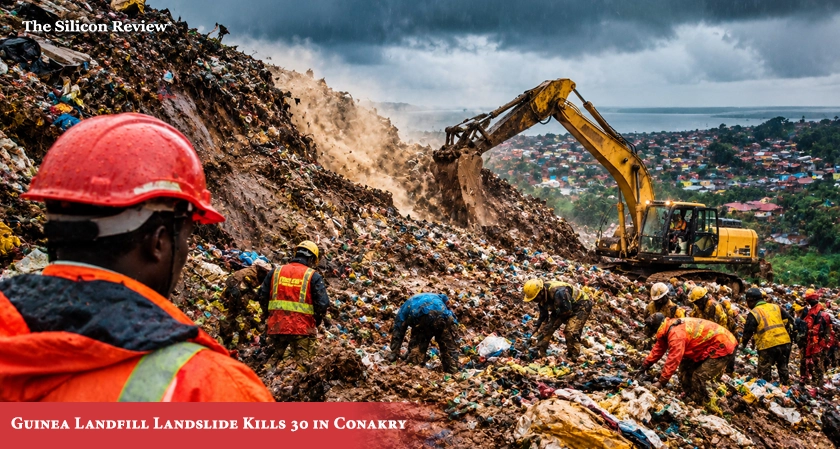
At least 30 people have been killed after heavy rain triggered a landslide at the Dar Es Salam landfill in Guinea's capital, Conakry, burying nearby shacks. A search and rescue operation is underway, with six people seriously injured.
A mountain of refuse collapsed at the largest landfill in Guinea's capital, Conakry, early on Sunday, killing at least 30 people, according to the central government. The disaster occurred after heavy rains, which began around 2 a.m., washed over the refuse at the Dar Es Salam landfill, triggering a landslide that buried nearby shacks.
"A mountainous heap of refuse collapsed at the largest landfill in Guinea’s capital of Conakry early on Sunday, killing 30 people," the central government confirmed.
A search and rescue operation is underway to find survivors. Six people were seriously injured and several homes were destroyed.
A Site Scheduled for Closure
The landfill, an open-air waste dump that is the largest in the city, had been designated for closure on the same day as the disaster, according to Lieutenant Colonel Baldé Mamadou Bailo, the sanitation officer for the military engineering battalion. Local residents had been given eviction notices, which forced many to leave the area, but many others were still present at the time of the collapse.
"We will ensure that the remaining families are relocated elsewhere," said Dienabou Touré, the minister of territorial administration and decentralization, who visited the scene.
The tragedy underscores the dangers faced by communities living in precarious conditions near waste disposal sites. The collapse of the refuse heap, combined with heavy rains, highlights the urgent need for proper waste management and the enforcement of safety regulations in urban areas.
Here is the question this disaster raises. A landfill collapse in Guinea's capital has killed 30 people, just as the site was scheduled to close and residents had been given eviction notices. When communities living on the margins of a city are forced to remain in dangerous conditions, what does it take to protect them from disasters that are both natural and man-made?
As the search and rescue operation continues, The Silicon Review asks a final question. When the closure of a landfill and the relocation of its residents were already planned, how many more lives could have been saved if those plans had been implemented sooner?
FAQ:
Q: Where did the landslide occur in Guinea?
A: The landslide occurred at the Dar Es Salam landfill, the largest landfill in Guinea's capital, Conakry.
Q: How many people were killed in the Guinea landfill landslide?
A: At least 30 people were killed in the landfill collapse.
Q: What caused the landslide at the Guinea landfill?
A: Heavy rains, which began around 2 a.m., washed over the refuse at the landfill, triggering a landslide that buried nearby shacks.
Q: Was the Guinea landfill scheduled to close?
A: Yes, the landfill had been designated for closure on the same day as the disaster, and residents had been given eviction notices.
Q: What is the government doing in response to the disaster?
A: A search and rescue operation is underway, and the government has pledged to relocate remaining families from the area.













Comments